
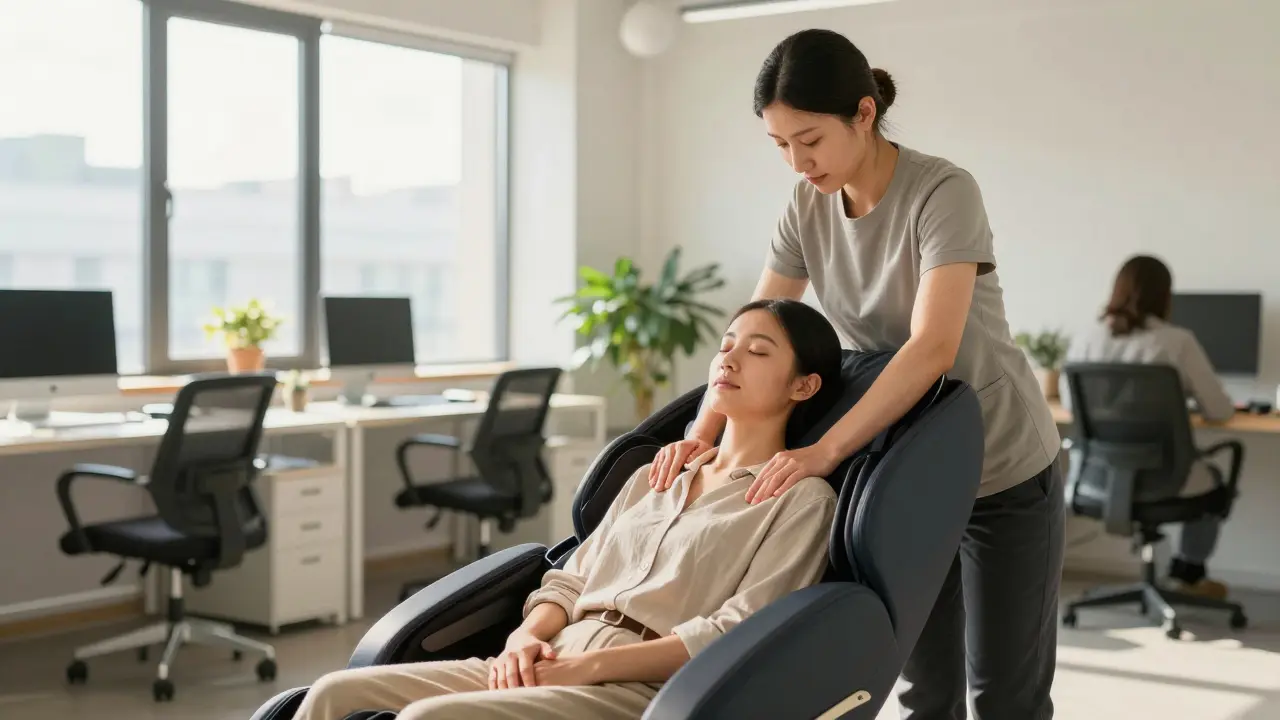
Picture this: You’ve been staring at a spreadsheet for four hours. Your shoulders are hunched up toward your ears, your lower back feels like it’s made of stone, and the hum of office chatter is starting to give you a headache. You don’t have time for a full spa day. You can’t even step out for a walk without missing a deadline. But what if you could reset your body in ten minutes, right where you sit?
That is exactly what chair massage is designed for. It is not just a trendy perk for tech giants; it is a practical, accessible form of therapeutic touch that fits into the cracks of a busy modern life. Unlike traditional table massage, which requires undressing, lying down, and scheduling an appointment weeks in advance, chair massage happens fully clothed. It targets the upper body-neck, shoulders, arms, hands, and back-using techniques derived from deep tissue work and acupressure.
The beauty of chair massage lies in its efficiency. It strips away the logistics of self-care and delivers immediate physical relief. Whether you are in a corporate office, a hospital waiting room, or a trade show booth, this modality offers a way to decompress without disrupting your day. Let’s look at why this simple intervention has become such a powerful tool for daily wellness.
How Chair Massage Works Without the Table
You might wonder how a therapist can do effective work when you’re sitting upright and wearing clothes. The secret is in the equipment and the technique. A specialized massage chair is used. These chairs are not your typical reclining salon seats. They are upright, often with adjustable headrests and armrests, designed to support your spine while allowing access to key muscle groups.
The therapist uses a variety of strokes adapted for clothing. Instead of gliding over skin with oil, they use friction, compression, and kneading through fabric. This actually allows for deeper pressure on certain areas because the therapist can leverage their body weight more effectively against the stable surface of the chair. Common techniques include:
- Effleurage: Long, gliding strokes along the back and shoulders to warm up the muscles.
- Petrissage: Kneading and lifting the shoulder muscles (trapezius) to release knots.
- Acupressure: Applying focused thumb pressure to specific points on the neck and hands to stimulate circulation.
- Myofascial Release: Gentle stretching and pulling to loosen the connective tissue around the spine.
Because you remain seated, gravity works differently than on a table. The therapist must be skilled in positioning your head and torso to ensure your neck isn’t strained during the session. A good session feels firm but never painful, focusing on releasing tension rather than causing bruising.
The Science Behind the Stress Relief
It’s easy to dismiss a quick back rub as just a nice feeling, but the physiological effects are measurable. When you experience chronic stress, your body stays in a state of low-grade fight-or-flight mode. Your cortisol levels remain elevated, your heart rate stays higher than necessary, and your muscles remain tight to protect against perceived threats.
Research published in journals like the Journal of Alternative and Complementary Medicine has shown that brief sessions of chair massage can significantly lower cortisol levels and increase serotonin and dopamine-the neurotransmitters associated with mood regulation and pleasure. Even a five-minute session can shift your autonomic nervous system from sympathetic (stress) dominance to parasympathetic (relaxation) dominance.
This shift doesn’t just make you feel calm; it improves cognitive function. Tension in the upper trapezius and neck muscles restricts blood flow to the brain. By releasing these muscles, chair massage improves oxygen delivery, which can help clear brain fog and improve focus for the tasks ahead. It’s essentially a hard reset for your nervous system.
Where You Can Find Chair Massage Today
While the image of a corporate office is common, chair massage has expanded far beyond the cubicle farm. Its portability makes it ideal for any high-traffic or high-stress environment. Here are the most common places you’ll encounter it:
| Location | Primary Benefit | Typical Session Length |
|---|---|---|
| Corporate Offices | Employee retention, productivity boost | 10-15 minutes |
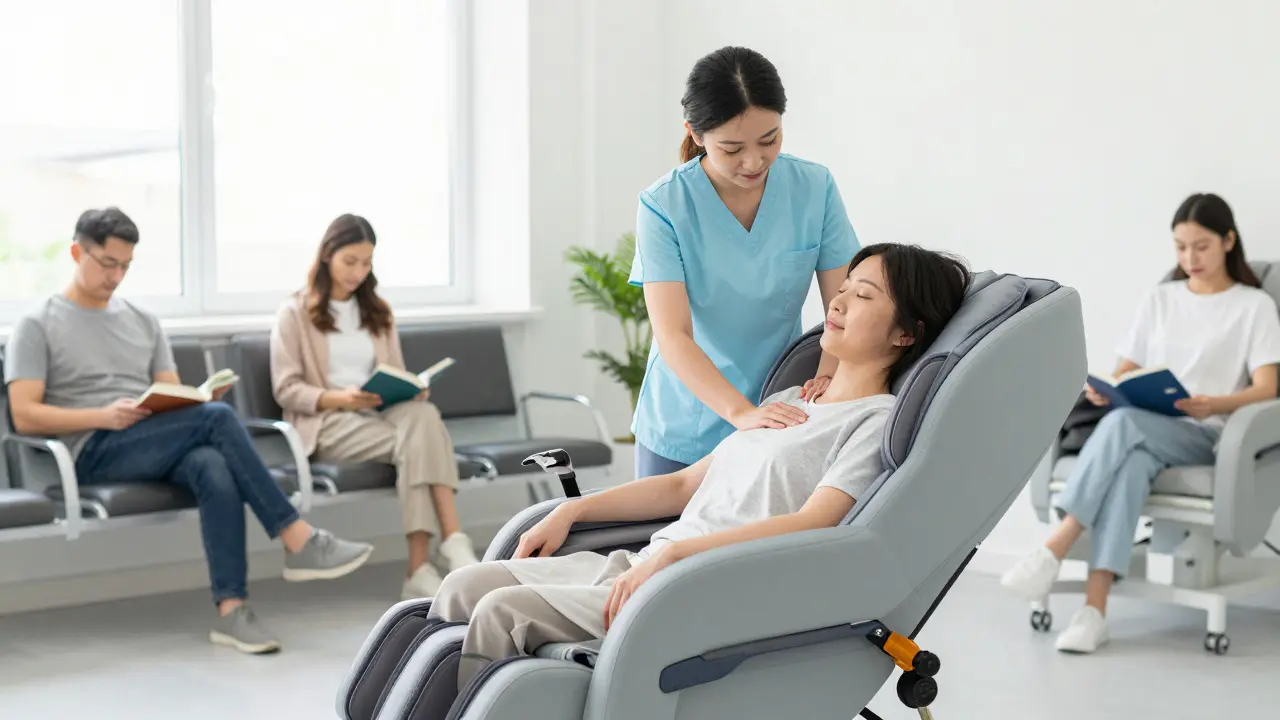
| Hospitals & Clinics | Pain management, anxiety reduction for patients | 10-20 minutes |
| Trade Shows & Conventions | Attendee comfort, lead generation for vendors | 5-10 minutes |
| Airports & Train Stations | Travel fatigue relief, posture correction | 10-15 minutes |
| Events & Weddings | Guest entertainment, relaxation | 5-10 minutes |
In healthcare settings, chair massage is increasingly used as an adjunct therapy for patients undergoing chemotherapy or those dealing with chronic pain conditions like arthritis. The gentle nature of the treatment makes it safe for populations who might not tolerate deep tissue table work.

Who Benefits Most From Chair Massage?
Not everyone needs a chair massage, but certain groups find it particularly transformative. If you fall into one of these categories, you should prioritize booking a session:
- Sedentary Workers: If you sit at a desk for more than six hours a day, your hip flexors shorten and your upper back rounds forward. Chair massage directly counteracts this "tech neck" posture.
- High-Stress Professionals: Lawyers, traders, and executives often carry emotional tension in their shoulders and jaw. Releasing this physical manifestation of stress can prevent headaches and migraines.
- Parents and Caregivers: Those who frequently lift children or assist elderly relatives develop significant strain in the lower back and shoulders. Since chair massage focuses on the upper body, it helps balance the load carried by the torso.
- Frequent Travelers: Sitting in cramped airplane seats restricts circulation. A quick session after landing can reduce swelling in the legs (through reflexology on the feet/hands) and loosen stiff neck muscles.
Even if you don’t fit these descriptions, anyone experiencing acute stress or minor muscular discomfort can benefit. It is a low-barrier entry point into regular body maintenance.
What to Expect During Your First Session
If you’ve never had a chair massage, the unknown can be slightly intimidating. Knowing the process removes the anxiety. Here is the step-by-step flow of a typical session:
- Consultation: The therapist will ask about any injuries, pain points, or preferences. Be honest-if your left shoulder hurts more, say so.
- Positioning: You will sit in the chair. The therapist will adjust the headrest so your head is supported comfortably. You may lean forward slightly onto the armrests or sit back against the cushion, depending on the therapist’s style.
- The Work Begins: Most therapists start with the hands and arms to establish contact and relax you, then move to the shoulders, neck, and back. They may use their thumbs, forearms, or elbows for deeper pressure.
- Communication: You can speak during the session. If the pressure is too much, say "lighter." If it’s not enough, say "more." Good communication ensures the best result.
- Closing: The session ends with gentle strokes to integrate the work. You’ll stand up, shake out your limbs, and likely feel a noticeable difference in your posture immediately.
There is no awkward undressing or draping. You stay in your business attire or casual clothes. The only requirement is that you wear comfortable clothing that allows some movement. Tight jeans or restrictive suits might limit the therapist’s ability to stretch your arms or back effectively.
Integrating Chair Massage Into Your Routine
To get the most out of chair massage, consistency matters more than duration. A single annual session is nice, but bi-weekly or monthly sessions create cumulative benefits. Think of it like brushing your teeth: doing it once a year won’t prevent cavities, but doing it regularly keeps your oral health intact. Similarly, regular chair massage prevents chronic tension from setting in.
If your employer offers it, take advantage of it. Schedule it during natural breaks in your workflow, such as right before lunch or early afternoon when energy dips. Avoid booking it immediately before a high-pressure meeting, as the relaxation response might make you feel too calm to compete aggressively, though this varies by person.
If you don’t have access to on-site services, consider hiring a mobile massage therapist who specializes in chair work for special events or home visits. Some wellness apps now connect you with local providers who can bring a portable chair to your location for a one-time session.
Common Misconceptions About Chair Massage
Despite its growing popularity, myths still surround chair massage. Let’s clear them up:
- "It’s just a light rub." False. Skilled therapists apply deep, targeted pressure that can be more intense than a Swedish table massage because they focus solely on problem areas.
- "It’s unprofessional." False. In many industries, it’s seen as a sign of a company that values employee well-being. It’s conducted with strict professionalism and boundaries.
- "I need to tip heavily." Tipping norms vary. In corporate settings where the service is free to employees, tipping is optional but appreciated ($5-$10). For private bookings, standard massage tipping rules (15-20%) apply.
- "It doesn’t count as real massage." It absolutely does. It uses the same anatomical knowledge and therapeutic principles, just adapted for a different context and constraint.
Understanding these facts helps you approach the experience with realistic expectations and respect for the therapist’s skill.
Is chair massage painful?
It should not be painful. While it can involve deep pressure, especially in tense areas like the trapezius, the sensation should be uncomfortable-but-good, similar to pressing a sore spot until it releases. If you feel sharp pain, tell the therapist immediately so they can adjust their technique or pressure.
Do I need to remove my shoes?
Usually, no. Most chair massages focus on the upper body. However, some therapists may offer foot reflexology as part of the session. In that case, you might be asked to remove one shoe and sock. Always follow the therapist’s instructions regarding clothing adjustments.
Can I get a chair massage if I have back pain?
Yes, but with caution. Inform the therapist about your back pain beforehand. They will avoid direct pressure on inflamed discs or herniated areas and focus on relieving the surrounding muscle tension that contributes to the pain. If you have acute injury, consult your doctor first.
How long does a typical chair massage last?
Most sessions range from 10 to 20 minutes. Shorter sessions (5-10 minutes) are common in high-traffic areas like trade shows, while longer sessions (15-20 minutes) are typical in corporate wellness programs or private appointments. The duration depends on the setting and the client’s needs.
Is chair massage covered by insurance?
Rarely. Most insurance plans cover therapeutic table massage prescribed by a physician for specific medical conditions. Chair massage is generally considered a wellness or preventive service, which is usually paid out-of-pocket. However, some flexible spending accounts (FSAs) or health savings accounts (HSAs) may allow reimbursement if you obtain a Letter of Medical Necessity from your doctor.
 Health and Wellness