
When you think of healing, you probably imagine pills, needles, or surgery. But what if your body already has the tools to fix itself-and all it needs is a quiet, gentle touch? That’s the idea behind craniosacral therapy. It’s not flashy. It doesn’t make noise. And it doesn’t promise miracles. But for people with chronic headaches, stress, or unexplained pain, it’s become a quiet lifeline.
What Exactly Is Craniosacral Therapy?
Craniosacral therapy (CST) is a light-touch method that focuses on the bones of the skull, spine, and sacrum. It’s based on the idea that your cerebrospinal fluid-the liquid that surrounds your brain and spinal cord-has a natural rhythm. This rhythm, called the craniosacral rhythm, moves like a slow tide, about 6 to 12 cycles per minute. Practitioners believe that when this rhythm gets stuck or slowed down, it can cause tension, pain, or dysfunction in the body.
Using just the weight of their fingertips-about the pressure you’d use to gently close your eyelid-therapists feel for restrictions in the flow. They don’t twist, crack, or push. They wait. They listen. And then, with subtle movements, they help the body release tension it’s been holding onto for years.
This isn’t new. The roots go back to osteopathy in the early 1900s, when Dr. William Sutherland noticed that the bones in the skull weren’t fused like everyone thought. He believed they moved slightly with each breath and heartbeat. His student, Dr. John Upledger, later developed CST into what we know today. It’s now used in hospitals, rehabilitation centers, and private clinics across Australia, the U.S., and Europe.
How Does It Feel?
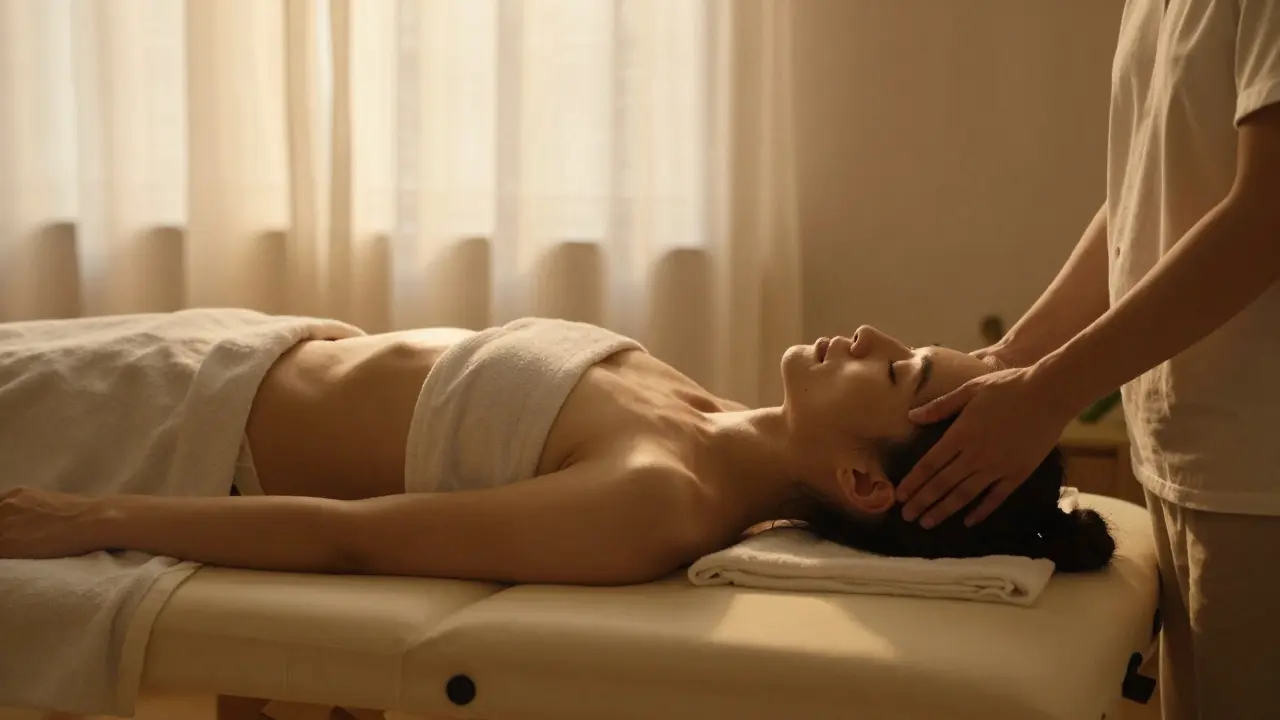
Most people describe craniosacral therapy as deeply relaxing. You lie fully clothed on a massage table. The therapist places their hands gently on your head, neck, or feet. That’s it. No oils. No music. No talking. Just stillness.
Some feel warmth, tingling, or a soft pulsing under their hands. Others drift into a meditative state. A few even fall asleep. One woman in Sydney, who’d suffered migraines for 12 years, said after her third session: “I didn’t feel anything dramatic. But the next morning, I woke up and realized-I hadn’t taken a painkiller in three days.”
It’s not a massage. It’s not acupuncture. It’s more like your body being gently reminded how to breathe again.
What Conditions Can It Help With?
Craniosacral therapy isn’t a cure-all. But research and patient reports suggest it may help with:
- Chronic headaches and migraines
- Stress, anxiety, and burnout
- Post-concussion symptoms
- TMJ disorders and jaw pain
- Lower back pain linked to pelvic tension
- Sleep issues, especially when tied to nervous system overload
- Recovery after surgery or trauma
A 2022 study in the Journal of Bodywork and Movement Therapies followed 68 people with chronic tension headaches. After 8 weekly CST sessions, 72% reported a 50% or greater reduction in pain frequency. Another study in 2023 found CST improved sleep quality in new mothers with postpartum anxiety-without medication.
It’s especially helpful for people who’ve tried everything else. Physical therapy didn’t fix their neck pain. Medications gave them side effects. Yoga helped, but only temporarily. CST doesn’t fight the problem. It helps the body settle into its own healing rhythm.

Who Should Try It?
If you’re sensitive to touch, overwhelmed by noise, or just tired of being poked and prodded, CST might be your fit. It’s gentle enough for babies, elderly people, and those recovering from injury. Newborns with colic or feeding difficulties often respond well. Older adults with arthritis or post-stroke stiffness find relief without aggressive manipulation.
It’s not for everyone. If you have a brain aneurysm, recent skull fracture, or severe bleeding disorder, avoid it. Always tell your therapist about your medical history. Most practitioners will ask for clearance from your doctor if you have a serious condition.
It’s also not a replacement for emergency care. If you have sudden, severe pain, dizziness, or numbness, see a doctor first. CST works best as a support tool-not a first-line treatment.
How to Find a Qualified Practitioner
There’s no single global certification for craniosacral therapy. In Australia, the Craniosacral Therapy Association of Australia (CTAA) sets basic standards. Look for someone who’s trained through a recognized school like the Upledger Institute, the Biodynamic Craniosacral Therapy Association, or the Sutherland Cranial Teaching Foundation.
Ask:
- How many years have you practiced CST?
- What training program did you complete?
- Do you work with clients who have my condition?
A good practitioner won’t promise results. They’ll explain what to expect, how many sessions are typical, and what signs might mean the therapy is working. Most people feel a difference after 3 to 5 sessions. Others need 8 to 12, especially if the issue has been there for years.
What to Expect in a Session
Your first visit usually lasts 60 to 90 minutes. The therapist will ask about your health history, sleep patterns, stress levels, and any symptoms you’re experiencing. Then you’ll lie down. They’ll place their hands lightly on your head, spine, or feet. You might feel a slight pull or warmth. Or nothing at all. That’s okay.
Afterward, you might feel:
- Deeply relaxed
- A bit lightheaded
- More emotionally sensitive
- Or nothing noticeable-until the next day
Some people report dreams, sudden tears, or a surge of energy. These are signs your nervous system is releasing stored tension. Drink water. Rest. Don’t rush into a busy day after your session.
Follow-up sessions are usually 45 to 60 minutes. Many people choose to come once a week at first, then taper off to monthly visits for maintenance.

Why It Works-Even Without a Clear Mechanism
Science hasn’t fully explained how CST works. The idea that skull bones move slightly is still debated. But that’s not the point. What matters is what people experience.
Think of it this way: your nervous system is always listening. If you’ve been under stress for years, your body learns to stay on high alert. CST doesn’t fix your spine. It helps your nervous system remember what calm feels like. And once it does, your body often starts healing on its own.
It’s like resetting a computer that’s been running too many background apps. You don’t delete anything. You just give it space to reboot.
Cost and Accessibility
In Australia, a single session typically costs between $90 and $150, depending on location and experience. Some private health insurers cover CST under “natural therapies” or “massage” extras. Check your policy. A few community health centers in Sydney and Melbourne offer sliding-scale rates.
It’s not cheap, but many find it more affordable than years of painkillers, physio, or specialist visits. One woman in Adelaide told me: “I spent $8,000 on scans and meds before trying CST. It cost me $1,200 total-and now I don’t need any of it.”
Is It Worth It?
If you’re looking for a quick fix, CST won’t deliver. If you’re ready to listen to your body instead of fighting it, it might be the most gentle, powerful thing you’ve ever tried.
It’s not magic. It’s not science fiction. It’s quiet, patient, and deeply human. And for people who’ve been told there’s nothing wrong with them-yet they still hurt-it’s a rare kind of validation.
You don’t need to believe in energy fields or fluid rhythms to benefit. You just need to be willing to lie still, breathe, and let someone else hold space for your body to heal.
Can craniosacral therapy help with anxiety?
Yes. Many people with anxiety find CST helps calm their nervous system. Unlike talk therapy or medication, it works through physical touch and stillness, helping the body release stored stress. Studies show reduced cortisol levels and improved heart rate variability after regular sessions. It’s especially helpful for those who feel disconnected from their bodies or overwhelmed by sensory input.
Is craniosacral therapy the same as massage?
No. Massage targets muscles and soft tissue with pressure and movement. Craniosacral therapy works with the fluid system and nervous system using extremely light touch-often less than 5 grams of pressure. You won’t feel kneading, rubbing, or stretching. Instead, you’ll feel stillness, subtle shifts, and deep relaxation.
How many sessions do I need?
It depends. For acute stress or tension, 3 to 5 sessions may be enough. For long-term issues like chronic pain, PTSD, or post-surgery recovery, 8 to 12 sessions are common. Some people continue monthly for maintenance. Your therapist will suggest a plan after your first session, but you can always adjust based on how you feel.
Can children receive craniosacral therapy?
Absolutely. Infants and children respond very well to CST. It’s used for colic, feeding difficulties, sleep issues, and developmental delays. The touch is even lighter than with adults-often just a few fingers resting on the baby’s head or feet. Many parents report calmer babies, better feeding, and improved sleep after just a few sessions.
Does it hurt?
No. CST is not painful. The pressure used is extremely light-like holding a feather. Some people feel a slight discomfort if there’s deep tension, but most describe it as soothing or neutral. If you feel any pain, tell your therapist immediately. They’ll adjust their touch.
Is there scientific proof it works?
The evidence is growing but mixed. Some studies show clear benefits for headaches, stress, and sleep. Others are inconclusive due to small sample sizes or lack of control groups. What’s clear is that people consistently report feeling better-even when objective measures don’t change. For many, the subjective experience of calm and relief is the real outcome.
 Health and Wellness