
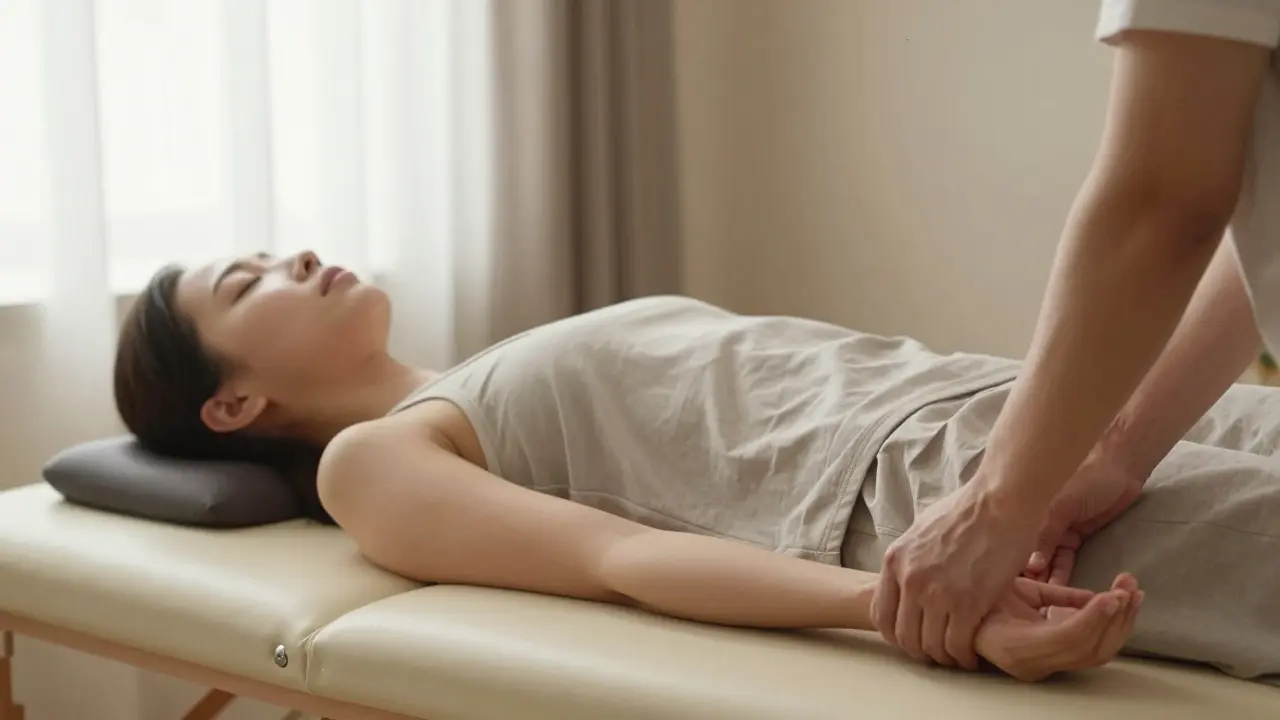
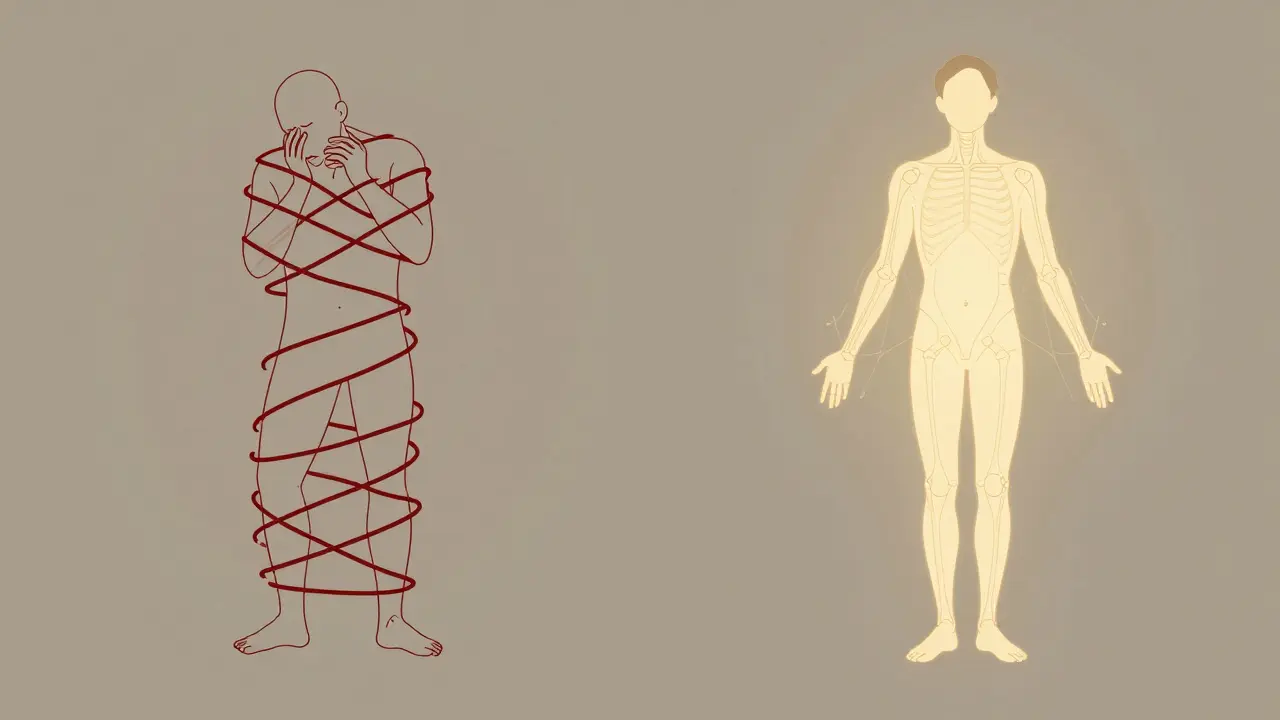
Imagine your body knows exactly how to heal itself-but it’s stuck. Too much stress, old injuries, or constant tension have locked it into a pattern of discomfort. You’ve tried stretching, massage, even physical therapy, but nothing sticks. What if the answer isn’t more force, but less? That’s the quiet revolution behind ortho-bionomy.
What Ortho-Bionomy Really Is
Ortho-bionomy isn’t a new age fad. It’s a gentle, non-invasive bodywork method developed in the 1970s by British osteopath Arthur Lincoln Pauls. He noticed something surprising: when he moved a joint slightly into its natural position of comfort-rather than forcing it into alignment-the body often corrected itself. No cracking. No pain. Just quiet, lasting change.
Unlike deep tissue massage or chiropractic adjustments, ortho-bionomy doesn’t push. It listens. Practitioners use subtle positioning, light pressure, and gentle rocking to help the body recognize its own balanced state. It’s like whispering to your nervous system instead of shouting.
It works because the body doesn’t respond well to force. When you push against tension, the muscles tighten more. Ortho-bionomy uses the body’s own reflexes to turn off the pain signal. It’s not about fixing you-it’s about reminding you how to fix yourself.
How It Works: The Body’s Natural Wisdom
Your body is constantly sending signals. Pain? That’s not just a problem-it’s a message. Muscles spasm because they’re protecting you. Joints ache because they’re misaligned under stress. Nerves fire because they’re compressed. But your body already knows how to correct these things. It just needs the right cue.
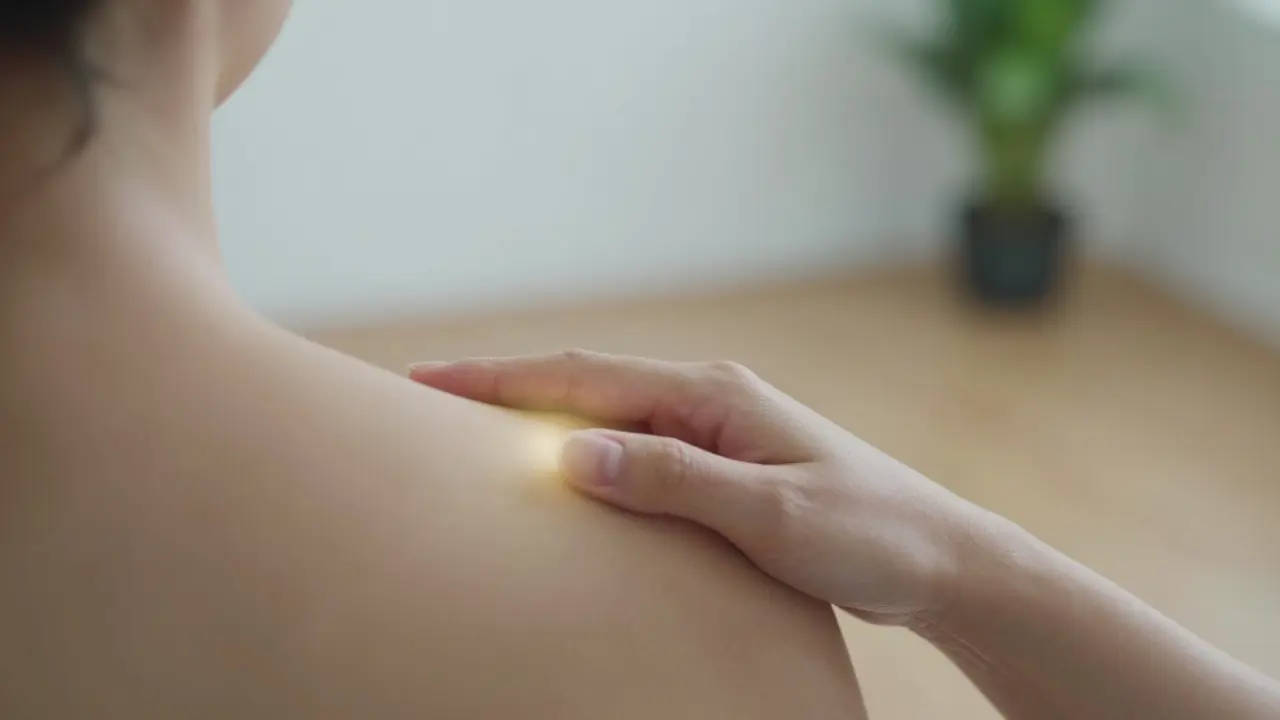
Ortho-bionomy gives that cue. A practitioner will gently guide your limb into a position where you feel the least discomfort-even if it’s just a millimeter off from where you think it should be. Then they hold it. And something shifts. The nervous system says, “Oh. This feels safe.” And the body relaxes.
It’s not magic. It’s neurophysiology. The technique activates proprioceptive feedback loops-the same ones that help you walk without thinking. By moving into comfort, you reset the brain’s map of your body. This is why people often say, “I didn’t even feel anything, but now my shoulder doesn’t hurt.”
What It Can Help With
Ortho-bionomy isn’t a cure-all, but it’s surprisingly effective for a wide range of issues:
- Chronic back and neck pain from sitting all day
- Tennis elbow or carpal tunnel symptoms
- Stress-related tension in the jaw, shoulders, or hips
- Recovery from minor injuries without aggravating them
- Post-surgical stiffness (when cleared by a doctor)
- Headaches triggered by neck tension
- Arthritis discomfort-especially when movement is limited
It’s particularly helpful for people who’ve been told, “It’s just aging,” or “You’ll have to live with it.” Ortho-bionomy doesn’t ignore those realities-it works within them. You don’t need to be flexible, strong, or even willing to move much. If you can lie still, it can help.
What Happens in a Session
A typical session lasts 60 to 75 minutes. You stay fully clothed, usually lying on a massage table. The practitioner starts by asking where you feel discomfort, then gently explores your posture and movement patterns. They don’t diagnose. They observe.
Then comes the quiet part. They might slowly rotate your ankle until you say, “That feels better,” even if it’s barely noticeable. They hold it. You breathe. After 10 to 20 seconds, they let go. Often, you’ll feel a subtle shift-like a joint sliding back into place, or a muscle releasing without being touched.
Some people feel nothing during the session. Others get warm, sleepy, or even tear up. All are normal. The body doesn’t always respond the way you expect. The key is that the changes stick. Many report feeling lighter, more grounded, or just “more like themselves” hours or even days later.
Why It’s Different from Other Therapies
Let’s compare it to what you might have tried:
| Method | Pressure | Client Involvement | Immediate Sensation | Long-Term Effect |
|---|---|---|---|---|
| Ortho-Bionomy | Very light | Passive-just breathe | Often subtle or unnoticed | Long-lasting, self-reinforcing |
| Deep Tissue Massage | Strong, sometimes painful | Must tolerate discomfort | Immediate relief, then soreness | Temporary, needs repetition |
| Chiropractic Adjustment | Forceful, often with popping | Passive | Instant, sometimes shocking | Can be temporary if posture isn’t addressed |
| Physical Therapy | Varies | Active-exercises required | Effortful | Effective, but time-intensive |
Ortho-bionomy doesn’t ask you to do anything. No stretches. No exercises. No equipment. Just presence. And that’s why it works for people who’ve given up on other treatments. It doesn’t demand energy-it restores it.
Who It’s Best For
This isn’t for everyone. But if you’re:
- Someone who hates being “worked on” aggressively
- Recovering from an injury and afraid of re-injury
- Highly sensitive to touch or pain
- Dealing with chronic stress and tension
- Older and looking for gentle movement support
- Or simply curious about how your body can heal itself
Then ortho-bionomy might be the quietest, most effective tool you’ve never tried.
What to Expect After Your First Session
Some people feel energized. Others feel tired. Both are normal. Your nervous system has been recalibrated. It’s like resetting a computer-there’s a lag while everything syncs up.
Within 24 to 48 hours, you might notice:
- Less pain in a spot you didn’t even mention
- Better sleep
- Easier breathing
- More fluid movement
- Emotional release-like crying for no reason
These aren’t side effects. They’re signs your body is rebalancing. If you feel worse after a session, it’s usually because you’re noticing old patterns you’d been ignoring. That’s part of the healing.
How Many Sessions Do You Need?
There’s no magic number. Some feel better after one. Others need three to five. It depends on how long the tension has been there, how much stress you’re under, and how well your body responds to gentle cues.
Most practitioners recommend starting with three sessions spaced a week apart. After that, you’ll know if it’s working for you. Maintenance sessions every 4 to 8 weeks help keep the nervous system calm and the body aligned.
It’s not about fixing something broken. It’s about helping your body remember how to stay whole.
Finding a Practitioner
Ortho-bionomy isn’t widely taught, so finding a certified practitioner takes a little digging. Look for someone certified by the Ortho-Bionomy Association or the International Association of Ortho-Bionomy. They’ve completed at least 200 hours of training and are required to renew their certification every few years.
In Australia, practitioners are mostly found in Melbourne, Sydney, and Brisbane. Many offer sessions in private clinics, wellness centers, or even home visits. Don’t be afraid to ask if they’ve worked with people with your specific issue. A good practitioner will be happy to talk through your concerns before you even lie down.
Why This Matters Now
In a world full of aggressive treatments-strong drugs, invasive procedures, high-intensity therapy-ortho-bionomy stands out. It doesn’t add more to your life. It takes away the noise. It gives your body space to heal without interference.
It’s not a miracle. But it’s real. And for people tired of being told to push through pain, it offers something rare: permission to rest. To be still. To let your body lead the way.
Maybe that’s the real healing power-not the technique itself, but the quiet trust it asks you to place in your own body.
Is ortho-bionomy safe for older adults or people with chronic conditions?
Yes. Ortho-bionomy is one of the safest bodywork methods available. Because it uses no force, no manipulation, and no pressure, it’s ideal for seniors, people with osteoporosis, arthritis, or nerve damage. Practitioners adjust their touch based on your comfort level-there’s no “one-size-fits-all.” Many older clients report improved balance, reduced joint stiffness, and better sleep after just a few sessions.
Can ortho-bionomy help with anxiety or stress?
Absolutely. While it’s not a substitute for therapy, ortho-bionomy directly calms the nervous system. By signaling safety to the body, it reduces the fight-or-flight response. Many clients report feeling calmer, more centered, and less reactive after sessions. It’s especially helpful for people who carry stress in their shoulders, jaw, or chest.
Do I need to believe in it for it to work?
No. Skepticism is fine. You don’t need to believe in energy, chakras, or spirituality. Ortho-bionomy works through biomechanics and neurophysiology-how your body moves and how your brain interprets movement. If you can feel discomfort and comfort, it can work. Many skeptics become regular clients after their first session.
Can I do ortho-bionomy on myself?
You can’t do the full technique alone, but you can learn simple self-correction moves. Practitioners often teach clients how to gently rock their joints into comfort at home-like slowly tilting the head or rolling the shoulders. These small movements reinforce what happens in sessions and help prevent tension from building up again.
How long does it take to feel results?
Some people feel a shift during the session. Others notice changes hours later-better sleep, less stiffness, easier breathing. The effects are cumulative. Most clients report noticeable improvement after two to three sessions. Long-term relief usually comes after consistent, gentle work over several weeks.
 Health and Wellness