
Imagine waking up without that tight ache in your lower back that’s been there for months. No more flinching when you reach for a coffee cup. No more lying awake at 3 a.m. because your shoulder feels like it’s locked in concrete. What if the key to feeling better wasn’t more stretching, more pills, or more intense therapy-but something so gentle it feels like your body is remembering how to heal itself?
That’s what ortho-bionomy does. It’s not a massage. It’s not chiropractic. It’s not even really a treatment. It’s a conversation-one your body already knows how to have, if you just let it.
What Ortho-Bionomy Actually Is
Ortho-bionomy was developed in the 1970s by British osteopath Dr. Arthur Lincoln Pauls. He noticed something odd: when he pushed too hard on stiff joints, the body would tense up harder. But when he moved *with* the tension-not against it-the body would relax on its own. That became the foundation.
Ortho-bionomy is a gentle, non-invasive bodywork method that uses positioning, light pressure, and subtle movement to help your nervous system recognize where it’s holding onto pain or stress. You don’t need to be flexible. You don’t need to be strong. You don’t even need to believe in it. You just need to lie down.
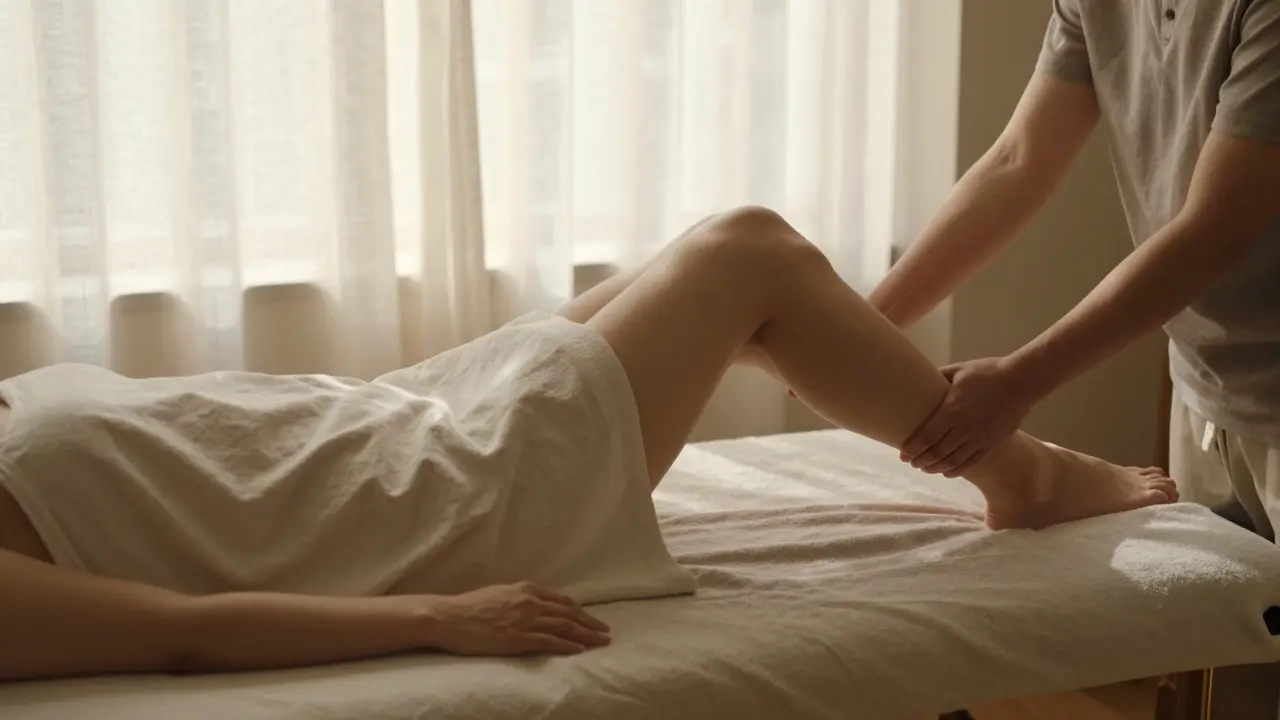
The practitioner doesn’t fix you. They don’t adjust bones or break up knots. Instead, they gently guide your body into positions that feel familiar, safe, or even slightly comfortable-positions your body already knows from when it was pain-free. Your nervous system notices: Oh, this feels like before the injury. And then, without being told, your muscles soften, your joints unlock, and your pain fades.
How It Works: Your Nervous System Is the Real Healer
Your body doesn’t heal because someone told it to. It heals because it senses safety. Pain is your nervous system’s alarm system. When it’s stuck on high alert, your muscles stay tight, your joints stay stiff, and your energy drains. Ortho-bionomy doesn’t silence the alarm. It shows your body that the danger isn’t real anymore.
Here’s how it plays out in real life: Someone comes in with chronic knee pain from an old sports injury. The practitioner doesn’t push on the knee. They might gently bend the ankle, rotate the hip, or even just support the foot in a way that reminds the knee joint of its natural range. In 30 seconds, the person says, “Wait… I can feel my knee moving again.” No force. No popping. Just a quiet shift.
Studies on similar gentle bodywork methods show reduced cortisol levels, improved vagal tone, and decreased muscle tension within minutes. Ortho-bionomy works the same way-by turning down the nervous system’s noise so your body can do what it was built to do: repair, restore, and rebalance.
Who It’s For (And Who It’s Not)
Ortho-bionomy isn’t a cure-all. But it’s surprisingly broad in who it helps:
- People with chronic pain from arthritis, fibromyalgia, or old injuries
- Those recovering from surgery or trauma who can’t handle deep pressure
- Stress-sensitive individuals who feel overwhelmed by traditional therapies
- Seniors with stiffness, balance issues, or joint discomfort
- Anyone who’s tried everything and still feels stuck
It’s not for acute emergencies. If you’ve broken a bone, had a stroke, or are in active sepsis-you need medical care first. Ortho-bionomy works best when the body is stable but stuck.
It’s also not for people who want quick fixes. You won’t walk out pain-free after one session. But you will walk out feeling lighter. And that’s often the first sign something’s changing.
Real-Life Changes People Experience
In Adelaide, I’ve seen clients come in with symptoms that had resisted years of physio, acupuncture, and even injections. One woman, 68, had sciatica for seven years. She couldn’t sit for more than 10 minutes. After three ortho-bionomy sessions-each lasting 45 minutes, no force, no noise-she started gardening again. Not because her spine was “adjusted,” but because her nervous system stopped screaming at her hip.
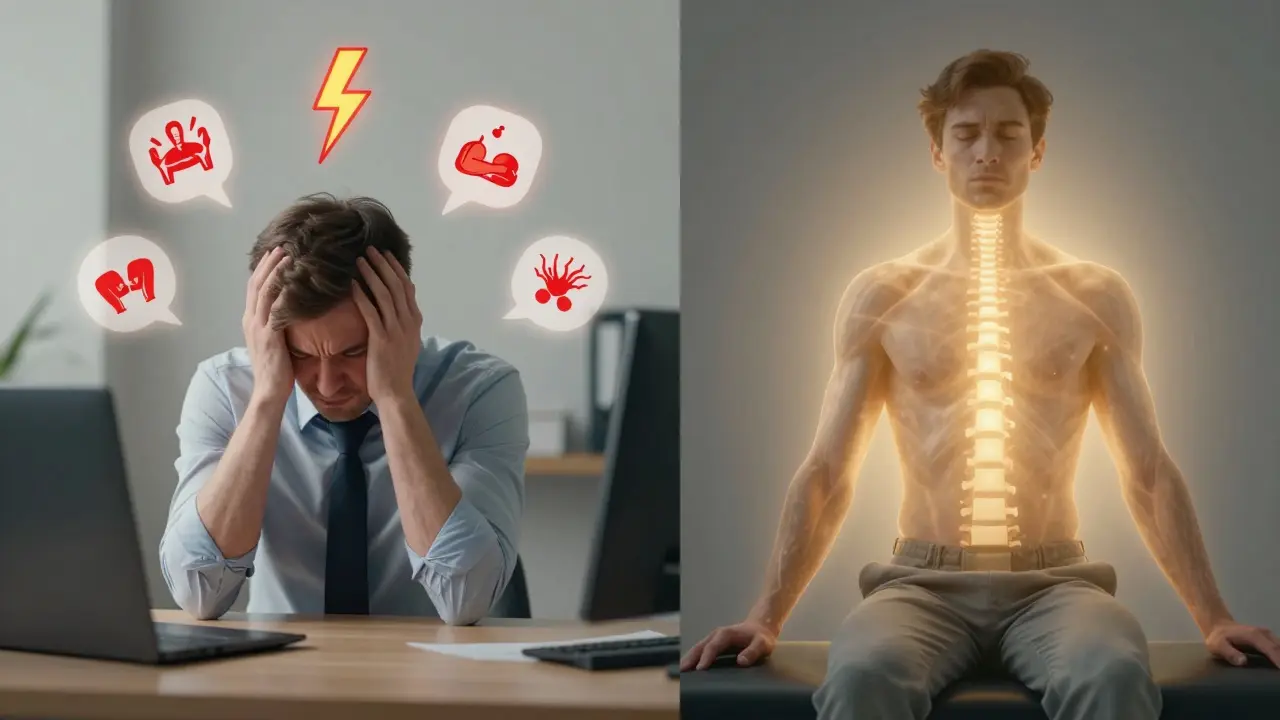
A 32-year-old office worker came in with tension headaches every day. She’d been on painkillers for three years. After two sessions focusing on the neck and jaw position, she stopped taking medication. Not because the tension vanished overnight, but because her body finally remembered how to relax.
Even athletes use it. A local soccer player with recurring hamstring tightness tried stretching, foam rolling, and massage. Nothing stuck. Ortho-bionomy showed him how his pelvis was subtly rotated from an old tackle. In one session, he moved differently. He didn’t feel better-he felt normal again.
What to Expect in a Session
Most sessions last 60 to 75 minutes. You lie fully clothed on a massage table. No oils. No music. Just quiet.
The practitioner will ask you to notice where you feel discomfort. Then, they’ll gently move you-sometimes just an inch-into a position that feels slightly familiar or easier. You might feel a tiny spark of relief. Or nothing at all. That’s okay. The work isn’t in the movement. It’s in the signal your nervous system receives.
You might feel warmth, tingling, or even a sudden deep breath. Some people fall asleep. Others cry. Others just stare at the ceiling and wonder why they feel so calm.
Afterward, you might feel looser. Or you might feel nothing. That’s normal. The real changes happen over the next 24-72 hours as your body integrates the shift. Many people report better sleep, less anxiety, or suddenly being able to turn their head without pain.
Why It’s Different From Massage or Chiropractic
Massage works on muscles. Chiropractic works on bones. Ortho-bionomy works on perception.
Massage can feel good, but if your nervous system is still on high alert, the relief is temporary. Chiropractic adjustments can feel powerful, but if the body doesn’t feel safe, it’ll just tense up again. Ortho-bionomy doesn’t try to change your body. It helps your body change itself.
Think of it like this: If your phone keeps crashing because it’s overloaded, you don’t force a restart. You shut it down, let it cool, then turn it back on. Ortho-bionomy is the shutdown button for your nervous system.
How Many Sessions Do You Need?
There’s no magic number. Some people feel a shift after one session. Others need three to five. Chronic conditions often take longer-but even one session can reset your baseline.
Most practitioners suggest starting with 2-3 sessions spaced a week apart. After that, you can space them out as needed. Some people come monthly just to stay in tune. Others come only when something flares up.
The goal isn’t dependency. It’s reconnection. Once your body remembers how to relax, you don’t need to keep coming back. You just need to remember how to listen to it.

Where to Find It
Ortho-bionomy isn’t widely taught. Practitioners are certified through the Ortho-Bionomy Association (USA) or the European Federation of Ortho-Bionomy. In Australia, you’ll find certified practitioners in major cities like Adelaide, Melbourne, Sydney, and Brisbane. Look for practitioners who hold the Ortho-Bionomy Practitioner credential.
It’s not covered by Medicare. But some private health insurers with extras cover it under “bodywork” or “holistic therapies.” Always ask before booking.
Can You Do It Yourself?
Yes-and you already do, in small ways.
When you stretch lazily in the morning and feel your spine sigh? That’s ortho-bionomy. When you roll your shoulders back and suddenly your neck stops aching? That’s your body finding its own balance.
There are simple self-practice techniques: gently supporting your arm in a comfortable position, letting your head tilt to one side without forcing it, or lying on your back with knees bent and letting your spine settle. The key? No strain. No pushing. Just letting your body find what feels easier.
Books like Ortho-Bionomy: A Guide to Gentle Self-Healing by Dr. Pauls offer basic exercises. But nothing replaces the experience of having someone else guide you-especially when pain has made you distrust your own body.
Why This Matters Now
We live in a world that rewards force. More reps. Harder stretches. Faster fixes. But chronic pain and stress aren’t solved by brute force. They’re solved by safety.
Ortho-bionomy doesn’t ask you to change. It asks you to remember. To feel. To let go.
If you’ve tried everything and still feel stuck, maybe it’s not your body that’s broken. Maybe it’s just been waiting for someone to listen.
 Health and Wellness