
Ever feel like your muscles are locked up, no matter how much you stretch? You roll out your hamstrings, you do yoga every morning, yet that tightness in your lower back or shoulders just won’t let go? That’s not just muscle tension-it’s your fascia. And myofascial release therapy isn’t another fancy massage trend. It’s a proven way to reset your body’s tension patterns and let it heal itself.
What Exactly Is Fascia?
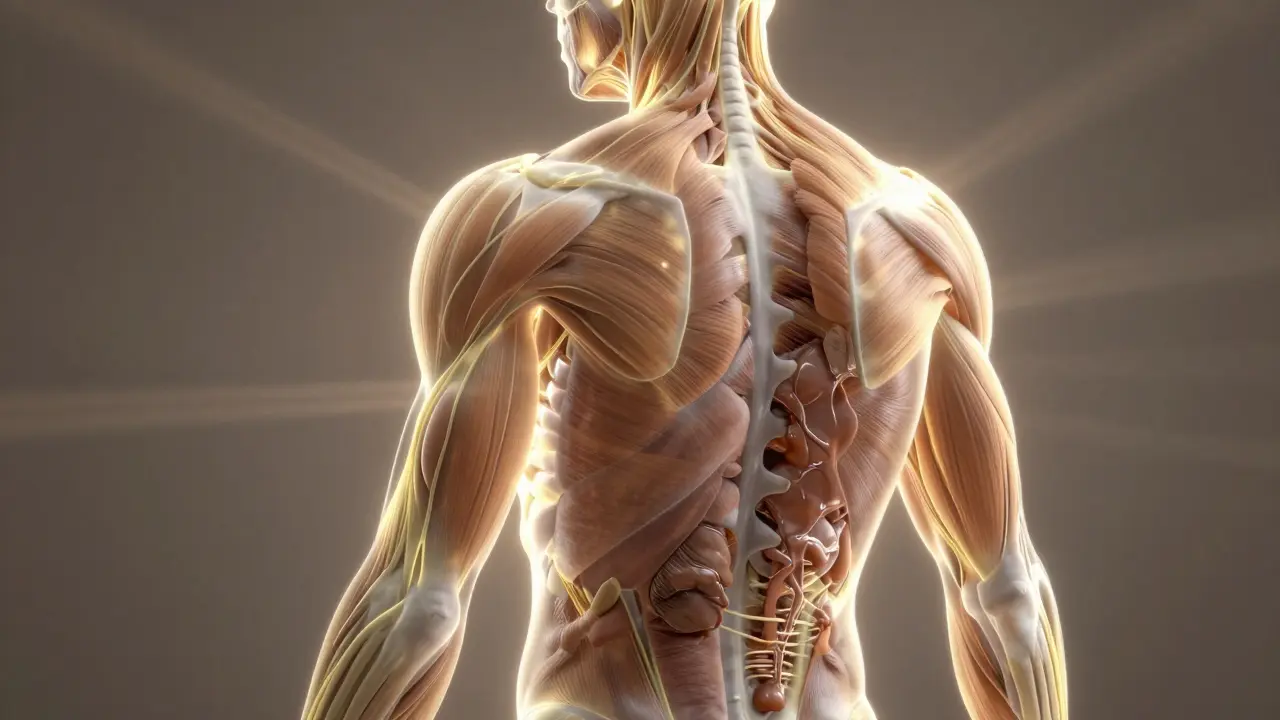
Fascia isn’t something you hear about in gym bro talk. It’s the invisible web that wraps around every muscle, bone, nerve, and organ in your body. Think of it like plastic wrap stretched tight over a whole chicken before roasting-it holds everything together, lets parts slide, and transmits force. When healthy, fascia is slippery and flexible. When it’s stuck from injury, stress, or sitting too long, it turns into glue.
Studies show that fascia contains more sensory nerves than muscle tissue. That means your tightness isn’t just "muscle tight"-it’s your nervous system screaming because the fascia is stuck. And when fascia tightens, it pulls on bones, compresses nerves, and restricts blood flow. That’s why you get headaches from tight neck fascia, or knee pain from a tight IT band that’s really just fascia gone wrong.
How Myofascial Release Works
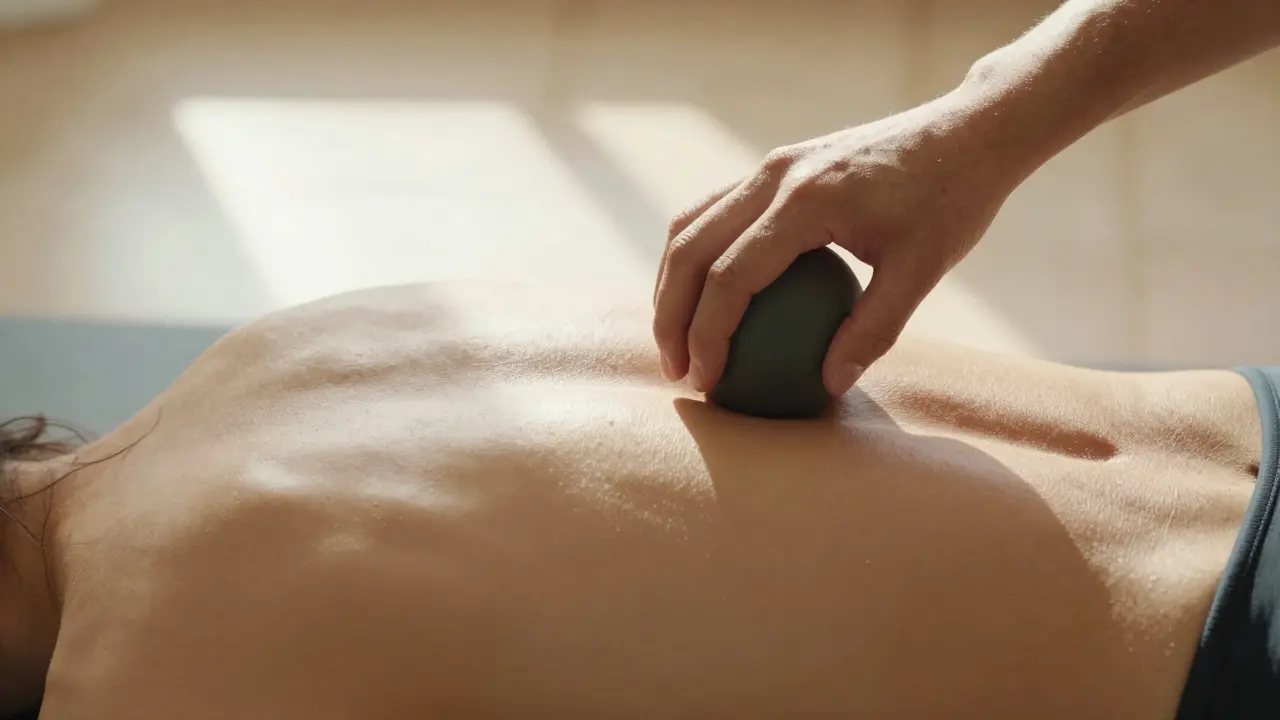
Myofascial release therapy (MFR) uses sustained pressure-either from a therapist’s hands or tools like foam rollers and lacrosse balls-to gently melt away those stuck spots. Unlike regular massage, which pushes and kneads, MFR holds. You find the tender spot, apply gentle pressure (not pain), and wait. Usually 90 seconds to 3 minutes. That’s it. No aggressive rubbing. No cracking.
Why so long? Fascia is made of collagen and elastin fibers that behave like memory foam. It takes time for the tissue to soften and reorganize. A quick 10-second roll won’t do it. You need patience. The goal isn’t to hurt the area into submission-it’s to signal the nervous system: "Hey, it’s safe to relax now."
Research from the University of Illinois found that just 5 minutes of sustained myofascial release on the quadriceps improved hip mobility by 18% in healthy adults. That’s not magic. That’s biology.
Self-Myofascial Release: Do It Yourself
You don’t need a therapist every week. Most people can manage their fascia with simple tools at home. Here’s how to start:
- Find your tight spot. It’s usually tender, not just sore. Press gently with a foam roller or ball. If it hurts like a sharp sting, you’re on a trigger point.
- Hold. Don’t roll back and forth. Stay still. Breathe. Let your body sink into the pressure.
- Wait 90 seconds. If the pain drops by half, keep going. If it spikes, back off.
- Move to the next spot. Don’t spend 20 minutes on one area. Three to five spots per session is enough.
Best spots to target: calves, thighs, upper back, chest, and the bottom of your feet. If you’re sitting all day, your pecs and hip flexors are probably glued shut. Roll those first.
Pro tip: Use a tennis ball or lacrosse ball for small areas like the sole of your foot or between your shoulder blades. A foam roller is fine for big muscles like quads or lats. Avoid rolling directly over joints or bones.
When Myofascial Release Helps Most
This isn’t a cure-all. But it works wonders for specific problems:
- Chronic lower back pain - Often caused by tight thoracolumbar fascia, not weak abs. Rolling the sides of your lower back (not the spine) can reduce pain in weeks.
- Tennis elbow or golfer’s elbow - Not just tendonitis. The fascia in your forearm is often the real culprit. Rolling the forearm muscles daily cuts flare-ups.
- Plantar fasciitis - Rolling the bottom of your foot with a frozen water bottle in the morning reduces heel pain more than stretches alone.
- Headaches from tension - Tightness in the suboccipital muscles (under the skull) pulls on the scalp. A soft ball pressed gently against the base of the skull for 2 minutes can stop morning headaches.
- Post-surgery stiffness - After shoulder or hip surgery, fascia tightens like shrink wrap. Gentle MFR, once cleared by your doctor, helps restore movement faster.
One study in the Journal of Bodywork and Movement Therapies followed 68 people with chronic low back pain. After 6 weeks of daily self-myofascial release, 79% reported at least a 50% drop in pain. No drugs. No injections. Just pressure and time.
What Doesn’t Work
Myofascial release isn’t a magic wand. Don’t expect miracles if you’re:
- Rolling too hard. Pain doesn’t mean it’s working. If you’re gritting your teeth, you’re triggering a protective spasm.
- Using it as a warm-up. MFR is best after exercise or at the end of the day. Cold fascia is harder to release.
- Expecting instant results. It takes consistency. Two weeks of daily 5-minute sessions beats one 30-minute session a month.
- Trying to fix a herniated disc or nerve compression. MFR helps symptoms, but it won’t reverse structural damage. See a physio if pain shoots down your leg.
Also, avoid rolling if you have open wounds, blood clots, osteoporosis, or are on blood thinners. Talk to your doctor first if you’re unsure.
Why Your Body Can Heal Itself
Here’s the real secret: Myofascial release doesn’t "fix" your body. It removes the barriers keeping your body from healing itself. Your body is built to repair. But when fascia gets stuck, it traps inflammation, blocks circulation, and confuses your nerves.
When you release that tension, you’re not adding something new. You’re removing the block. Blood flows again. Nerves stop screaming. Muscles stop guarding. And suddenly, your body remembers how to move freely.
Think of it like unclogging a drain. You don’t need to add water-you just need to remove the gunk. Myofascial release is that plunger.
What to Expect After a Session
Right after, you might feel:
- Lighter, looser, or taller
- A bit sore (like after a good workout)
- More relaxed, even sleepy
Some people feel emotional. Fascia holds stress. Releasing it can bring up old tension-sometimes tears, sometimes laughter. That’s normal.
Within 24-48 hours, you’ll likely notice better movement. Maybe you can reach higher. Maybe your hip doesn’t click when you stand. That’s your body relearning how to move.
Don’t overdo it. Two to three sessions per week is plenty. Daily is fine if you’re gentle. More than that can irritate tissue.
Tools You Actually Need
You don’t need a $200 gadget. Here’s what works:
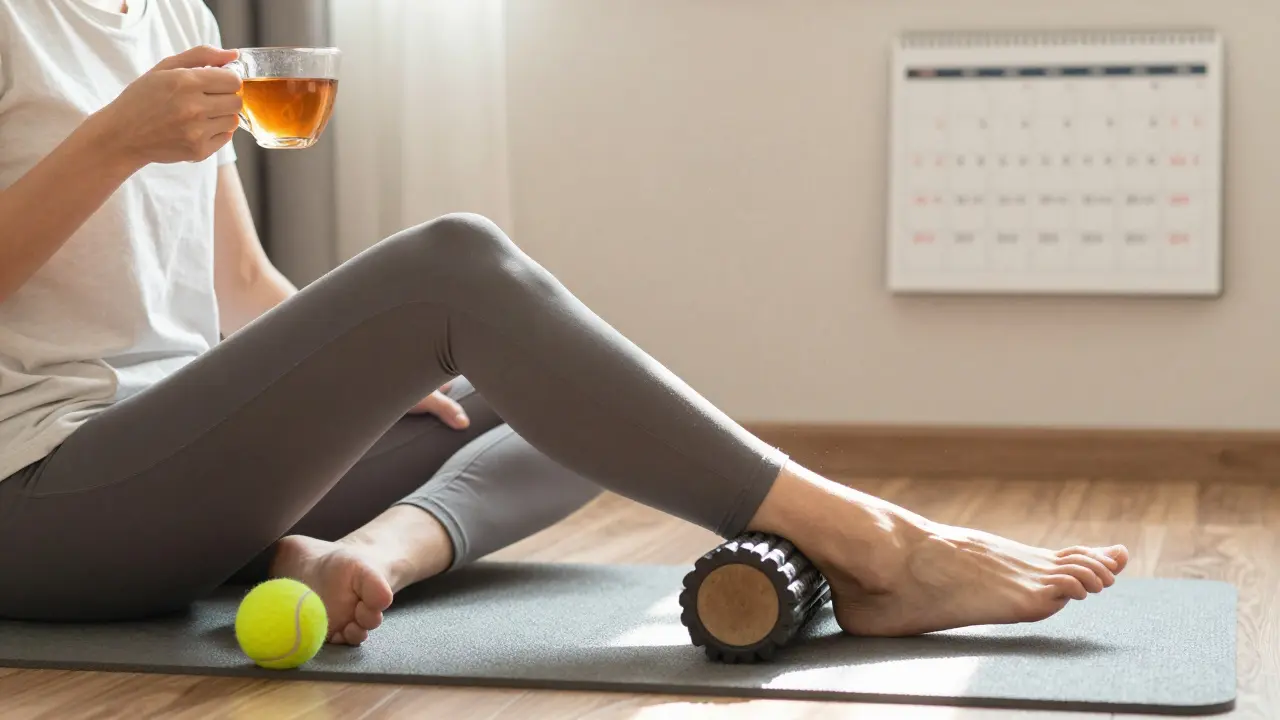
- Foam roller - Medium density. Too soft = useless. Too hard = painful. A 36-inch roller is best for back and legs.
- Lacrosse ball - Perfect for feet, shoulders, glutes. You can get them at any sports store.
- Tennis ball - Gentle enough for the spine or chest. Great for beginners.
- Massage stick or wand - Useful for calves and thighs if you can’t bend down.
Skip the vibrating rollers, electric massagers, and "magic" balls with spikes. They’re marketing gimmicks. Pressure and time are the only real tools.
When to See a Professional
Self-care works-but sometimes you need a guide. Look for a licensed physical therapist, osteopath, or certified myofascial release therapist. Avoid massage therapists who don’t mention fascia or treat MFR like a quick rubdown.
A good therapist will:
- Ask about your movement patterns, not just pain
- Use sustained holds, not quick strokes
- Explain what’s happening in your body
- Teach you how to continue at home
One session with a skilled therapist can show you exactly where you’re missing the mark. Then you take over.
Final Thought: Your Body Knows How to Heal
You don’t need expensive treatments or magic creams. You just need to listen. Myofascial release is quiet, simple, and deeply effective. It’s not about fixing what’s broken. It’s about removing the noise so your body can do what it was built to do-recover.
Start small. Roll one area for 90 seconds. Breathe. Wait. Feel the change. Then do it again tomorrow. That’s all it takes.
Can myofascial release therapy help with chronic pain?
Yes, especially for pain caused by tight fascia-like lower back pain, tension headaches, or plantar fasciitis. Studies show consistent self-myofascial release can reduce chronic pain by 50% or more within 4-6 weeks. It doesn’t cure structural issues like arthritis, but it removes the tension that makes pain worse.
Is foam rolling the same as myofascial release?
Foam rolling is one tool for myofascial release, but not all foam rolling counts. True MFR requires sustained pressure-holding on a tender spot for 90 seconds or more. Rolling back and forth quickly is just massage. For real release, slow down and breathe.
How often should I do myofascial release?
Two to three times a week is enough for maintenance. If you’re dealing with pain or stiffness, daily 5-10 minute sessions are safe and effective. Just don’t overdo it-more isn’t better. Consistency matters more than intensity.
Can I do myofascial release after a workout?
Yes, but it’s better after. Post-workout, your muscles and fascia are warm and more pliable. That makes release easier and more effective. Doing it cold-like right after waking up-can be less effective and more uncomfortable.
Why does myofascial release sometimes make me emotional?
Fascia stores physical and emotional stress. When you release long-held tension, your nervous system can respond with tears, laughter, or sudden calm. It’s not unusual. Your body is releasing more than just tight tissue-it’s letting go of stored stress patterns.
Does myofascial release replace stretching?
No-it complements it. Stretching pulls on muscles. Myofascial release melts the glue between tissues. You need both. Do MFR first to loosen the fascia, then stretch. You’ll get deeper, safer results.
Can I use myofascial release if I have arthritis?
Yes, but be gentle. Avoid direct pressure on inflamed joints. Focus on the muscles and fascia around the joint instead. Many people with osteoarthritis find relief by releasing surrounding tissue-reducing strain on the joint. Always check with your doctor if you’re unsure.
How long does it take to see results?
Some people feel looser after one session. For lasting change-like reduced chronic pain or better mobility-it usually takes 2-4 weeks of consistent practice. Think of it like brushing your teeth. One session won’t fix cavities. Daily care builds results.
 Health and Wellness