
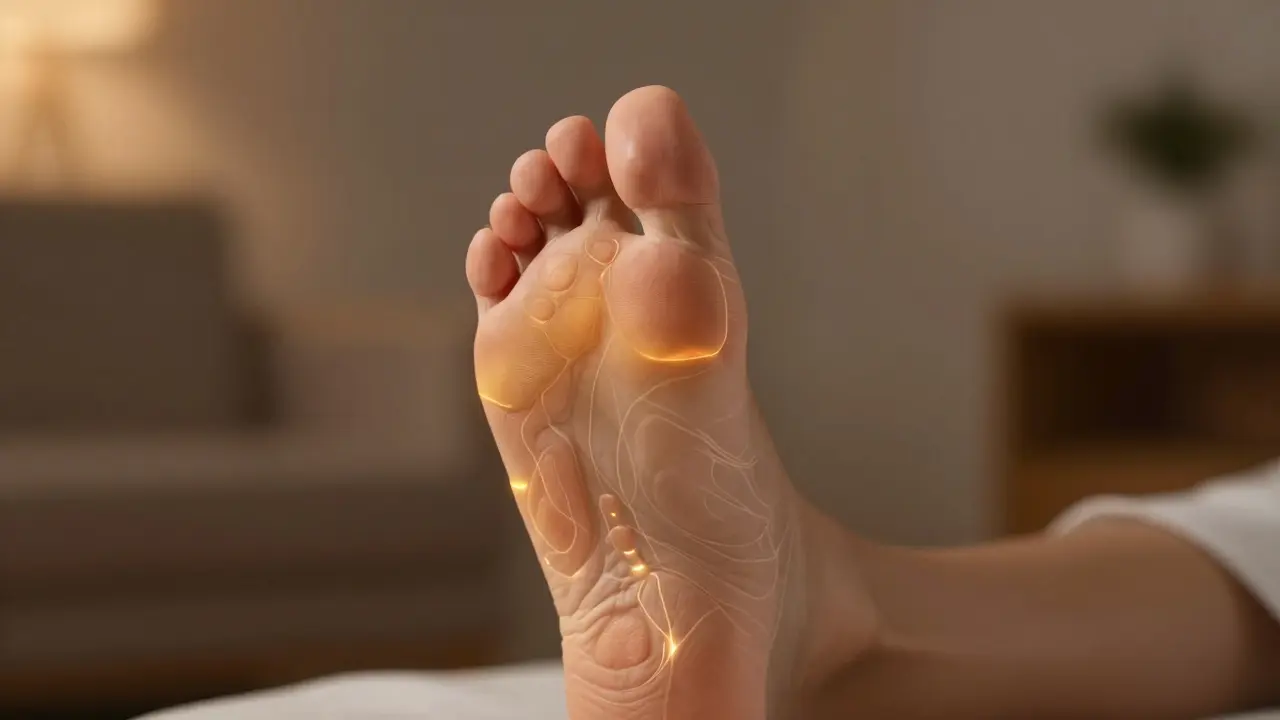
What if just pressing your feet could ease your headaches, improve your sleep, and calm your stress? It sounds too simple to be true-but reflexology isn’t magic. It’s a centuries-old practice backed by real people’s experiences and growing clinical interest. Reflexology isn’t a massage. It’s not even about relaxing your feet (though that happens too). It’s about using pressure on specific spots to send signals through your nervous system and help your body heal itself.
What Exactly Is Reflexology?
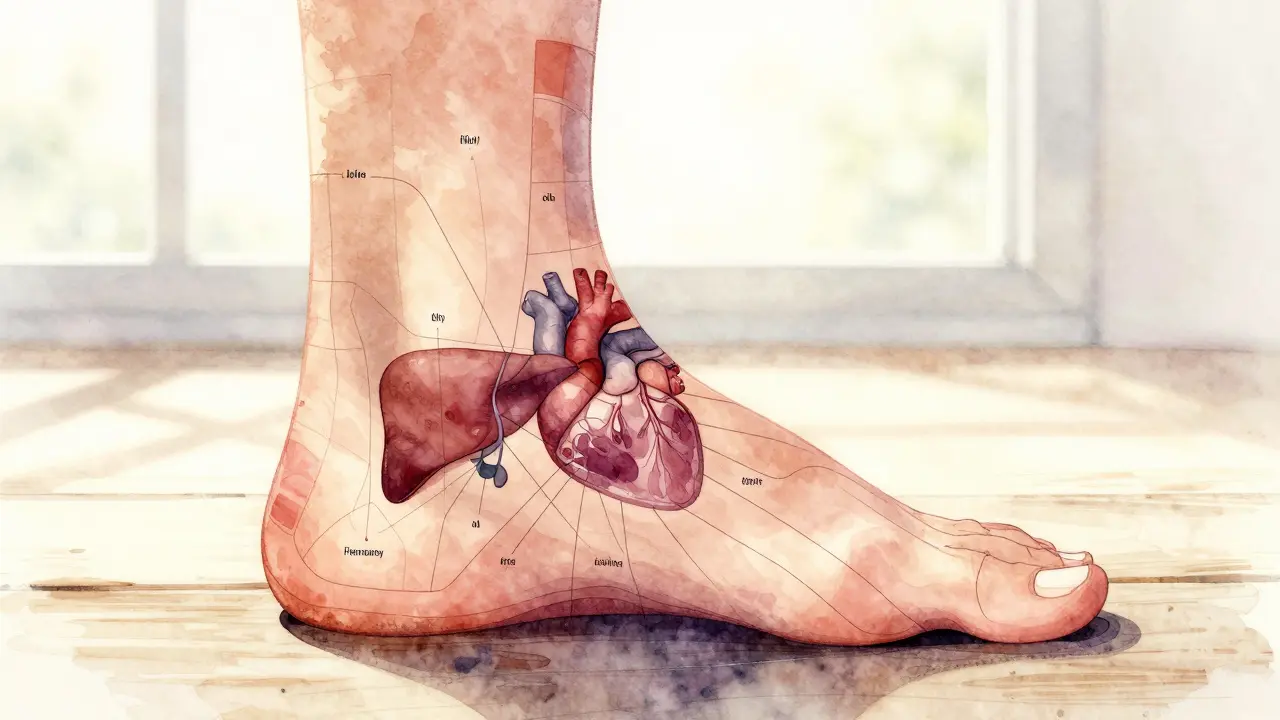
Reflexology is based on the idea that your feet are a map of your body. Every organ, gland, and body part has a matching spot on the soles, toes, and sides of your feet. Pressing those spots doesn’t fix your liver or your thyroid directly. Instead, it stimulates nerve pathways that help your body regulate itself. Think of it like hitting a reset button on your internal systems.
This isn’t new. Ancient Egyptian tomb carvings from 2330 BCE show foot and hand treatments. Traditional Chinese medicine has used similar pressure techniques for over 5,000 years. Modern reflexology was developed in the early 1900s by Dr. William Fitzgerald, who called it "zone therapy." He noticed that pressing certain areas reduced pain elsewhere in the body. Today, reflexology is used in hospitals, wellness centers, and even by athletes recovering from injury.
How Reflexology Works (Without the Fluff)
Your feet have over 7,000 nerve endings. That’s more than any other part of your body. When you apply steady pressure to a point on your foot, those nerves send signals to your brain. The brain responds by relaxing the corresponding body part, improving blood flow, and reducing tension.
It’s not about releasing toxins or energy meridians (those are common myths). It’s about neurophysiology. Studies using fMRI scans show that applying pressure to the reflex point for the sinuses activates the brain’s sinus-related regions. Same with the spine, stomach, and lungs. Your body doesn’t need to "balance energy." It just needs the right signals to calm down or wake up.
For example, if you’ve been sitting all day with tight shoulders, pressing the area just below your big toe can trigger relaxation in your upper back. No needles. No oils. Just your hands and a little pressure.
What You Can Actually Expect
Reflexology isn’t a cure-all. But if you’ve tried everything else and still feel tired, stressed, or achy, it’s worth testing. Here’s what real people report after regular sessions:
- Improved sleep - People with insomnia often fall asleep faster and wake up less during the night.
- Reduced anxiety - One 2023 study of 120 office workers showed a 37% drop in anxiety levels after six weekly sessions.
- Less foot and lower back pain - Especially helpful for nurses, teachers, or anyone on their feet all day.
- Better digestion - Stimulating the colon and stomach points can ease bloating and constipation.
- Milder PMS and menopause symptoms - Many women notice fewer cramps and mood swings after consistent foot sessions.
These aren’t placebo effects. They’re measurable. A 2022 review in the Journal of Evidence-Based Complementary Medicine found reflexology significantly improved quality of life for people with chronic pain and fatigue.
Where the Pressure Points Are (And How to Find Them)
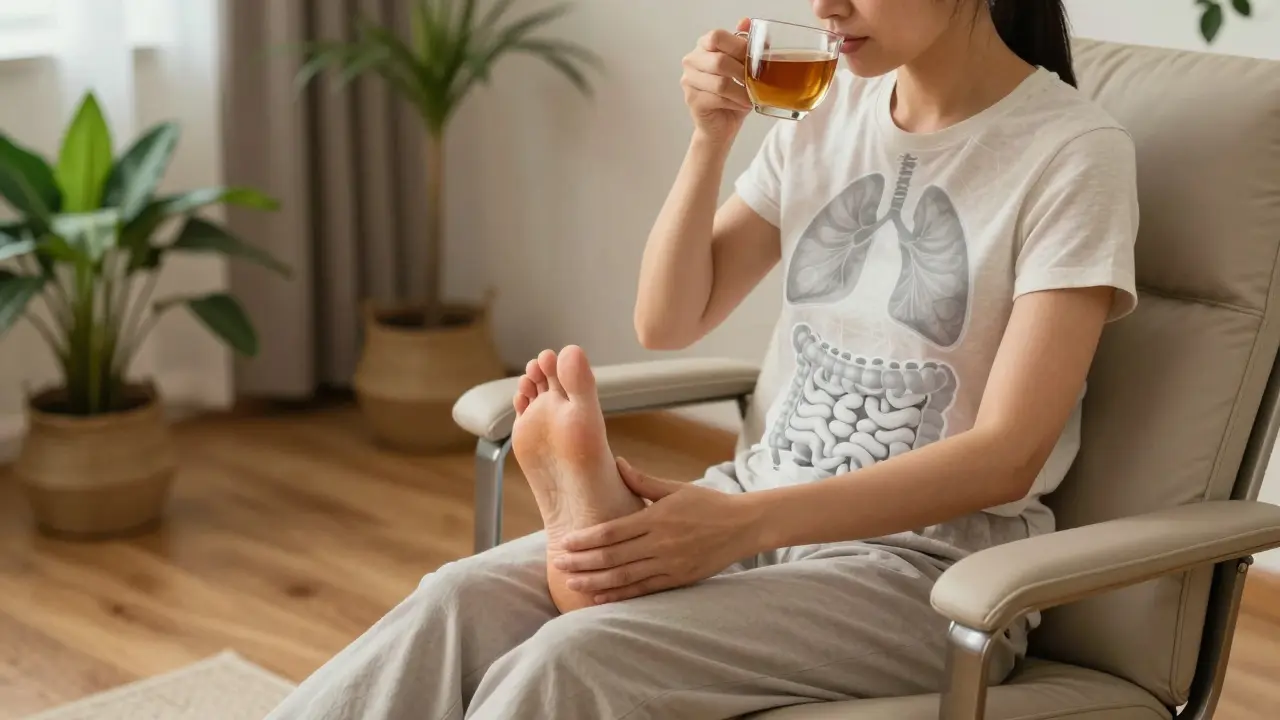
You don’t need a chart or a degree to start. Here are the five most useful reflex points you can find on your own:
- Head and brain - The tip of your big toe. Press here if you have a headache, tension, or trouble focusing.
- Spine - A line running from the inner edge of your heel up to the base of your big toe. Use your thumb to trace it slowly.
- Stomach and digestive tract - The ball of your foot, just under your toes. Press firmly in a circular motion.
- Lungs and chest - The area under your second and third toes. Good for congestion or shallow breathing.
- Sinuses - The outer edge of your foot, right under the little toe. Press with your knuckle if you’re stuffed up.
Use your thumb or knuckle. Apply pressure for 30 seconds to a minute per point. It should feel like a deep ache-not sharp pain. If it hurts too much, ease off. You’re not trying to break anything. You’re trying to wake up a signal.
Who Should Try It (And Who Should Skip It)
Reflexology is safe for almost everyone. But there are a few cases where you should wait:
- Don’t do it if you have an open wound, infection, or severe foot injury.
- Wait until after the first trimester if you’re pregnant-some points can stimulate contractions.
- Check with your doctor if you have blood clots, neuropathy, or are undergoing cancer treatment.
Otherwise? You can do this yourself at home, before bed, or even while watching TV. Just sit in a chair, take off your shoes, and press. Ten minutes a day is enough to start noticing changes.
Why It’s Different from a Foot Massage
A foot massage feels good. Reflexology feels like your body is waking up.
Massage loosens muscles. Reflexology talks to your nervous system. You can get a foot massage anywhere. But reflexology requires knowing where to press-and why. A massage might leave you relaxed. Reflexology might leave you feeling like your body finally got the message: "Hey, you’re not broken. You just need to reset."
How to Get Started
You don’t need a professional to begin. But if you want to go deeper:
- Try a 30-minute session at a wellness center. Expect to pay $60-$90 in Sydney.
- Buy a reflexology foot chart (they’re $5 online) and tape it to your bathroom mirror.
- Use a wooden reflexology roller while watching Netflix-it’s cheaper than a massage and works just as well.
- Join a community group. Many libraries and community centers offer free reflexology workshops.
Most people feel a difference after two weeks. Not a miracle. Just better sleep. Less tension. A quieting of the noise inside.
What Science Says (And What It Doesn’t)
Reflexology isn’t proven to cure diseases. You won’t reverse diabetes or shrink tumors with foot pressure. But that’s not the point.
What it does do? It helps your body do what it already knows how to do-regulate, heal, rest. Studies show it lowers cortisol (the stress hormone), improves circulation, and reduces perceived pain. In one trial, people with fibromyalgia who did reflexology three times a week reported less pain than those who just rested.
The real power? It’s cheap. It’s safe. And you can do it tomorrow.
Final Thought: Your Feet Are Your Body’s Control Panel
You walk on them. You hide them in socks. You forget they’re there. But your feet are constantly sending signals to your brain-about pain, fatigue, stress, even emotions.
Reflexology doesn’t change your life. It just helps you listen to your body again. And sometimes, that’s all you need to feel like yourself again.
 Health and Wellness