
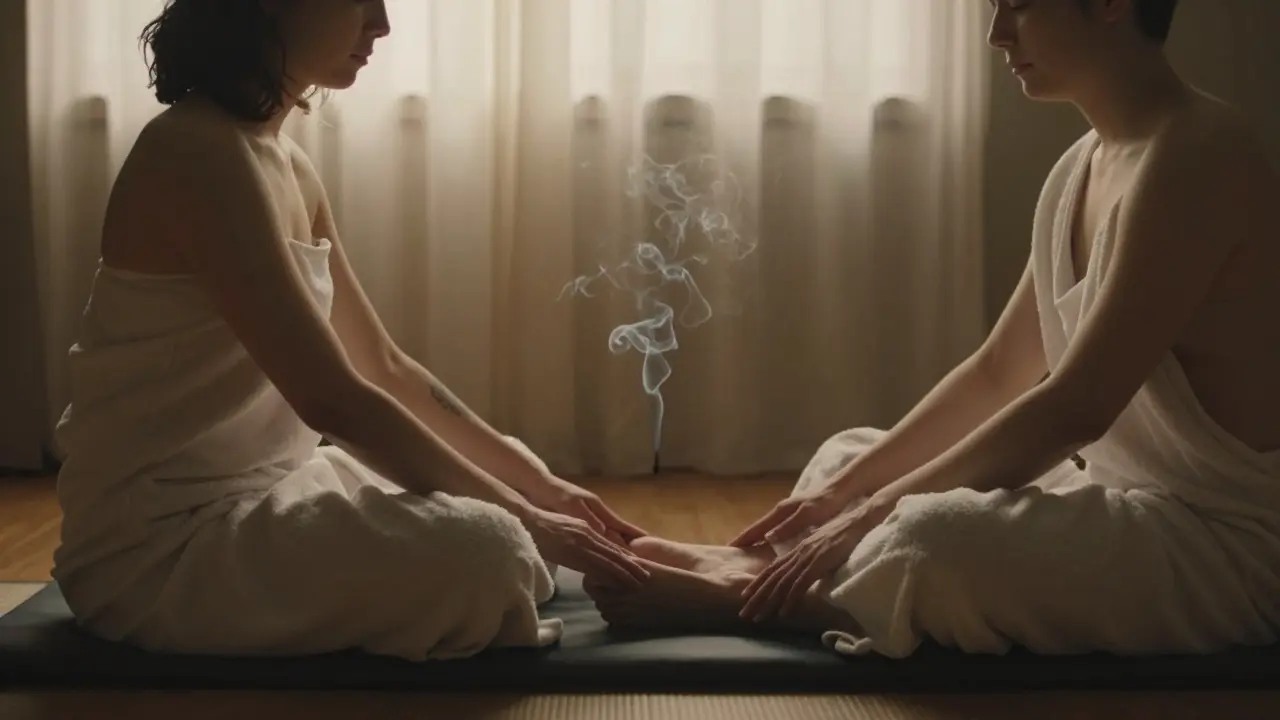
Tantric massage isn’t about sex. It’s not about orgasm. It’s not even really about the hands moving over skin. At its core, it’s a quiet, deliberate way to reconnect-with your body, with your partner, and with the space between you. If you’ve ever felt distant in a relationship, even when you’re physically close, tantric massage offers a path back. Not through words, but through presence.
What Tantric Massage Really Is
Tantric massage comes from ancient Indian and Tibetan spiritual traditions, but it’s been stripped of dogma in modern practice. It’s not a ritual you need to believe in to feel its effects. Think of it as slow, intentional touch designed to awaken awareness, not arousal. The goal isn’t to get someone off-it’s to help them feel fully alive in their body.
Unlike regular massage, where pressure and technique matter most, tantric massage focuses on rhythm, breath, and attention. The therapist-or partner-moves with patience. Fingers linger. Palms hover. Eyes stay connected. There’s no rush. No agenda. Just the quiet space between one breath and the next.
Studies in somatic psychology show that slow, non-goal-oriented touch can lower cortisol levels and increase oxytocin-the bonding hormone. That’s why people often cry during tantric sessions. Not because it’s sad, but because they’re finally feeling safe enough to let go.
How It Builds Emotional Intimacy
Most couples stop touching in meaningful ways after a few years. Hugs become quick. Kisses turn routine. Sex becomes a chore or a release valve. Tantric massage flips that script.
One couple I worked with in Birmingham-both in their early 40s-hadn’t held hands without checking their phones in over a year. After three sessions of tantric massage together, they started talking again. Not about bills or kids. About how they felt when their partner’s hand rested on their chest. About the warmth, the stillness, the absence of pressure.
The magic isn’t in the technique. It’s in the permission. Permission to be seen. Permission to feel without performing. Permission to be silent and still, together.
What Happens During a Session
A typical session lasts 60 to 90 minutes. You lie fully clothed or draped in a towel. The room is warm, dim, quiet. Incense or essential oils might be used-not to mask scent, but to ground the senses.
The practitioner begins with light contact on the back, feet, or hands. No lubricant at first. Just skin meeting skin. Then, slowly, the touch expands. Arms, legs, shoulders. The abdomen. The face. But never the genitals-unless both people explicitly agree, and even then, it’s not about stimulation. It’s about awareness.
Every movement is deliberate. The hands don’t glide. They settle. The breath slows. The receiver is encouraged to notice where tension lives, where warmth spreads, where the mind tries to escape. If thoughts come up-about work, about past hurts, about how awkward this feels-that’s normal. The practice isn’t to stop thinking. It’s to notice the thoughts without reacting.
Why It’s Different From Other Massage Types
Swedish massage? It’s about relaxation. Deep tissue? It’s about pain relief. Sports massage? Recovery. Tantric massage? It’s about transformation.
Here’s how it stacks up:
| Aspect | Tantric Massage | Swedish Massage | Deep Tissue |
|---|---|---|---|
| Primary Goal | Emotional connection, presence | Relaxation, stress relief | Release muscle tension |
| Touch Speed | Slow, deliberate | Flowing, rhythmic | Firm, focused |
| Eye Contact | Encouraged | Rare | Usually avoided |
| Goal-Oriented? | No | Partially | Yes |
| After Effects | Emotional release, deeper bonding | Physical relaxation | Reduced soreness |
Most massage therapists don’t talk during sessions. Tantric practitioners often do-quietly, gently. Asking, "Where do you feel that?" or "What does that remind you of?" It’s not therapy. But it opens the door for it.

Can You Do It With a Partner?
Absolutely. In fact, many couples find it more powerful when shared.
Start simple. Set aside 20 minutes. No phones. No distractions. One person lies down. The other sits beside them, breathing slowly. Begin with the feet. Use your palms, not your fingers. Let your touch be soft, warm, unhurried. Don’t try to fix anything. Don’t try to please. Just be there.
After five minutes, switch roles. No talking. Just touch. Then, when it’s over, sit together. Look at each other. Ask: "What did you notice?" Don’t judge the answer. Just listen.
It’s not about getting it right. It’s about showing up. And showing up, again and again, is how real intimacy grows.
Who Benefits Most?
Tantric massage isn’t for everyone-and that’s okay.
It helps people who:
- Feel disconnected from their bodies after trauma or illness
- Struggle with performance anxiety in sex
- Have lost physical closeness in a long-term relationship
- Feel emotionally numb or stuck in routines
- Want to deepen intimacy without adding more pressure
It’s not for people looking for a quick fix. Or those who think it’s a sexual technique. Or anyone who expects to feel "high" or euphoric. The benefits are quiet. Subtle. Lasting.
One woman I worked with after cancer treatment said, "I didn’t know I could feel safe in my own skin again." She didn’t cry during the session. She just smiled. And for the first time in years, she held her husband’s hand without thinking about what she had to do next.
What to Look For in a Practitioner
There’s no official certification for tantric massage. That means anyone can call themselves a tantric practitioner. So trust your gut.
Ask:
- Do you have training in somatic or trauma-informed touch?
- How do you handle boundaries?
- Do you work with couples?
- What’s your approach to consent?
Good practitioners don’t push. They don’t promise enlightenment. They create space. They check in. They let you lead. If someone talks about "energy channels" or "chakras" like it’s magic, walk away. Real tantric work is grounded in the body, not mysticism.
Look for people with backgrounds in massage therapy, psychotherapy, or bodywork. Many are trained in Somatic Experiencing, Hakomi, or Sensorimotor Psychotherapy. Those are solid foundations.
What to Expect After Your First Session
Some people feel light, calm, or deeply relaxed. Others feel raw. Emotional. Even angry. That’s normal. Tantric massage doesn’t create new feelings-it uncovers ones you’ve buried.
You might cry. You might laugh. You might not say anything at all. That’s okay. The work doesn’t end when the session does. Give yourself time. Drink water. Avoid screens. Sleep if you can.
Most people report feeling more present in their daily lives after a few sessions. They notice the warmth of sunlight. The texture of their partner’s skin. The quiet sound of breathing. Small things. But they matter.
Why This Matters Now
In a world that rewards speed, productivity, and constant stimulation, tantric massage is radical. It says: You don’t have to do anything to be worthy of touch. You don’t have to perform. You don’t have to fix yourself. You just have to be here.
That’s not just healing. It’s revolutionary.
It’s not about learning a technique. It’s about remembering how to be human-with yourself, and with someone else.
Is tantric massage sexual?
No, tantric massage is not sexual. While it involves touch and can lead to heightened awareness of the body, its goal is not arousal or orgasm. It’s about presence, connection, and emotional release. Any sexual activity is not part of the practice unless both parties explicitly agree-and even then, it’s approached with the same slow, non-goal-oriented intention.
Can I do tantric massage with my partner at home?
Yes, you can. Many couples start with simple 20-minute sessions: one person lies down, the other touches slowly-feet, arms, back-with no agenda. The key is presence, not technique. Turn off phones, breathe together, and just be. No words needed. Just touch and attention.
Do I need to be spiritual to benefit from tantric massage?
No. While tantric massage has roots in spiritual traditions, modern practice is secular. You don’t need to believe in chakras, energy, or reincarnation. The benefits come from slow touch, deep breathing, and focused attention-all things anyone can experience, regardless of belief.
How many sessions does it take to feel a difference?
Some people feel a shift after one session. Others need three to five. It depends on how disconnected you feel, how much emotional weight you’re carrying, and how open you are to receiving. There’s no timeline. The goal isn’t to "fix" yourself-it’s to reconnect, slowly and safely.
Is tantric massage safe for trauma survivors?
Yes, when done by a trained practitioner who understands trauma-informed care. Consent is non-negotiable. You control the pace, the touch, and the boundaries. Many trauma survivors find tantric massage helps them reclaim safety in their bodies-not by forcing them to relax, but by letting them choose when and how to open up.
Next Steps
If you’re curious, start small. Try a 10-minute touch session with your partner-just hands on shoulders, no words. Notice how it feels. Then try again tomorrow. And the day after.
If you want professional support, look for a massage therapist with training in somatic or body-centered therapy. Ask about their approach to boundaries and consent. Trust your instincts.
This isn’t about becoming better at touch. It’s about remembering that touch, when given with care, is one of the most powerful ways we heal-not just our bodies, but our hearts.
 Health and Wellness