
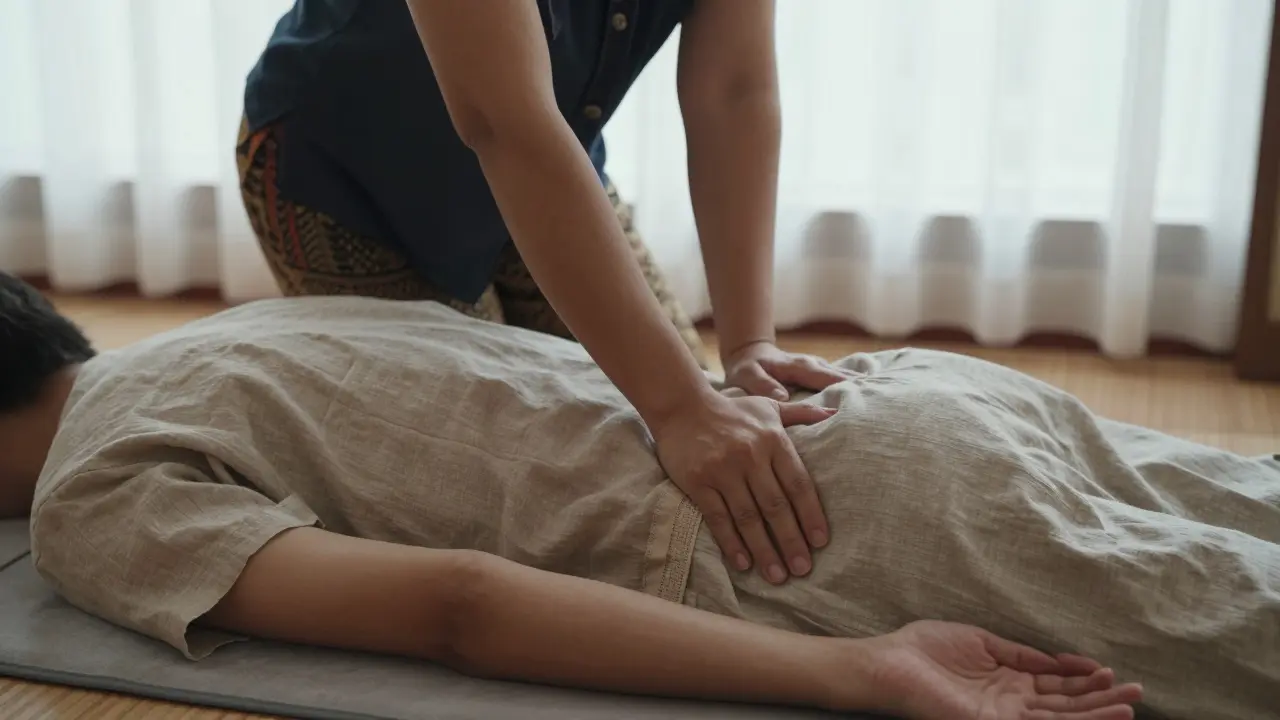
Think of Thai massage as yoga you don’t have to do yourself. It’s not just a back rub. It’s a full-body experience that moves you through stretches, deep pressure, and rhythmic compression - all while you lie there, completely relaxed. Originating in Thailand over 2,500 years ago, this ancient practice was developed by Buddhist monks who combined Ayurvedic principles, acupressure, and assisted yoga postures. Today, it’s one of the most sought-after therapies worldwide - and for good reason.
What Makes Thai Massage Different?
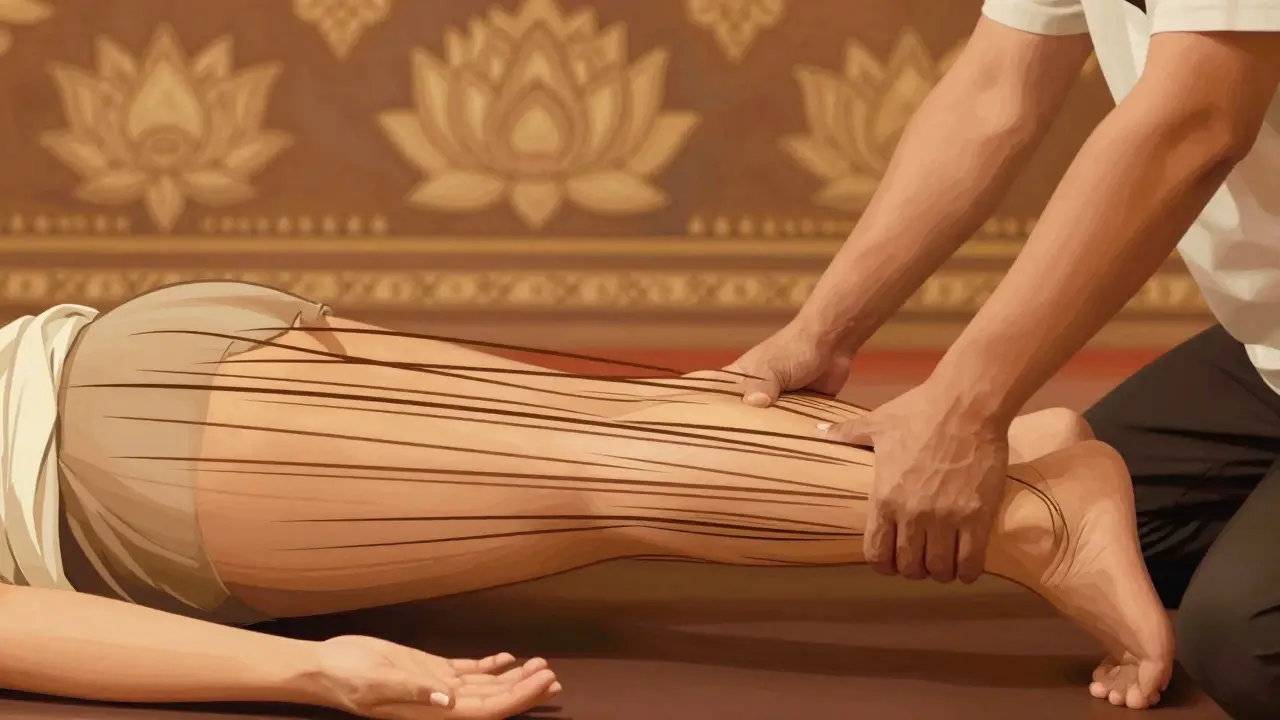
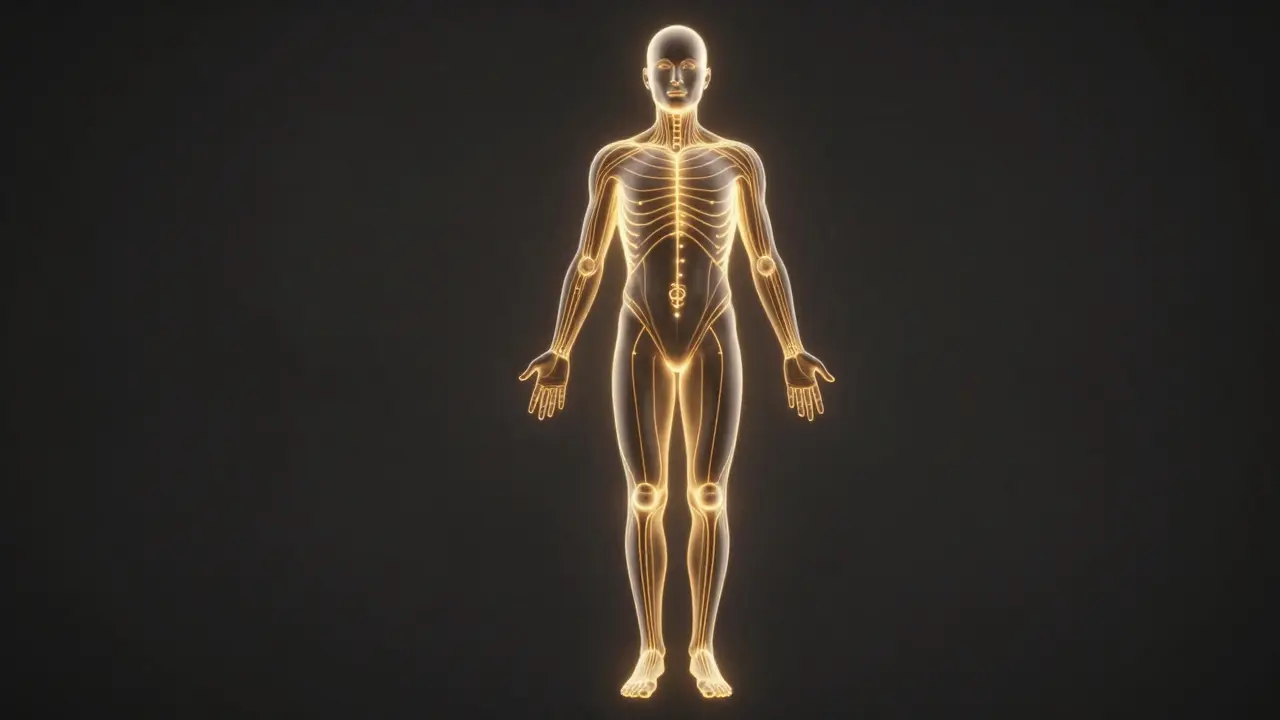
Most massages focus on muscles. Thai massage works on energy lines - called sen lines - that run through the body. There are 10 main sen lines, similar to meridians in traditional Chinese medicine. Practitioners use their hands, thumbs, elbows, knees, and even feet to apply pressure along these lines. You won’t be lying on a table with oil. You’ll be on a mat on the floor, fully clothed in loose, comfortable clothing.
The session usually lasts 60 to 90 minutes. No oils. No music (though some places play soft ambient sounds). Just you, the therapist, and the slow, intentional movement of your body through stretches you couldn’t do on your own. It’s not a gentle spa treatment. It’s deeper. More active. More transformative.
How Thai Massage Supports Your Health
People often come for relaxation. They stay for the health benefits.
- Improved flexibility: A 2021 study published in the Journal of Bodywork and Movement Therapies found that participants who received weekly Thai massage for eight weeks increased their hamstring flexibility by 32% - without doing any stretching on their own.
- Reduced muscle tension: The rhythmic compression and stretching release tightness in areas like the lower back, shoulders, and hips. Many people with chronic desk-job stiffness report feeling like they’ve been reset after one session.
- Better circulation: Pressure along the sen lines helps move blood and lymph. This means less swelling, faster recovery after workouts, and even clearer skin.
- Lower stress levels: One session can drop cortisol levels by up to 25%, according to research from Chiang Mai University. That’s comparable to a weekend getaway.
- Joint mobility: Thai massage gently opens up stiff joints. People with mild arthritis or frozen shoulder often notice improved range of motion after just a few sessions.
It’s not a cure-all. But if you’re looking for something that doesn’t just numb pain - it actually helps your body repair itself - Thai massage delivers.
The Science Behind the Stretches
Why does it work so well? It’s because Thai massage combines passive stretching with deep tissue work. When your body is held in a stretch by someone else, your nervous system relaxes more deeply than when you stretch yourself. You can’t fight it. You can’t overdo it. You just let go.
The pressure applied during Thai massage triggers the parasympathetic nervous system - the part of your body that says, “It’s safe to rest.” This shifts your body from fight-or-flight mode into repair mode. Blood flow increases. Inflammation decreases. Muscles begin to release tension they’ve held for years.
Unlike Swedish massage, which focuses on relaxation, Thai massage is more like physical therapy disguised as luxury. It’s why athletes, dancers, and people recovering from injury swear by it.
Who Should Try It - And Who Should Skip It
Thai massage isn’t for everyone. It’s intense. It’s deep. It’s not a “gentle” experience.
Great for:
- People with tight hips, shoulders, or lower back
- Those who sit all day at a desk
- Anyone recovering from mild muscle strain
- People who want to improve flexibility without going to the gym
- Those seeking stress relief beyond aromatherapy candles
Not recommended for:
- People with recent fractures or severe osteoporosis
- Those with acute inflammation or infections
- Women in the first trimester of pregnancy (unless cleared by a doctor)
- People with severe high blood pressure or blood clots
If you’re unsure, talk to your therapist. A good Thai massage practitioner will ask about your health history - and won’t push you into anything uncomfortable.
What to Expect During Your First Session
Your first session might feel strange. Maybe even a little awkward. That’s normal.
You’ll arrive in loose clothing. The therapist will greet you quietly. No chitchat. You’ll lie on a padded mat on the floor. They’ll begin with gentle pressure on your feet - then move up your legs, hips, back, arms, and neck. You’ll be pulled, twisted, and stretched - but never forced. If something hurts, say so. A skilled therapist will adjust immediately.
Some people cry. Others laugh. Some fall asleep. All are normal reactions. Your body is releasing tension it didn’t even know it was holding.
Afterward, you’ll feel light. Maybe a little sore - like after a good workout. Drink water. Don’t rush into a meeting or a workout. Let your body settle. Many people say they feel taller, looser, and calmer for days after.
Where to Find Authentic Thai Massage
Not all “Thai massage” is real Thai massage. In some spas, it’s just a mix of Swedish and deep tissue with a few stretches thrown in.
Look for these signs of authenticity:
- Therapists wear loose, traditional Thai clothing
- You’re massaged on a floor mat, not a table
- No oils or lotions are used
- The session includes full-body stretching - not just back and shoulders
- The therapist uses their body weight - not just hands - to apply pressure
In Australia, cities like Sydney, Melbourne, and Brisbane have dedicated Thai massage studios. Ask for practitioners trained in Chiang Mai or Bangkok. Many Thai therapists have trained at Wat Pho - the birthplace of Thai massage in Bangkok. That’s a good sign.
How Often Should You Get It?
For general health: once every 3 to 4 weeks.
If you’re dealing with chronic tightness or pain: once a week for 4-6 weeks, then taper off.
Like exercise, consistency matters. One session won’t fix a lifetime of slouching. But five sessions? You’ll notice your posture change. Your breathing will deepen. You’ll move differently.
Thai Massage and Mental Wellbeing
It’s not just physical. Thai massage helps quiet the mind.
Because you’re not in control - you’re being guided - your brain stops racing. You can’t check your phone. You can’t plan your next meeting. You just breathe. That alone can reset anxiety, improve sleep, and help with mild depression.
Many therapists practice with mindfulness. Their hands move slowly. Their presence is calm. You don’t just leave feeling looser - you leave feeling quieter inside.
Final Thoughts
Thai massage isn’t a luxury you treat yourself to once a year. It’s a tool for long-term health. It’s cheaper than a gym membership. More effective than stretching alone. And far more grounding than any meditation app.
If you’ve ever felt stiff, stressed, or just stuck - give it a try. Not because it’s trendy. But because your body remembers how to move. And Thai massage helps it remember.
 Health and Wellness