
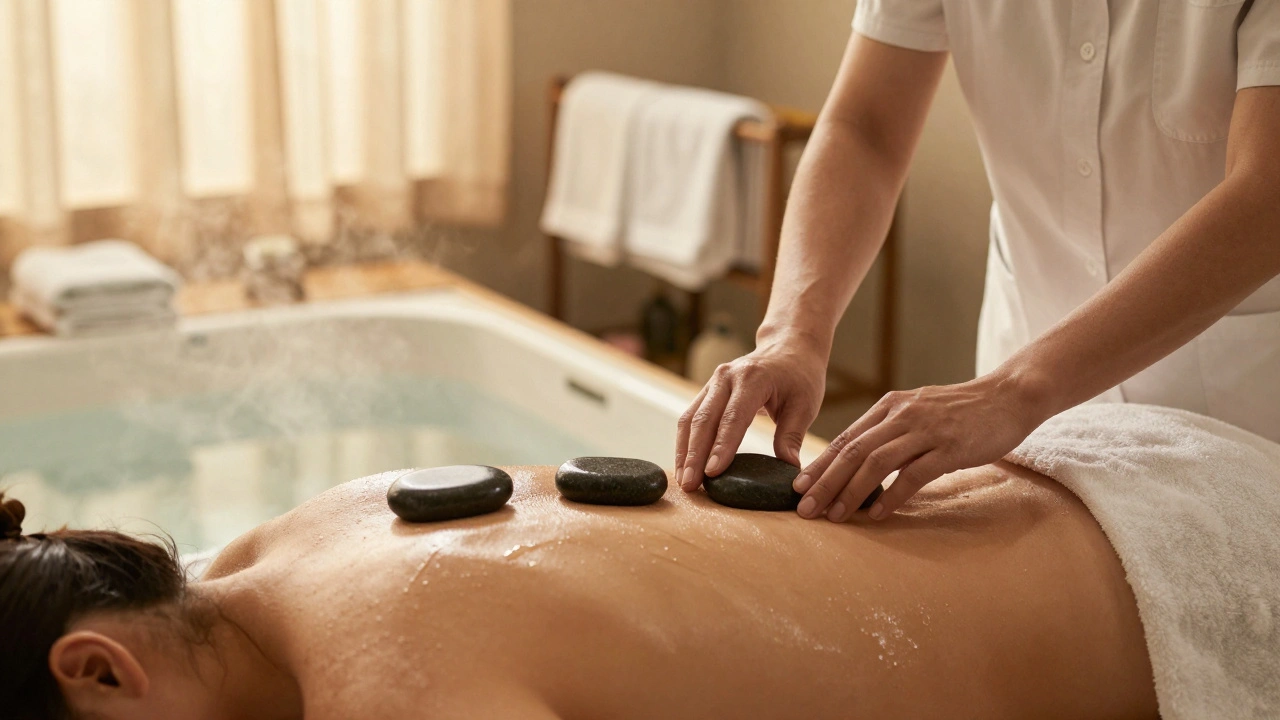
Stone massage isn’t just a spa trend-it’s a centuries-old practice that uses heated or cooled stones to ease muscle tension, improve circulation, and calm the nervous system. But if you’re new to it, or even if you’ve tried it once, you might not know what actually makes it work-or what could go wrong. Too hot? Too cold? Wrong stones? Bad technique? These mistakes can turn a relaxing session into a painful one. Here’s what you need to do-and what you absolutely shouldn’t do-to get real results without risking burns, bruising, or worse.
Do Use the Right Stones
Not all rocks are created equal. The best stones for massage are basalt, a type of volcanic rock that holds heat evenly and retains it for a long time. Basalt stones are smooth, dense, and naturally rounded from river erosion. They’re ideal because they warm up slowly and cool down slowly, giving you a steady, soothing temperature. Avoid marble, quartz, or any stone that cracks easily or doesn’t hold heat well. Some therapists use cold stones made from jade or stainless steel for lymphatic drainage, but those are advanced techniques. Stick to basalt unless you’re trained.
Size matters too. Large stones (about 4-6 inches) go on the back, legs, and feet. Smaller ones (1-2 inches) fit between fingers, along the spine, or under the neck. Stones should feel comfortable in your hand-not too heavy, not too sharp. If a stone feels jagged, return it. A good stone should glide like butter.
Don’t Skip the Temperature Check
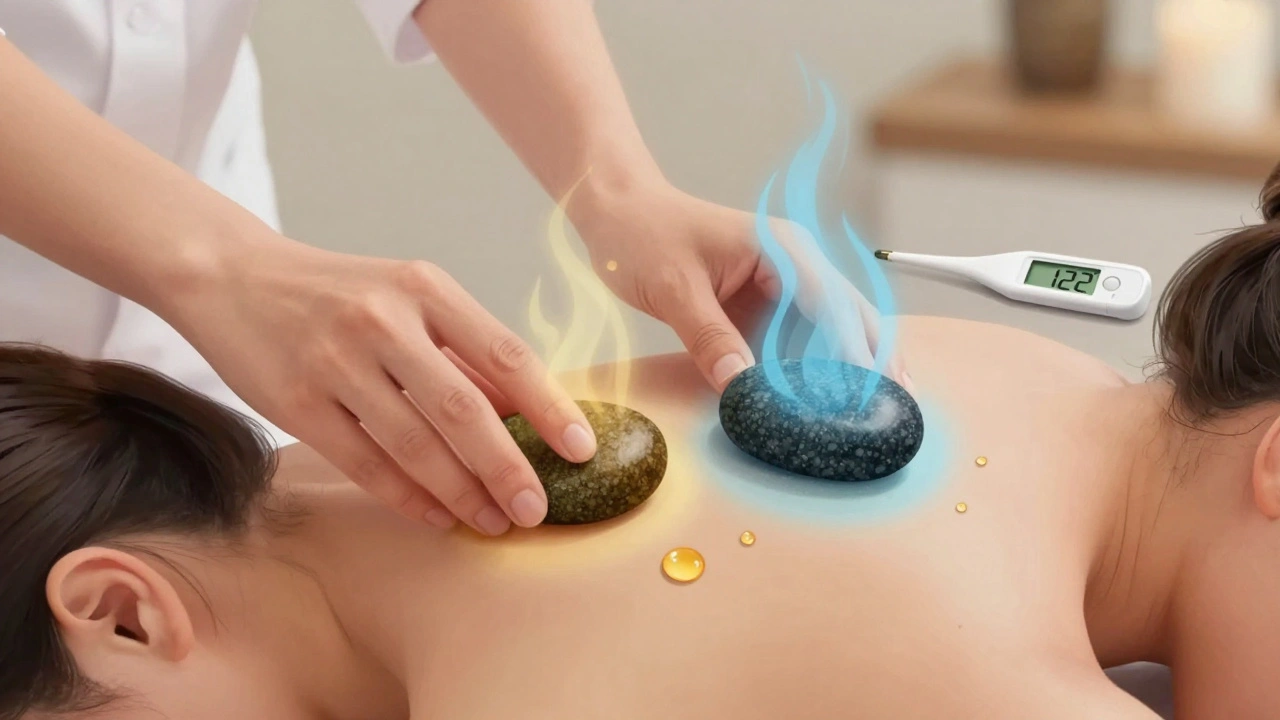
Hot stone massage sounds relaxing, but too much heat can cause serious burns. The ideal temperature range is between 110°F and 130°F (43°C-54°C). Anything above 135°F is dangerous. Most spas use a water bath with a thermometer to keep stones at a safe level. If you’re doing this at home, never guess. Use a digital thermometer. Test each stone on your inner wrist before placing it on your client’s skin. That spot is more sensitive than your palm. If it feels uncomfortably hot on your wrist, it’s too hot for their back.
And don’t assume the stones stay warm. They cool fast on skin. Reheat them every 5-7 minutes. Keep a second set warming in a water bath so you can swap them out smoothly. Never leave stones on skin for more than 10 minutes at a time. Even at the right temperature, prolonged contact can cause thermal injury-especially on thin skin or areas with poor circulation.
Do Prepare the Skin and Environment
Stone massage works best on clean, dry skin. Oils or lotions are essential-they reduce friction and let stones glide. Use a high-quality massage oil with a medium viscosity: sweet almond, jojoba, or grapeseed oil work well. Avoid thick creams or petroleum-based products. They trap heat and can cause overheating under the stone.
Warm the room. Cold air makes muscles tense, which defeats the whole purpose. Keep the room at 75-78°F (24-26°C). Use a space heater if needed. Have clean, dry towels ready-not just for cleanup, but to wrap stones between uses. Never place a hot stone directly on a cold towel or table. Always pre-warm your towels in a dryer or use heated towel racks. Cold towels shock the skin and disrupt the flow of the session.
Don’t Use Stones on Certain Areas or People
There are clear red zones where stones should never go. Never place stones on the:
- Abdomen of pregnant women
- Open wounds, rashes, or recent scars
- Varicose veins or areas with blood clots
- Thyroid gland (front of neck)
- Spinal fusion sites or recent surgical incisions
People with diabetes, neuropathy, or circulatory disorders are at higher risk of burns because they can’t feel heat properly. If someone says, “I don’t feel much,” take that seriously. Back off. Use cooler stones or skip the heat altogether. Same goes for people on blood thinners-they bruise easily. Cold stones can be used instead for swelling or inflammation, but only if you know what you’re doing.
And never use stones on children under 12. Their skin is too thin. Elderly clients need extra care too. Test temperature often, use fewer stones, and keep sessions shorter-30 minutes max.
Do Combine With Gentle Pressure
Stone massage isn’t about deep tissue pounding. It’s about letting the heat do the work. Let the stone rest on the muscle. Use light, gliding strokes. Think of it like a warm blanket moving slowly over your body. If you’re pushing hard, you’re doing it wrong. The heat relaxes the tissue. Your hands just guide the stone. Overpressure can cause micro-tears or bruising, especially on sensitive areas like the shoulders or inner thighs.
Use the stones as extensions of your hands. Hold them with both hands for balance. Use one stone to glide while the other rests to maintain warmth. Rotate stones often. Don’t rely on one stone for too long. A skilled therapist will use 15-20 stones in a single session, swapping them out fluidly.
Don’t Rush the Process
A full hot stone massage should take at least 60 minutes. Anything shorter and you’re just warming skin, not releasing deep tension. The first 10-15 minutes should be slow-just placing stones on key points: spine, feet, hands, forehead. Let the client adjust. Then begin gentle strokes. Don’t jump into deep pressure too soon. The body needs time to relax into the heat.
Same goes for cooling down. Don’t pull stones away quickly. Let them cool naturally on the skin. After the session, cover the client with a warm blanket for 5-10 minutes. This helps the body regulate temperature and prevents chills. Skipping this step can lead to muscle stiffness or even a headache.
Do Stay Hydrated
Heat opens up your blood vessels and increases circulation. That’s good-but it also means your body loses fluids faster. Always offer water before, during (if possible), and after the session. Dehydration can make you feel dizzy, tired, or nauseous after a stone massage. It’s not just about feeling good-it’s about preventing side effects.
Some clients report mild headaches or fatigue after their first session. That’s normal if they didn’t drink enough water. Others feel euphoric. That’s the endorphin release from deep relaxation. Either way, hydration is non-negotiable.
Don’t Use Stones as a Substitute for Medical Care
Stone massage can ease chronic pain, reduce stress, and improve sleep. But it won’t cure arthritis, fix a pinched nerve, or replace physical therapy. Don’t tell clients it will. Be clear: it’s a complementary therapy, not a treatment. If someone has ongoing pain, refer them to a physiotherapist or doctor. Your role is to support, not diagnose.
And if a client comes in with unexplained swelling, numbness, or fever-stop. Don’t massage them. Send them to a clinic. A stone massage could mask symptoms and delay diagnosis.
Do Clean and Store Stones Properly
After each use, wash stones with warm water and mild soap. Use a soft brush to remove oil residue. Rinse well. Dry completely before storing. Never leave them wet-they can crack or grow mold. Store them in a clean, dry container lined with soft fabric. Keep them away from direct sunlight. UV rays can weaken the stone over time.
Check stones monthly for cracks or chips. Even a tiny fracture can trap bacteria or cause sharp edges. If a stone looks worn or feels rough, retire it. It’s not worth the risk.
Don’t Skip Training
Yes, you can buy a stone massage kit online for $50. But that doesn’t make you qualified. Proper training covers anatomy, contraindications, temperature control, and stroke techniques. Without it, you’re gambling with someone’s comfort-and safety. Look for certified courses from massage therapy schools. Many offer 8-16 hour workshops. It’s worth every dollar.
If you’re a therapist, keep your skills updated. Stone massage techniques evolve. New research on thermal therapy and nervous system response comes out every year. Stay informed. Your clients deserve more than a YouTube tutorial.
What Happens When You Get It Right?
When all the do’s line up and the don’ts are avoided, the results are powerful. Clients report deeper sleep, less muscle stiffness, reduced anxiety, and even fewer headaches. One study from the Journal of Bodywork and Movement Therapies found that people with chronic lower back pain saw a 40% reduction in discomfort after six weekly stone massage sessions. That’s not magic. It’s science.
Heat relaxes tight fascia. It increases blood flow. It triggers the parasympathetic nervous system-the part that says, “You’re safe. You can rest.” That’s why stone massage feels so different from regular massage. It’s not just touch. It’s warmth, rhythm, and timing working together.
Do it right, and your clients will come back. Do it wrong, and they’ll never trust another stone again.
Can I use river rocks I found for stone massage?
No. River rocks may look smooth, but they’re not guaranteed to be basalt or safe for heat retention. Many contain minerals that can crack when heated or release toxins. Always use professionally sourced, tested basalt stones designed for massage therapy.
Is hot stone massage safe during pregnancy?
It can be, but only with major adjustments. Avoid the abdomen and lower back entirely. Use only lukewarm stones (under 115°F), limit sessions to 30 minutes, and never apply pressure to the inner thighs or sacrum. Always consult the client’s OB-GYN first. Many therapists avoid hot stones entirely during pregnancy to reduce risk.
How often should I get a stone massage?
For general relaxation, once a month is ideal. If you have chronic pain or high stress, weekly sessions for 4-6 weeks can help reset your nervous system. After that, taper to every 2-4 weeks. Too frequent (more than twice a week) can overstimulate the body and lead to fatigue.
Can I do stone massage at home?
Yes, but only if you follow safety rules. Use a thermometer, warm the room, avoid sensitive areas, and never leave stones unattended. Start with simple techniques-stones on feet and back only. Don’t attempt full-body sessions without training. Home sessions should be short: 20-30 minutes max.
Why do some stones feel colder than others?
This happens when stones aren’t properly heated or cooled. Cold stones are sometimes used for inflammation or after a hot session to balance circulation. But if a stone feels cold mid-session, it’s likely underheated. Always keep a backup set warming. Uneven temperatures disrupt the therapeutic effect.
Next Steps
If you’re new to stone massage, start small. Buy a basic kit with 6-8 basalt stones, a thermometer, and a heating unit. Practice on yourself first. Learn how your body reacts. Then try it on a trusted friend. Track how they feel the next day-sleep quality, pain levels, mood. That’s your feedback loop.
If you’re a professional, invest in continuing education. Attend a workshop. Learn how to adapt stone massage for athletes, seniors, or trauma survivors. The more you know, the more value you offer-and the safer your clients will be.
Stone massage is one of the most grounding therapies out there. It connects body and warmth in a way few other treatments do. But like any tool, it demands respect. Do the work. Follow the rules. And let the stones do their quiet, powerful job.
 Health and Wellness