

That sharp, localized pain in your shoulder blade that flares up when you reach for a high shelf? Or the dull ache at the base of your neck that makes focusing on work nearly impossible? These are often not just "tight muscles." They are likely trigger points, hyperirritable spots in skeletal muscle that are associated with palpable nodules in taut bands. Trigger point massage is a specialized form of manual therapy designed to deactivate these painful spots by applying sustained pressure to restore normal tissue function. Unlike standard relaxation massages that focus on general circulation and stress reduction, this technique targets specific anatomical locations. If you have ever felt like no amount of stretching fixes a certain spot, you have probably encountered active or latent trigger points. Understanding how they form and how targeted pressure can resolve them is key to managing chronic musculoskeletal pain without relying solely on medication.
What Are Trigger Points and Why Do They Form?
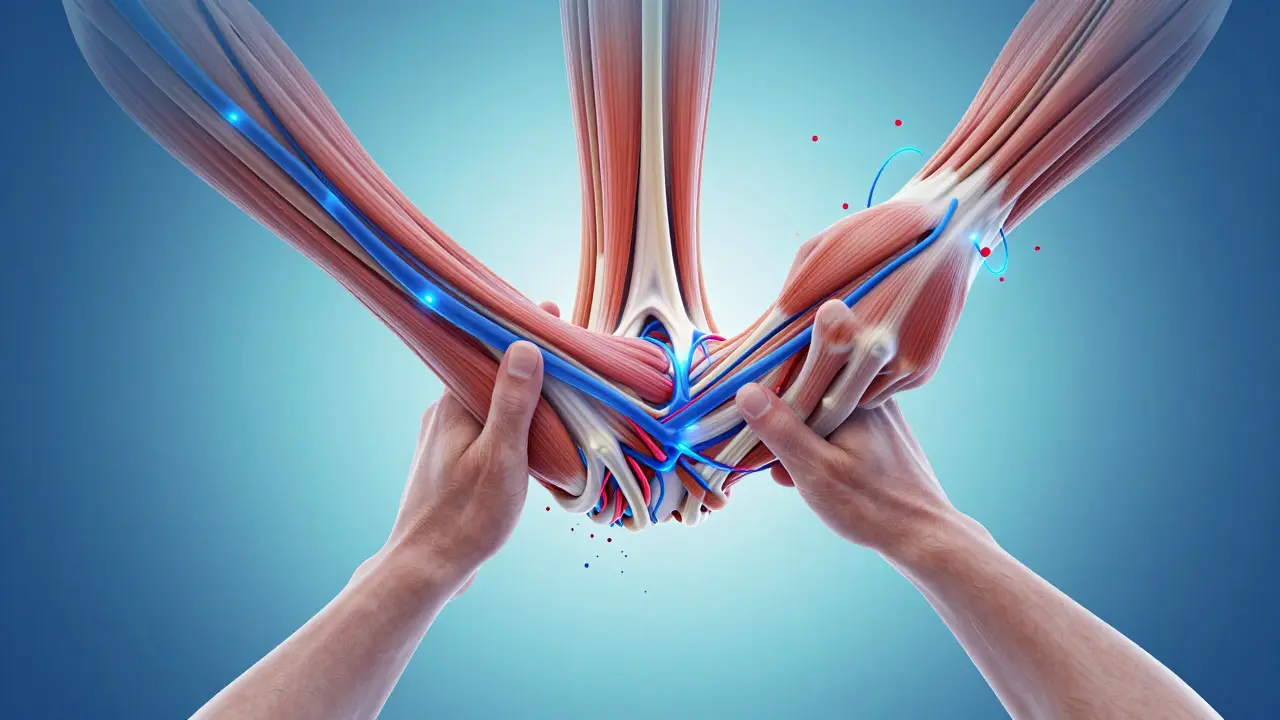
To understand the treatment, you first need to understand the problem. A trigger point is essentially a knot in the muscle fiber where the sarcomeres (the basic units of muscle contraction) remain contracted even when the rest of the muscle is relaxed. This creates a localized area of ischemia, meaning reduced blood flow, which leads to the accumulation of metabolic waste products like lactic acid and inflammatory mediators. This buildup sensitizes nerve endings, causing local pain and referred pain in other areas.
These knots do not appear out of nowhere. They usually result from three main factors:
- Overuse or Repetitive Strain: Typing for eight hours a day, holding a phone at an awkward angle, or lifting weights with poor form.
- Acute Trauma: A sudden injury, such as a whiplash accident or a fall, can cause protective muscle guarding that evolves into trigger points.
- Postural Stress: Slouching while sitting or sleeping in an unsupported position places constant tension on specific muscle groups, particularly the trapezius and upper back.
It is crucial to distinguish between active and latent trigger points. Active points cause pain at rest and limit range of motion. Latent points are tender but only become painful under deep pressure; they are often precursors to active issues if left unaddressed.
How Trigger Point Massage Works Mechanically
The core principle behind this therapy is mechanical deactivation. When a therapist applies firm, sustained pressure to a trigger point, several physiological changes occur simultaneously. First, the pressure mechanically stretches the shortened muscle fibers, helping to elongate the taut band. Second, it increases local blood flow, flushing out the accumulated metabolic waste and delivering fresh oxygen and nutrients. Third, it stimulates mechanoreceptors in the tissue, which send signals to the brain to inhibit pain transmission via the gate control theory of pain.
This process is distinct from deep tissue massage, which generally works along the length of the muscle to break down adhesions. In contrast, trigger point therapy focuses on isolating and treating specific nodules. The goal is not just to relax the muscle, but to reset its neurological firing pattern so it can return to a resting state.
Common Areas Treated and Referred Pain Patterns
One of the most confusing aspects of trigger points is referred pain. You might feel pain in your jaw, but the source is actually in your sternocleidomastoid muscle in the neck. Knowing common patterns helps both patients and therapists identify the true source of discomfort.
| Muscle Group | Typical Location of Knot | Referred Pain Area | Common Cause |
|---|---|---|---|
| Trapezius | Upper neck/shoulder junction | Headache, temple pain, earache | Stress, computer use, poor posture |
| Sternocephaloid | Side of the neck | Deep eye socket, forehead, mastoid process | Whiplash, prolonged head positioning |
| Pectoralis Major | Chest near armpit | Outer arm, elbow, wrist | Push-ups, heavy lifting, hunching over desk |
| Gluteus Medius | Upper outer buttock | Lateral hip, knee, shin | Running, standing on one leg, weak core |
| Masseter | Jawline | Temple, ear, lower jaw | Teeth grinding (bruxism), clenching |
Recognizing these patterns allows for more effective self-care. For instance, if you have persistent headaches, checking the upper trapezius before reaching for painkillers might provide faster relief.
Professional vs. Self-Administered Techniques
You can receive this therapy from licensed professionals, including physical therapists, chiropractors, and certified massage therapists. Professional sessions typically involve direct pressure techniques using thumbs, elbows, or specialized tools. Indirect techniques may also be used, where the therapist positions the limb in a stretched position and applies gentle pressure to the origin of the muscle, allowing it to slowly release.
However, many people find significant relief through self-massage. This is highly effective for accessible areas like the neck, shoulders, and calves. The key to successful self-treatment is consistency and proper tool usage.
- Identify the Spot: Locate the tender nodule. It should feel like a small marble or grain of rice embedded in the muscle.
- Apply Pressure: Use a tennis ball, lacrosse ball, or your thumb. Apply firm pressure until you feel moderate discomfort (a 5-7 on a scale of 10).
- Hold and Release: Hold the pressure for 30 to 90 seconds. You may feel the pain subside or move slightly away from the center of the pressure.
- Repeat: Perform this 3 to 5 times daily for best results. Avoid rolling over the point rapidly; sustained static pressure is more effective than quick strokes.
For hard-to-reach areas like the mid-back or glutes, a foam roller or percussion gun can be helpful. Percussion devices deliver rapid, short bursts of vibration that can help penetrate deeper tissues without requiring extreme force from the user.

Safety, Contraindications, and When to See a Doctor
While generally safe, trigger point massage is not suitable for everyone. It is important to consult a healthcare provider if you have certain conditions. Deep pressure should be avoided in cases of:
- Recent acute injury (first 48-72 hours) where inflammation is high.
- Blood clotting disorders or if you are taking anticoagulant medications.
- Osteoporosis, where fragile bones could be damaged by deep pressure.
- Open wounds, infections, or skin rashes in the treatment area.
Building a Long-Term Pain Management Strategy
Treating the symptom (the knot) is only half the battle. To prevent recurrence, you must address the root cause. This involves a multi-faceted approach:
- Ergonomic Adjustments: Ensure your workstation height is correct. Your elbows should be at 90 degrees, and your screen should be at eye level.
- Stretching and Mobility: Incorporate daily stretches for the affected muscle groups. For example, chest openers for pectoral tightness or hip flexor stretches for gluteal issues.
- Hydration and Nutrition: Dehydrated muscles are more prone to cramping and knot formation. Adequate magnesium intake also supports muscle relaxation.
- Stress Management: Since stress causes muscle tension, practices like deep breathing, yoga, or meditation can reduce the overall load on your musculature.
 Health and Wellness