

Ever felt a sharp, aching pain in your shoulder that won’t go away-even after stretching or resting? Or maybe a deep throb in your lower back that makes sitting unbearable? You’re not just tense. You might be dealing with trigger points-tight, sensitive spots in your muscles that act like tiny landmines, sending pain signals far from where they live.
What Exactly Are Trigger Points?
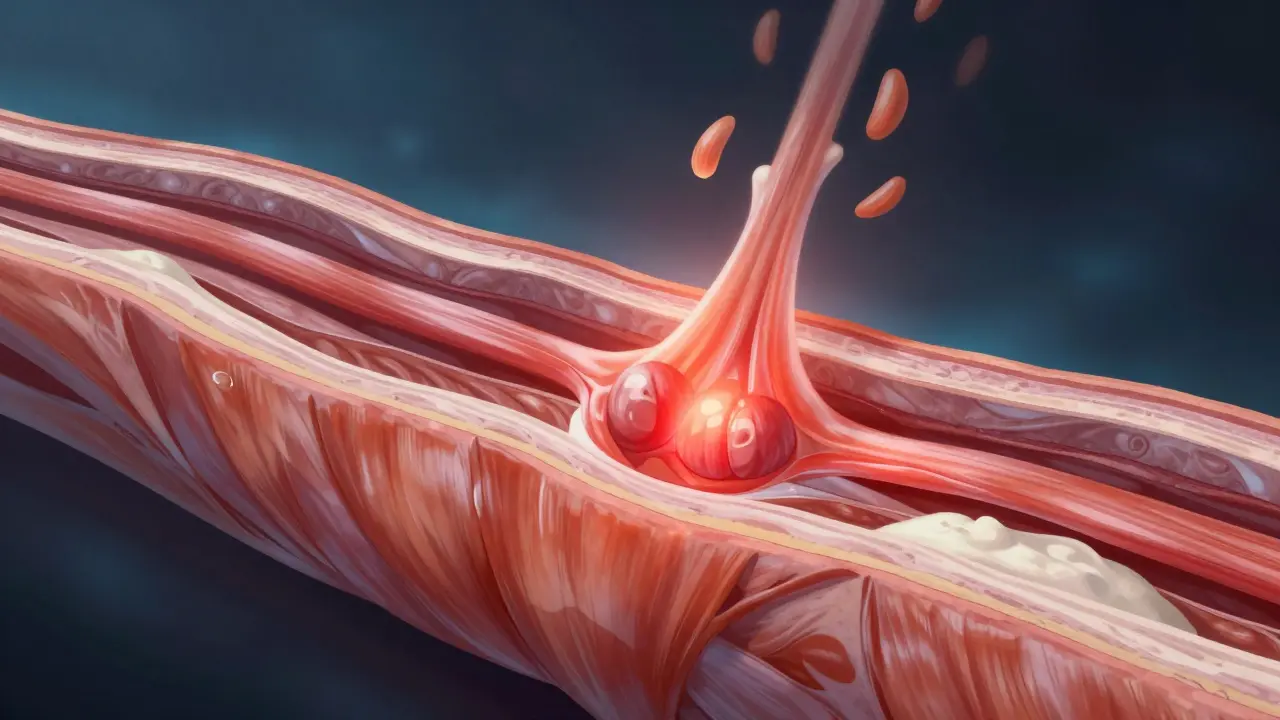
Trigger points aren’t just sore spots. They’re hyperirritable bands of muscle fiber, often called muscle knots, that form when muscle tissue gets stuck in a contracted state. Unlike regular soreness from a workout, trigger points don’t fade with rest. They persist, and worse-they refer pain. A trigger point in your neck might make your head hurt. One in your hip could feel like a sciatic nerve flare-up.
Research from the Journal of Orthopaedic & Sports Physical Therapy shows that over 85% of chronic pain cases involve active trigger points. These aren’t myths. They’re measurable. Doctors use pressure thresholds and referred pain maps to diagnose them. And the good news? They respond incredibly well to targeted pressure-exactly what trigger point massage delivers.
How Trigger Point Massage Works
Think of trigger point massage like resetting a stuck button. When a muscle stays clenched, it cuts off its own blood supply. That means no oxygen, no healing nutrients, and a buildup of metabolic waste. The result? Pain and stiffness.
Trigger point massage applies sustained, focused pressure-usually with fingers, thumbs, or tools-to that exact spot. This pressure temporarily cuts off blood flow, then releases it. The sudden rush of fresh blood flushes out the toxins and re-activates the muscle’s natural relaxation response. It’s not about rubbing hard. It’s about holding steady pressure until the knot softens.
Studies show that just 30-60 seconds of direct pressure can reduce pain intensity by 50% or more. The key? Consistency. One session won’t erase years of tension. But daily 5-minute routines? That’s where real change happens.
Where Trigger Points Hide (And How to Find Them)
Trigger points don’t always show up where you feel pain. Here are the most common trouble zones:
- Upper trapezius (top of your shoulders): Causes headaches and neck stiffness.
- Levator scapulae (side of your neck): Leads to shoulder blade pain and trouble turning your head.
- Gluteus medius (side of your hip): Mimics hip or knee pain.
- Quadratus lumborum (lower back): Triggers deep, constant lower back ache.
- Plantar fascia (bottom of your foot): The #1 cause of morning heel pain.
To find them, roll slowly over the area with a tennis ball or foam roller. When you hit a spot that makes you wince, hold it. Don’t move. Breathe. Wait. That’s your trigger point. It might sting at first, but the pain should ease within 30-45 seconds. If it doesn’t, you might be pressing too hard. Ease off. This isn’t torture. It’s therapy.
Tools You Can Use at Home
You don’t need a clinic to treat trigger points. Here’s what actually works:
- Tennis ball: Perfect for back, hips, and feet. Roll it under your shoulder blade or against a wall.
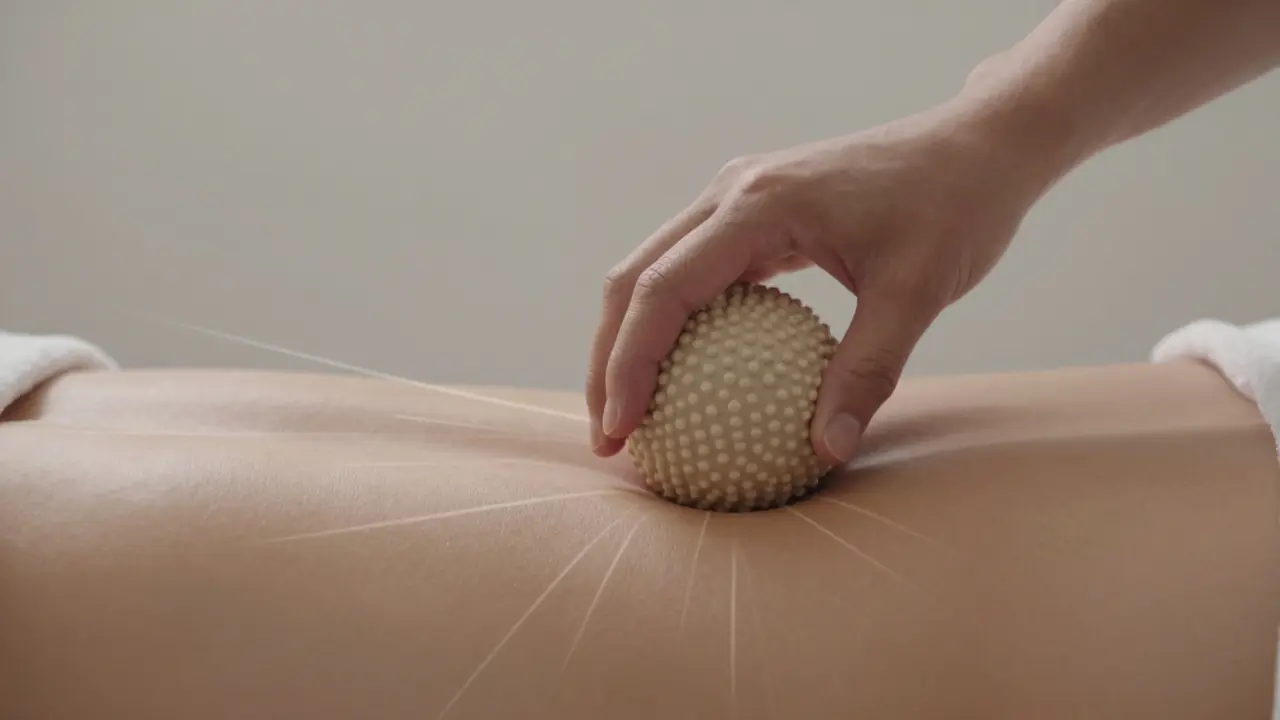
- Massage ball with spikes: Offers deeper penetration for dense muscles like glutes or calves.
- Foam roller: Great for large muscle groups like quads and hamstrings. Use slow, controlled rolls.
- Theracane: A hooked tool designed to reach hard-to-access spots like upper back and neck without needing a second person.
- Fingers and thumbs: Your own hands are still the most precise tools. Use them for the face, hands, and feet.
Pro tip: Warm up first. A hot shower or heating pad for 5 minutes makes muscles more responsive. Cold after? That helps reduce inflammation if the area feels irritated.
When Trigger Point Massage Works Best
This technique shines for:
- Chronic tension headaches
- Lower back pain without nerve involvement
- Recurring shoulder or neck stiffness
- Tennis elbow or golfer’s elbow
- Plantar fasciitis
- Repetitive strain from desk work or phone use
It’s not magic for every pain. If you have numbness, tingling, or radiating pain down your leg or arm, you could be dealing with nerve compression-not just trigger points. That needs a different approach. Same goes for acute injuries. Don’t massage a freshly pulled muscle. Wait 48 hours.
What to Avoid
People often mess this up. Here’s what not to do:
- Rolling too fast: Speed doesn’t release knots. Pressure and time do.
- Using a hard ball on soft tissue: A lacrosse ball might be too intense for your neck or upper back. Start softer.
- Pushing through sharp pain: You should feel discomfort, not agony. Think 5/10, not 9/10.
- Skipping hydration: Drink water after. Muscles need fluids to recover and release.
- Doing it once and quitting: Trigger points return if you don’t stay consistent. Treat them like brushing your teeth.
Real-Life Results: A Sydney Case
One regular client I worked with-call her Lisa-had been dealing with chronic headaches for three years. She’d tried physio, acupuncture, even Botox. Nothing stuck. Then she started massaging the trigger points in her upper traps and levator scapulae every night before bed. Just 3 minutes. A tennis ball against the wall. Within two weeks, her headaches dropped from 5 days a week to 1. By month two? Gone. No meds. No appointments. Just pressure and patience.
That’s the power of this method. It’s not flashy. It’s not expensive. But it works when done right.
Building a Daily Routine
Here’s a simple 10-minute plan you can start today:
- Warm up (2 min): Take a hot shower or use a heating pad on tight areas.
- Neck and shoulders (3 min): Roll a tennis ball between your shoulder blade and the wall. Hold on tender spots.
- Lower back (2 min): Sit on the floor, place a massage ball under your lower back, lean back slightly, and gently roll.
- Feet (2 min): Roll a golf ball under each foot. Focus on the arch.
- Hydrate (1 min): Drink a glass of water.
Do this every morning or before bed. In 30 days, you’ll notice more mobility, less stiffness, and fewer random aches.
When to See a Professional
You can do a lot yourself. But if:
- Pain lasts more than 4 weeks despite consistent self-care
- You feel numbness, tingling, or weakness
- The pain wakes you up at night
- You’ve tried everything and still no relief
Then it’s time to see a licensed massage therapist or physiotherapist trained in trigger point therapy. They’ll use advanced techniques-like ischemic compression, dry needling, or myofascial release-to get deeper than you can at home.
Can trigger point massage cause damage?
No, when done correctly. Trigger point massage is safe for most people. The key is using moderate pressure and not forcing it. Avoid it if you have open wounds, bruises, infections, or recent fractures. If you have osteoporosis, blood clotting disorders, or are pregnant, check with your doctor first.
How often should I do trigger point massage?
Daily is ideal for persistent issues. Even 5 minutes a day makes a difference. For maintenance, 3-4 times a week is enough. If you’re just starting out, aim for every other day to let your muscles adjust. Overdoing it can cause soreness or bruising-listen to your body.
Is trigger point massage the same as deep tissue massage?
No. Deep tissue massage works on broad areas with long strokes to release overall tension. Trigger point massage is hyper-focused-it targets one small knot at a time with sustained pressure. Think of it like using a scalpel instead of a sledgehammer.
Why does pressing on a knot hurt so much?
Because that spot is hypersensitive. It’s full of chemical irritants and has fewer pain receptors, so it’s wired to send signals to other areas. The pain you feel elsewhere is referred pain. Pressing on the knot temporarily overloads the nerve, resetting its sensitivity. It hurts because it’s working.
Can trigger points go away on their own?
Sometimes, but rarely. Most trigger points stay active unless you break the cycle of tension. Poor posture, stress, overuse, or lack of movement keeps them locked in. Without intervention, they’ll keep causing pain and limiting your movement. They don’t vanish with rest alone.
Final Thought
You don’t need expensive treatments or complicated gadgets to fix chronic muscle pain. Sometimes, all it takes is knowing where to press-and having the patience to hold it. Trigger point massage is one of the most underrated tools in pain management. It’s cheap, effective, and entirely under your control. Start small. Stay consistent. And let your body tell you where it needs healing.
 Health and Wellness