
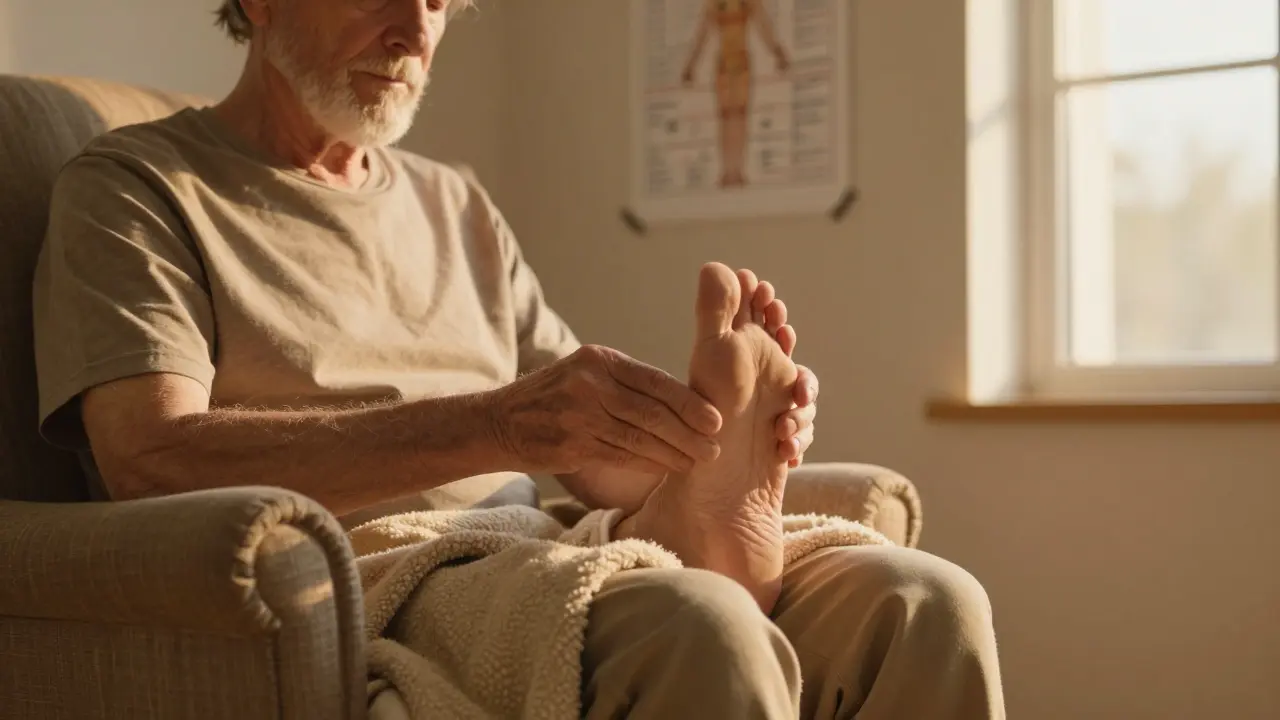
Most people think of reflexology as just a foot massage. But if you’ve ever had your toes pressed and felt a sudden release in your shoulder, you know it’s more than that. Reflexology isn’t about relaxation alone-it’s a targeted system that connects specific points on your feet to organs, nerves, and systems across your body. And it’s not new. Ancient Egyptians carved images of foot pressure techniques into tomb walls over 4,000 years ago. Today, it’s backed by clinical studies showing real changes in stress hormones, pain levels, and even sleep quality.
What Exactly Is Reflexology?
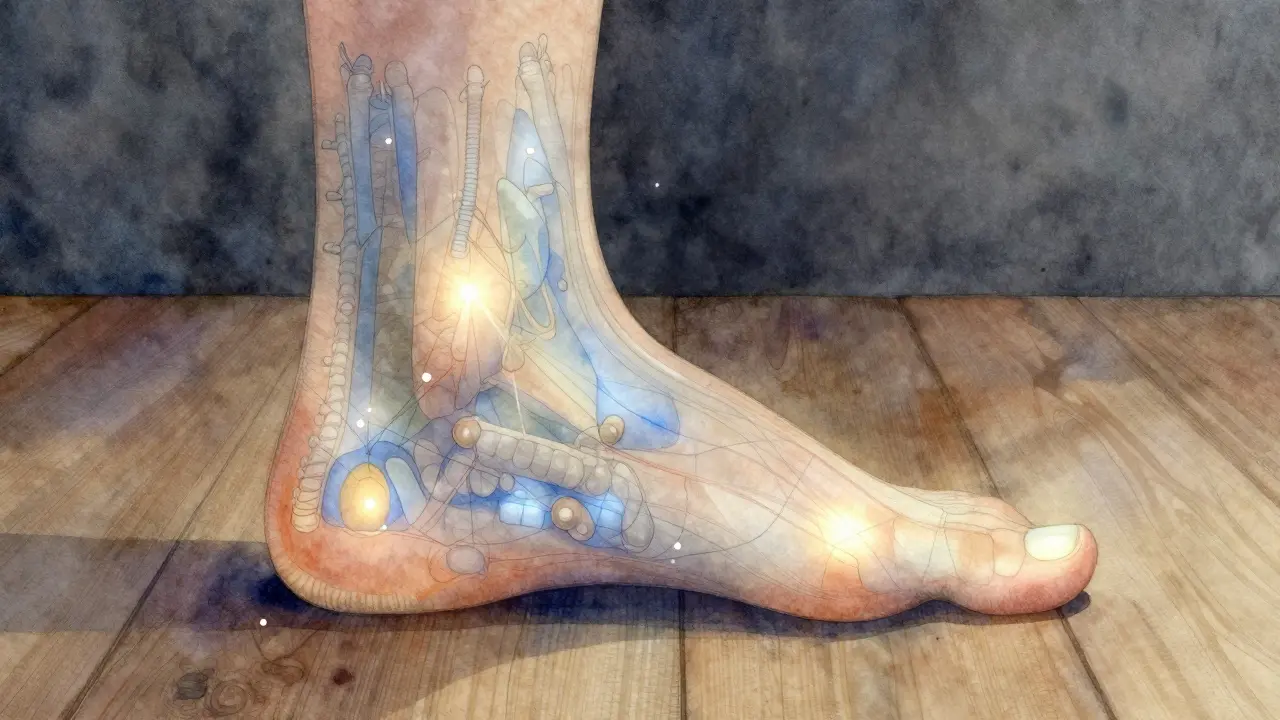
Reflexology is based on the idea that your feet are a map of your body. Each area on the sole, top, and sides of your foot corresponds to a different organ or body part. Pressing these areas sends signals through the nervous system, helping your body reset its natural balance. It’s not acupuncture-you’re not inserting needles. It’s not massage-you’re not working on muscles. It’s a precise application of thumb and finger pressure to reflex zones.
For example, the ball of your foot links to your lungs and chest. Pressing there can ease tightness after a cold or help with shallow breathing. The inner edge of your foot runs along the spine. Apply steady pressure there, and you might feel your back loosen up. The heel connects to your lower back and intestines. People with constipation often report improved digestion after regular sessions.
The science behind it? A 2023 study from the University of Melbourne tracked 120 adults with chronic stress. Those who received weekly reflexology for eight weeks showed a 32% drop in cortisol levels-the main stress hormone-compared to the control group. Their self-reported anxiety scores also fell by nearly 40%. That’s not placebo. That’s measurable biology.
How Reflexology Works on Your Nervous System
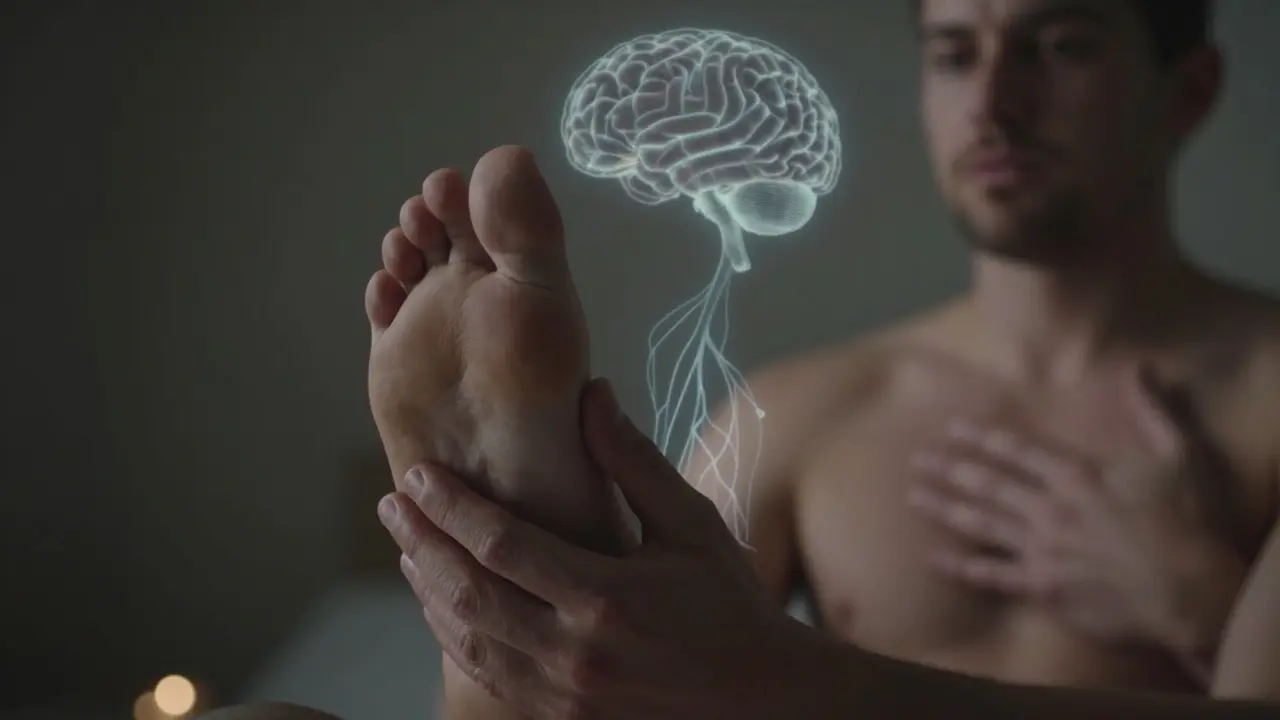
Your feet are packed with nerve endings-over 7,000 in each one. That’s more than your fingertips. When you press on a reflex point, those nerves send signals straight to your brainstem, which controls automatic functions like breathing, digestion, and heart rate. This triggers what’s called the parasympathetic response: your body switches from ‘fight or flight’ to ‘rest and digest’ mode.
Think of it like hitting a reset button. If you’re always tense from work, traffic, or screens, your nervous system gets stuck. Reflexology doesn’t fix your problems-but it gives your body the space to heal itself. You don’t need to believe in energy fields or chakras. You just need to understand that nerves respond to pressure. And that’s science, not mysticism.
One woman I know, a nurse working 12-hour shifts in Melbourne, started doing 10-minute reflexology sessions on her own feet before bed. Within three weeks, she stopped waking up with headaches. Her sleep deepened. She didn’t need caffeine to get through the afternoon. She didn’t think it would work-until it did.
The Most Powerful Reflex Points to Try
You don’t need a professional to get started. Here are five key points you can target at home, with just your thumb:
- Ball of the foot - Lungs and chest. Use your thumb to make small circles here for 30 seconds. Helps with congestion, shallow breathing, or post-nasal drip.
- Inner edge of the foot - Spine and lower back. Run your thumb slowly from the heel up to the arch. Good for stiffness after sitting all day.
- Heel - Lower back and intestines. Press firmly and hold for 10 seconds. Can help with bloating or constipation.
- Big toe - Head and sinuses. Squeeze the sides gently. Useful for tension headaches or sinus pressure.
- Arch - Kidneys and adrenal glands. Press in the middle of the arch with your thumb. Helps with fatigue and low energy.
Use a little lotion or oil so your thumb glides smoothly. Don’t push until it hurts-pressure should feel like a deep, steady ache. Think of it like a good stretch, not a punch. Spend 1-2 minutes on each point, twice a day. You’ll feel it in your whole body within days.
What Reflexology Can-and Can’t-Do
Let’s be clear: reflexology isn’t a cure for cancer, diabetes, or heart disease. It doesn’t replace medical treatment. But it does support your body’s natural healing. Think of it as a tuning fork for your nervous system. It doesn’t fix the broken string-it helps the whole instrument resonate better.
Studies show it helps with:
- Reducing chronic pain (especially migraines and lower back pain)
- Improving sleep quality in people with insomnia
- Lowering anxiety and improving mood
- Relieving symptoms of PMS and menopause
- Boosting circulation in people with peripheral neuropathy
But it won’t:
- Shrink tumors
- Lower blood sugar in diabetics
- Reverse arthritis damage
- Replace surgery or medication
It’s a tool for balance, not a miracle. And that’s exactly why it works so well for people who feel stuck in modern life-overworked, overstressed, and disconnected from their own bodies.
Who Should Avoid Reflexology?
Most people can do reflexology safely. But there are a few exceptions:
- If you have a foot injury, open wound, or recent fracture-wait until it heals.
- If you’re in the first trimester of pregnancy, avoid deep pressure on the arch and heel-some points may trigger contractions.
- If you have blood clots or severe varicose veins, avoid vigorous pressure on the legs and feet.
- If you have neuropathy from diabetes, be gentle. You might not feel pain, but you can still damage tissue.
Always check with your doctor if you’re unsure. But for most people, reflexology is as safe as stretching or taking a walk.
How to Make Reflexology Part of Your Routine
You don’t need to book expensive sessions. Here’s how to build it into your life:
- Start with 5 minutes a day. Do it while watching TV or waiting for your coffee to brew.
- Use a tennis ball or massage roller under your foot while sitting at your desk.
- Keep a small foot reflexology chart taped to your bathroom mirror. Check it while brushing your teeth.
- Pair it with deep breathing. Inhale for four counts, press the point, exhale for six.
- Try it with a partner. It’s a quiet, calming way to connect without talking.
One man I met at a community center in Carlton-he’s 72, retired, and has had arthritis for 20 years-does reflexology every morning with his wife. He says it’s the only thing that lets him get out of bed without groaning. He doesn’t call it healing. He calls it ‘getting back to myself.’
Why It Feels Like Magic
Reflexology feels magical because it works in ways you can’t see. You press your toe, and your shoulder relaxes. You rub your heel, and your stomach stops rumbling. There’s no pill, no machine, no doctor’s note. Just your hands, your feet, and your body’s own wisdom.
It reminds us that healing doesn’t always come from the outside. Sometimes, it comes from paying attention-to the soles of your feet, to your breath, to the quiet signals your body sends every day. You don’t need to believe in energy. You just need to feel it.
Try it for two weeks. No expectations. Just press. And notice what changes.
Can reflexology help with insomnia?
Yes. Studies show reflexology improves sleep quality by calming the nervous system and reducing cortisol. One 2022 trial found participants fell asleep 22 minutes faster and stayed asleep longer after four weeks of weekly sessions. Targeting the heel and arch points before bed is especially effective.
Is reflexology the same as a foot massage?
No. A foot massage focuses on relaxation and muscle tension. Reflexology targets specific nerve zones linked to organs and systems. The pressure is more focused, the technique is precise, and the goal is systemic balance-not just comfort.
How often should I do reflexology?
For general wellness, 10-15 minutes daily works well. If you’re dealing with stress, pain, or sleep issues, aim for twice a day for two weeks, then reduce to every other day. Consistency matters more than duration.
Can I do reflexology on myself?
Absolutely. Most people start with self-reflexology. You don’t need training to press the main points. Use your thumb, a ball, or even a bottle. Professional sessions are great for deeper work, but daily self-care is where real change happens.
Does reflexology hurt?
It shouldn’t. You might feel tenderness in areas where your body is out of balance-that’s normal. But sharp pain means you’re pressing too hard. Reflexology works with gentle, sustained pressure, not force. Think of it like a deep stretch, not a massage from a chiropractor.
Reflexology doesn’t promise miracles. But it gives you something rarer: a way to listen to your body-and trust what it’s telling you.
 Health and Wellness