
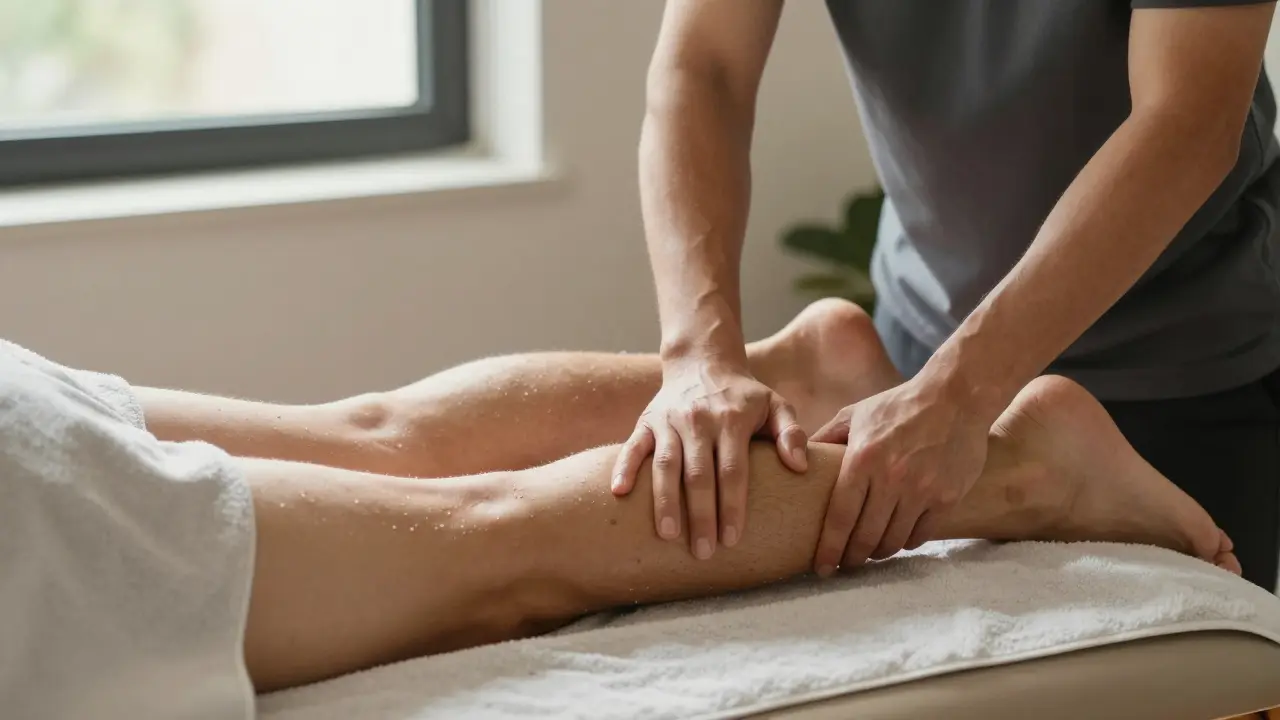
After a tough training session, your body doesn’t just shut down. It’s repairing tears in muscle fibers, flushing out lactic acid, and resetting your nervous system. If you’re skipping recovery, you’re not just slowing down-you’re risking injury, burnout, and stalled progress. Sports massage isn’t a luxury for pro athletes. It’s a non-negotiable tool for anyone who pushes their body hard, whether you’re a weekend warrior, a college runner, or a fitness coach training clients.
How Sports Massage Speeds Up Recovery
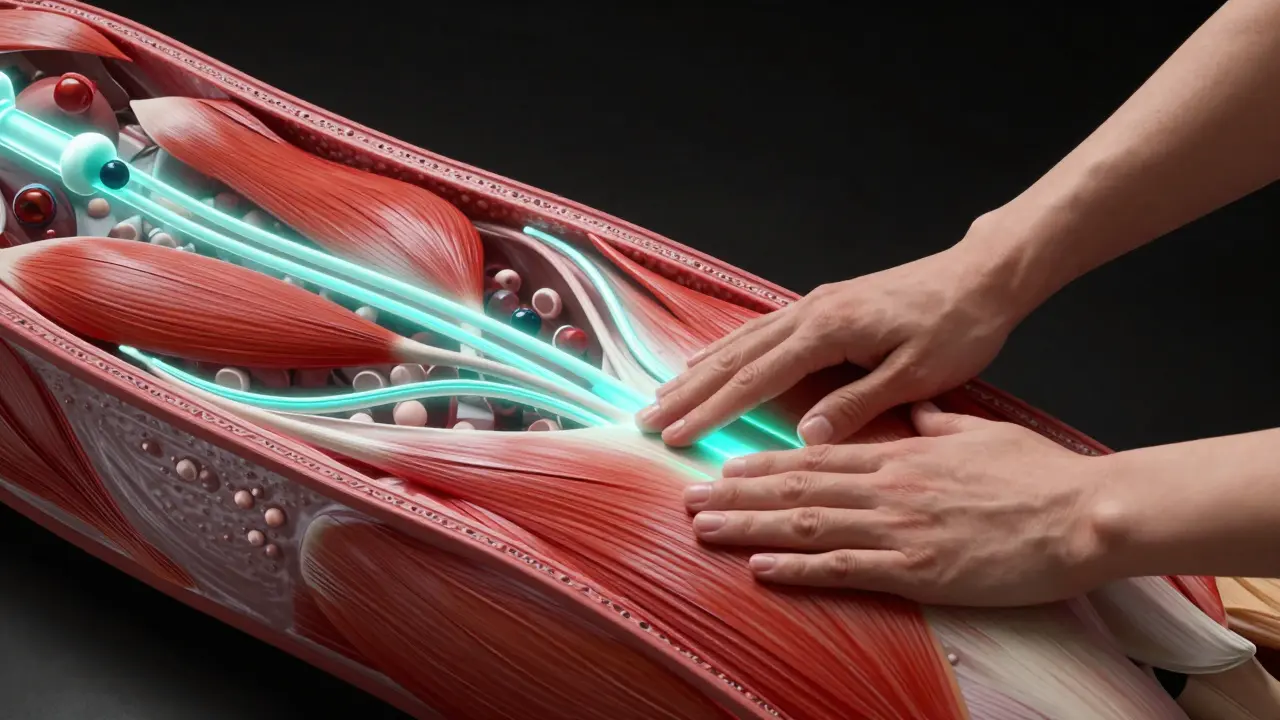
Sports massage isn’t just about feeling good. It’s science-backed recovery. Studies show it increases blood flow to muscles by up to 25% within minutes of treatment. That means more oxygen and nutrients get delivered where they’re needed most. At the same time, it helps clear metabolic waste like lactic acid and cytokines that build up during intense exercise. This isn’t magic-it’s physiology.
Think of it like cleaning out a clogged drain after a heavy rain. Your muscles are flooded with byproducts of effort. Without a way to flush them, inflammation lingers, stiffness sets in, and soreness lasts longer. A skilled sports massage therapist uses targeted pressure, friction, and stretching to open those pathways. It’s not about deep tissue pain-it’s about precision.
When to Get a Sports Massage
Timing matters. Get it too soon after a race or heavy lift, and you risk aggravating micro-tears. Wait too long, and stiffness becomes chronic. The sweet spot? Between 30 minutes and 48 hours after exertion.
- Within 2 hours post-workout: Light effleurage (gliding strokes) helps reduce swelling and kickstart circulation. Ideal after a 10K run or HIIT session.
- 24-48 hours later: Deeper work on tight quads, hamstrings, or shoulders. Best for strength training days or endurance events.
- Before a big event (2-3 days out): Focus on loosening knots, not breaking down tissue. This is prep, not repair.
One runner I worked with in Adelaide started getting massage 12 hours after her long runs. Within three weeks, her recovery time dropped from 72 hours to 24. She went from dreading Sunday mornings to hitting the trail again by Monday.
What Happens During a Session
A typical sports massage lasts 45 to 75 minutes. It’s not a full-body relaxation experience. The therapist zeroes in on your problem zones based on your sport and training load.
For a cyclist, that’s glutes, calves, and hip flexors. For a swimmer, it’s lats, shoulders, and thoracic spine. The therapist will ask about your last workout, any niggles, and how you’re feeling. They don’t guess-they adapt.
Techniques you’ll feel:
- Friction: Deep, circular pressure on tendons and fascia to break adhesions.
- Trigger point release: Sustained pressure on tight knots-like the ones in your IT band after hill sprints.
- Stretching with pressure: Passive stretches where the therapist moves your limb while applying resistance to lengthen muscle fibers.
- Myofascial release: Gentle, sustained pulls on connective tissue to restore mobility.
It shouldn’t hurt. If it does, speak up. Pain isn’t progress-it’s a red flag.
Who Benefits Most
Sports massage isn’t just for elite athletes. Anyone who trains regularly gains from it.
- Runners: Reduces risk of plantar fasciitis and shin splints by loosening tight calves and feet.
- Weightlifters: Prevents shoulder impingement and lower back strain by releasing tight lats and pecs.
- Team sport players: Helps recover from sudden stops, jumps, and directional changes that stress joints and ligaments.
- Beginners: Often overlook recovery. A monthly massage can prevent overuse injuries before they start.
One study from the Journal of Athletic Training followed 120 recreational athletes over six months. Those who got weekly sports massage reported 38% fewer days lost to injury compared to those who stretched alone.
What to Avoid
Not all massage is sports massage. Don’t confuse it with Swedish relaxation or hot stone therapy. Those feel nice, but they won’t fix your tight hamstrings.
Also, avoid getting massaged if you have:
- Acute inflammation (red, hot, swollen area)
- A recent muscle strain (first 48 hours)
- Open wounds or skin infections
- Deep vein thrombosis (DVT) or blood clotting disorders
If you’re on blood thinners or have osteoporosis, tell your therapist. They’ll adjust pressure and technique.
Home Care to Boost Results
Massage is powerful, but it’s not a standalone fix. Pair it with smart recovery habits.
- Hydrate: Drink at least 2 liters of water after a session. Toxins flushed out need water to leave your body.
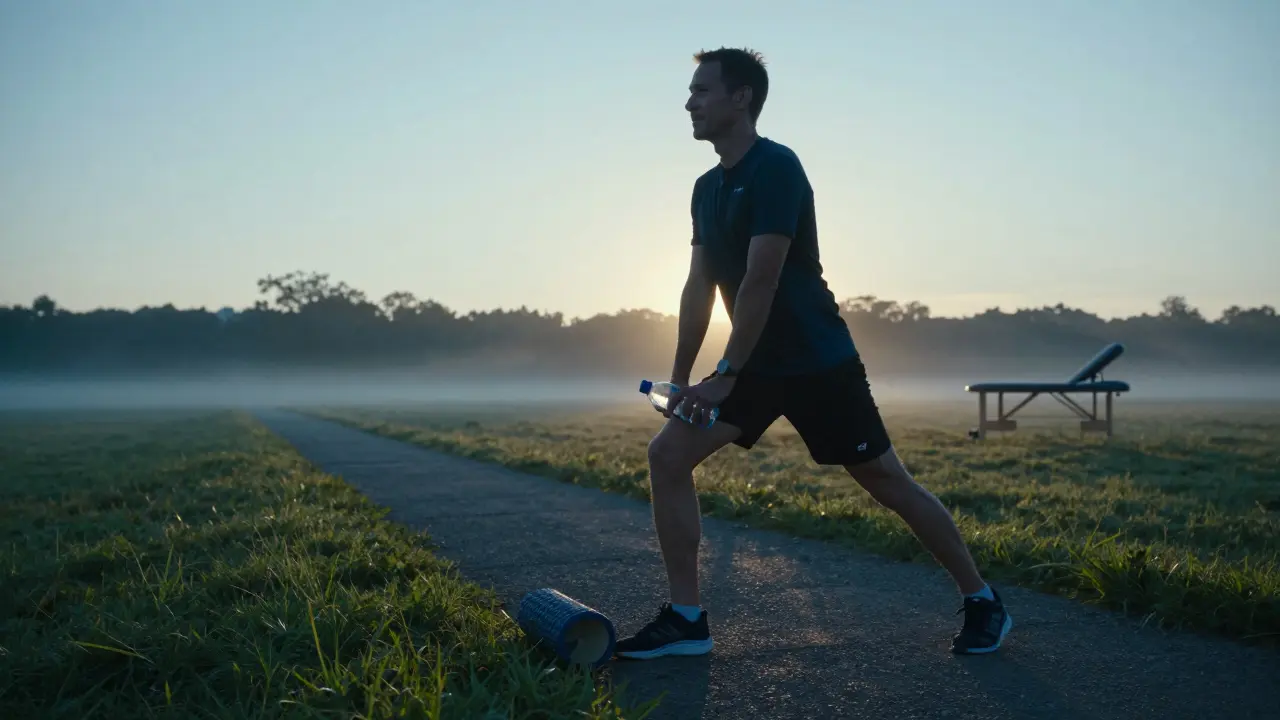
- Mobility work: 10 minutes of foam rolling your quads, calves, and back after massage keeps things loose.
- Light movement: A 15-minute walk or gentle bike ride the day after helps circulation without stressing muscles.
- Sleep: Growth hormone peaks during deep sleep. No massage can replace 7-9 hours of rest.
One client of mine, a 42-year-old triathlete, started doing 5 minutes of dynamic stretching after every massage. Within two months, his VO2 max improved by 6%. He didn’t train harder-he recovered better.
How to Find a Good Therapist
Not every massage therapist knows sports recovery. Look for:
- Certification in sports massage or athletic therapy (not just basic massage)
- Experience working with athletes in your sport
- Willingness to ask about your training schedule and goals
- Clear communication-they explain what they’re doing and why
Ask for references. If they’ve worked with local running clubs, triathlon teams, or gyms, that’s a good sign. In Adelaide, many physio clinics offer sports massage as part of rehab. Don’t assume it’s too expensive-some clinics offer package deals for regular clients.
Real Results, Real People
Emma, a 28-year-old CrossFit athlete, used to miss two days a week because of soreness. She started getting sports massage twice a week during peak training. After six weeks, she was training six days a week without pain. Her coach said her movement quality improved because her muscles weren’t fighting each other anymore.
Mark, a 55-year-old cyclist, had chronic knee pain from years of riding. He thought it was just aging. After four sports massage sessions focused on his IT band and hip rotators, his knee pain dropped by 80%. He’s now riding 200km a week again.
These aren’t outliers. They’re people who treated recovery like part of training-not an afterthought.
Final Thought: Recovery Is Training
You don’t get stronger in the gym. You get stronger when you rest. Sports massage is one of the most effective ways to make that rest count. It’s not about pampering. It’s about performance. If you’re serious about your fitness, you’re serious about recovery. And if you’re serious about recovery, you’re already ahead of 90% of people who train.
Start small. One session a month. Then two. Track how your body feels. Notice how quickly you bounce back. That’s the real metric. Not how much you lifted. Not how far you ran. But how fast you recovered-and how often you showed up again.
Is sports massage the same as deep tissue massage?
No. Deep tissue massage targets chronic tension and general muscle tightness, often using heavy pressure across large areas. Sports massage is focused, goal-driven, and tailored to athletic performance. It uses specific techniques like trigger point release and myofascial release to address sport-specific muscle groups and recovery needs. A sports therapist knows which muscles to work based on your sport, not just where you feel sore.
How often should I get a sports massage?
It depends on your training volume. Casual exercisers: once a month. Regular athletes training 4-6 days a week: every 2-3 weeks. Competitive athletes or those in heavy training blocks: weekly or biweekly. The goal isn’t to fix pain-it’s to prevent it. Think of it like changing your car’s oil. You don’t wait until the engine fails.
Can I do sports massage on myself?
You can use foam rollers, massage balls, and handheld tools to help, but you can’t fully replicate a professional session. Self-massage lacks the precision and depth a trained therapist provides. You also can’t easily reach certain areas like your upper back or glutes without tools. Use self-care to maintain between sessions, not replace them.
Does sports massage hurt?
It should feel intense, not painful. A good therapist works within your comfort zone. If you’re wincing or holding your breath, it’s too much. The goal is to release tension, not cause trauma. Some discomfort during trigger point work is normal, but sharp or shooting pain isn’t. Always communicate with your therapist.
Will sports massage make me sore afterward?
Sometimes, yes-but it’s different from workout soreness. You might feel a dull ache or slight bruising, especially if you’ve had tight areas released. That usually fades in 24-48 hours. Drink water, move gently, and avoid intense training the next day. If you’re swollen or in pain for more than two days, contact your therapist. That’s not normal.
 Health and Wellness