
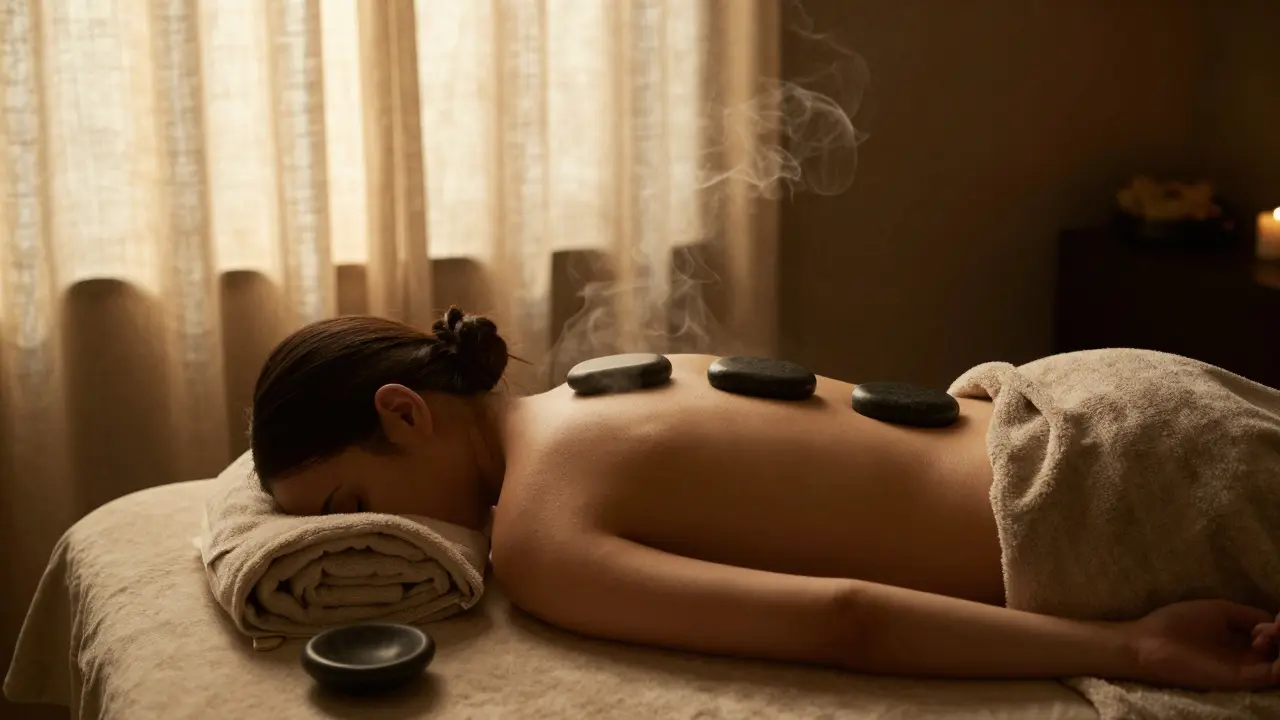
Imagine lying on a warm table, the heat seeping into your muscles like sunlight through a window on a quiet morning. Smooth stones, heated just right, rest along your spine, between your shoulder blades, or cradled in the arches of your feet. You breathe deeper. Your shoulders drop. This isn’t just relaxation-it’s stone therapy, an ancient practice that’s finding new life in modern wellness routines.
What Is Stone Therapy?
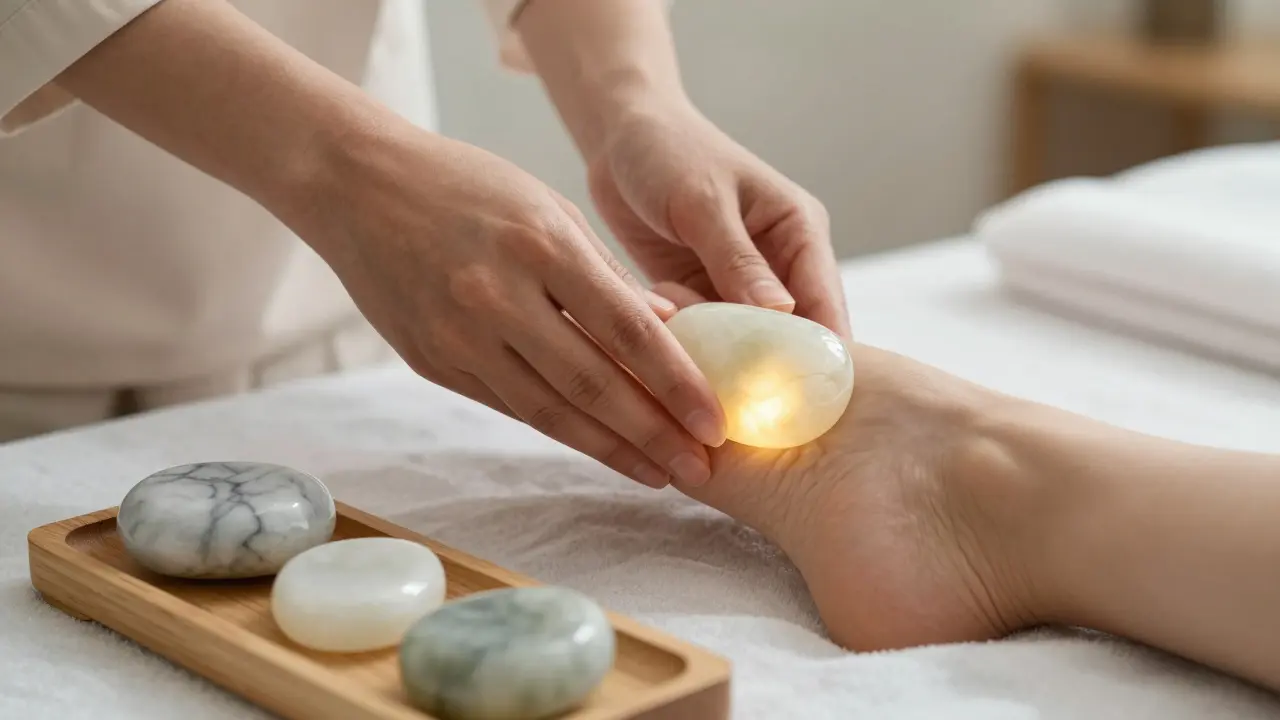
Stone therapy uses heated or cooled stones-usually basalt, marble, or jade-to promote physical and emotional well-being. Basalt stones, formed from volcanic rock, hold heat exceptionally well and are the most common choice for hot stone massages. Marble stones, cooler to the touch, are often used for calming treatments. Jade, prized in traditional Chinese medicine, is believed to carry balancing energy.
The technique isn’t new. Ancient cultures from China to India to Native American tribes used stones for healing. The Egyptians placed them on the body to relieve pain. The Chinese integrated them into acupuncture and qi flow practices. Today, therapists blend these traditions with modern anatomy and physiology to create treatments that target tension, circulation, and stress.
It’s not magic. It’s science. Heat from the stones dilates blood vessels, increasing circulation. Better blood flow means more oxygen and nutrients reach tired muscles. It also helps flush out lactic acid and other metabolic waste. Studies from the Journal of Alternative and Complementary Medicine in 2023 showed that participants in hot stone massage sessions reported a 38% reduction in muscle stiffness after just one 60-minute treatment.
How Stone Therapy Works on the Body
When a therapist places a warm stone on your back, the heat doesn’t just sit there. It travels. Muscles relax in response to warmth, releasing tightness that massage alone might not reach. The stones act as an extension of the therapist’s hands-larger, heavier, and consistently warm. This allows deeper pressure without strain on the therapist’s wrists.
The nervous system responds too. Warmth triggers the parasympathetic nervous system-the part that says, “It’s safe to rest.” Heart rate slows. Cortisol, the stress hormone, drops. In a 2024 study of 120 adults with chronic stress, those who received weekly stone therapy for six weeks saw cortisol levels fall by an average of 27%.
Stone therapy also works on the fascia-the connective tissue that wraps around muscles and organs. When fascia gets stuck from injury or prolonged sitting, it pulls on surrounding structures, causing pain. The steady, penetrating heat of the stones helps soften this tissue, making it more pliable. Many clients report feeling “lighter” after a session, as if their body has been reset.
Hot Stone vs. Cold Stone: Two Sides of the Same Coin
Not all stone therapy is warm. Cold stones-often made of marble or quartz-serve a different purpose. They’re used to reduce inflammation, calm overactive nerves, or soothe swollen joints. Think of them as the opposite of heat: instead of inviting relaxation, they invite recovery.
Hot stones are best for:
- Chronic muscle tension
- Stress and anxiety
- Poor circulation
- Insomnia linked to physical tension
Cold stones are better for:
- Post-workout soreness
- Headaches and migraines
- Swelling from injury
- Overheated or inflamed skin
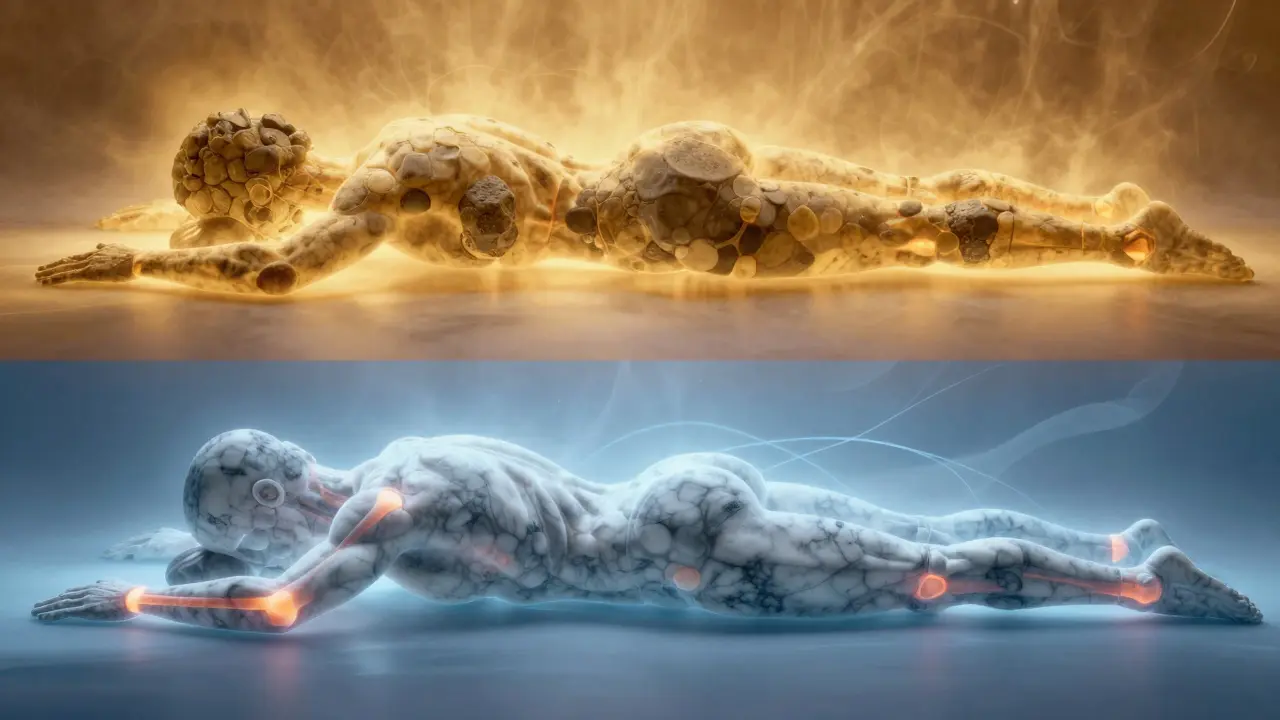
Many therapists combine both in a single session-starting with cold stones to calm inflammation, then switching to warm ones to encourage healing. This contrast therapy is especially popular among athletes and people with autoimmune conditions like rheumatoid arthritis.
What to Expect During a Session
A typical stone therapy session lasts 60 to 90 minutes. You’ll lie on a massage table, covered with towels. The therapist will warm the stones in water heated to between 45°C and 55°C-hot enough to feel soothing, not scalding. Before placing stones on your skin, they’ll test the temperature on their own wrist.
Stones are placed along energy pathways, known in traditional systems as meridians, or along major muscle groups. Common placements include the spine, palms, soles of the feet, and between the shoulder blades. The therapist may also use the stones to glide over your skin, combining massage with thermal therapy.
Some people feel immediate relief. Others feel nothing at first. That’s normal. Stone therapy works cumulatively. The first session might just make you feel calm. The third or fourth? That’s when you notice your chronic back pain has eased, or you’re sleeping through the night without waking up stiff.
After the session, you’ll be offered water. Hydration helps flush out toxins released during the treatment. It’s common to feel a bit lightheaded or emotionally sensitive afterward. That’s your body processing the release.
Who Benefits Most From Stone Therapy?
Stone therapy isn’t for everyone-but for the right people, it’s transformative.
People with fibromyalgia often find it more tolerable than deep tissue massage because the heat softens pain sensitivity. Those with arthritis report improved joint mobility after consistent sessions. Pregnant women (in their second and third trimesters) benefit from the gentle pressure and improved circulation, as long as the therapist is trained in prenatal stone therapy.
It’s also popular among high-stress professionals: teachers, nurses, IT workers, and caregivers. One Melbourne nurse, who works 12-hour shifts, told me she started stone therapy after a flare-up of chronic neck pain. “It didn’t fix everything,” she said, “but for the first time in years, I didn’t wake up with my shoulders in my ears.”
It’s not a cure for disease. But it’s a powerful tool for managing symptoms and restoring balance.
What to Look for in a Practitioner
Not all massage therapists are trained in stone therapy. Look for someone who:
- Has specific certification in stone therapy (not just general massage)
- Uses clean, smooth stones without cracks or sharp edges
- Tests stone temperature before applying to your skin
- Asks about medical conditions like diabetes, neuropathy, or blood clotting disorders
People with diabetes or nerve damage should avoid hot stones on their feet or legs-their ability to sense heat may be reduced, raising the risk of burns. Those with open wounds, recent surgery, or active infections should wait until healed.
Reputable clinics will have a brief intake form. Don’t skip it. Your safety matters more than your schedule.
Can You Do Stone Therapy at Home?
You can try a simplified version at home, but it’s not the same. You can buy basalt stones online-look for ones around 8 to 12 centimeters long, smooth, and naturally heated. Heat them in warm (not boiling) water for 15 minutes. Wrap them in a towel before placing them on your back or feet.
But here’s the catch: you can’t replicate the pressure, rhythm, or energy of a trained therapist. Home sessions are good for maintenance, not deep healing. And never use stones if you’re pregnant, have open wounds, or feel unwell.
Think of home stone therapy like taking a vitamin supplement. Helpful, maybe even comforting. But it doesn’t replace the full treatment.
How Often Should You Get Stone Therapy?
There’s no universal rule. If you’re dealing with chronic pain or high stress, once a week for four weeks is a good starting point. Then, taper to every two or three weeks for maintenance.
For general wellness? Once a month keeps your body in tune. Many people in Melbourne start with a monthly session and notice they need fewer painkillers, sleep better, and feel more grounded.
It’s not about frequency. It’s about consistency. Like meditation or walking, stone therapy builds its effect over time.
Stone Therapy and the Mind
Healing isn’t just physical. Stone therapy often unlocks emotional release. People cry during sessions. Others laugh. Some fall into deep silence. That’s because the body stores stress-not just in muscles, but in memory.
When the heat melts physical tension, it sometimes unlocks buried emotions. A client once told me she remembered her mother’s touch during a stone session. “It felt like being held again,” she said. “I didn’t realize I’d been missing that.”
This isn’t therapy in the clinical sense. But it’s deeply human. Stone therapy creates space-for stillness, for feeling, for letting go.
Final Thoughts
Stone therapy doesn’t promise miracles. But it does something rarer: it gives you back your body. Not as a machine to fix, but as a living system that responds to care.
It’s quiet. It’s slow. It doesn’t shout. And in a world that’s always pushing, that’s exactly what many of us need.
 Health and Wellness