
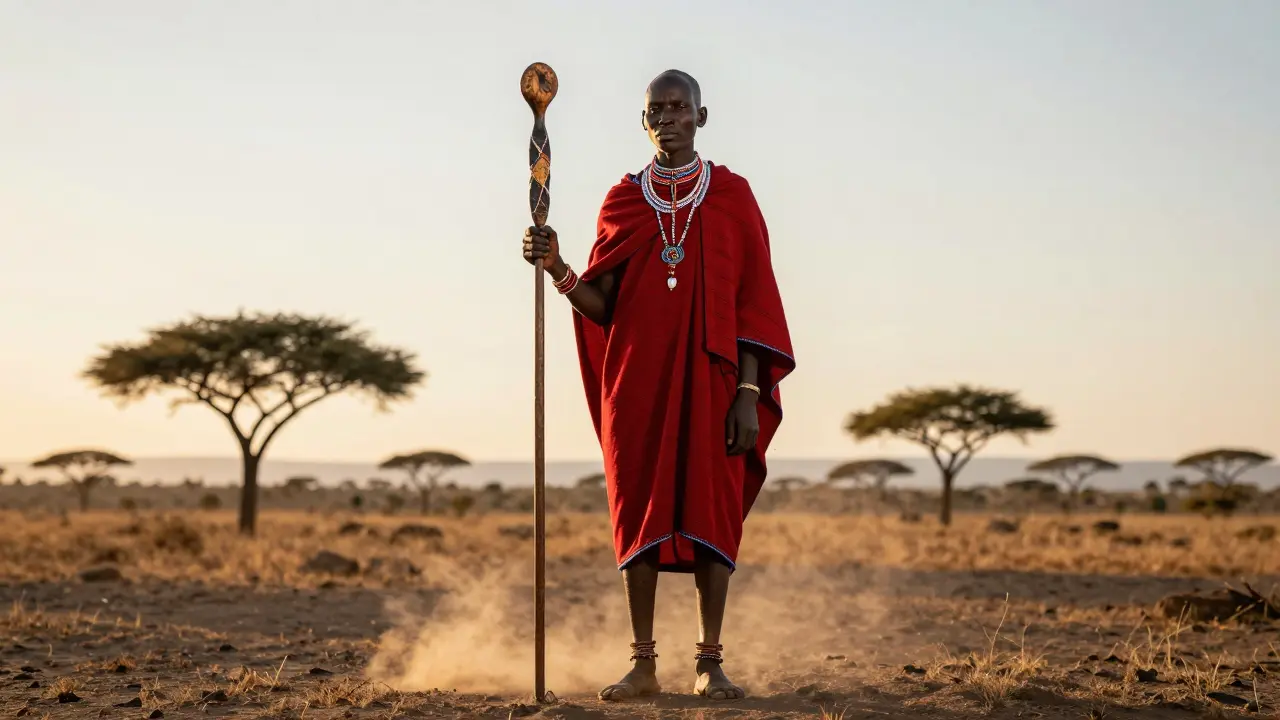
The rungu is a traditional wooden club used by several ethnic groups across East Africa, particularly among the Maasai, Kikuyu, and other Nilotic peoples. Also known as rungu stick, it’s more than just a tool or weapon-it’s a living piece of cultural identity.
What the Rungu Actually Is
The rungu is typically carved from dense hardwood like ironwood or acacia. It’s about 12 to 18 inches long, with a thick, rounded head and a tapered handle. Some are smooth; others have carved patterns or small bumps for grip. The weight is balanced so it can be swung with speed and accuracy. Unlike a simple stick, the rungu is designed to be thrown or used in close combat. Its shape allows it to deliver a crushing blow without getting stuck in bone or flesh.
Historically, it was carried by young men as part of their daily attire, just like a belt or knife. It wasn’t just for fighting-it was a symbol of readiness, responsibility, and manhood. Among the Maasai, a boy would receive his first rungu during rites of passage into warriorhood. Carrying one meant he was expected to protect his family, livestock, and community.
More Than Just a Weapon
While the rungu can be used as a weapon, reducing it to that alone misses the point. In many communities, it’s a ceremonial object. Elders carry rungus during negotiations or community meetings as a sign of authority. During dances, warriors swing them rhythmically to the beat of drums, turning the club into part of the performance. In some villages, a rungu is given to a bridegroom as a gift from his future father-in-law-a symbol of trust and strength.
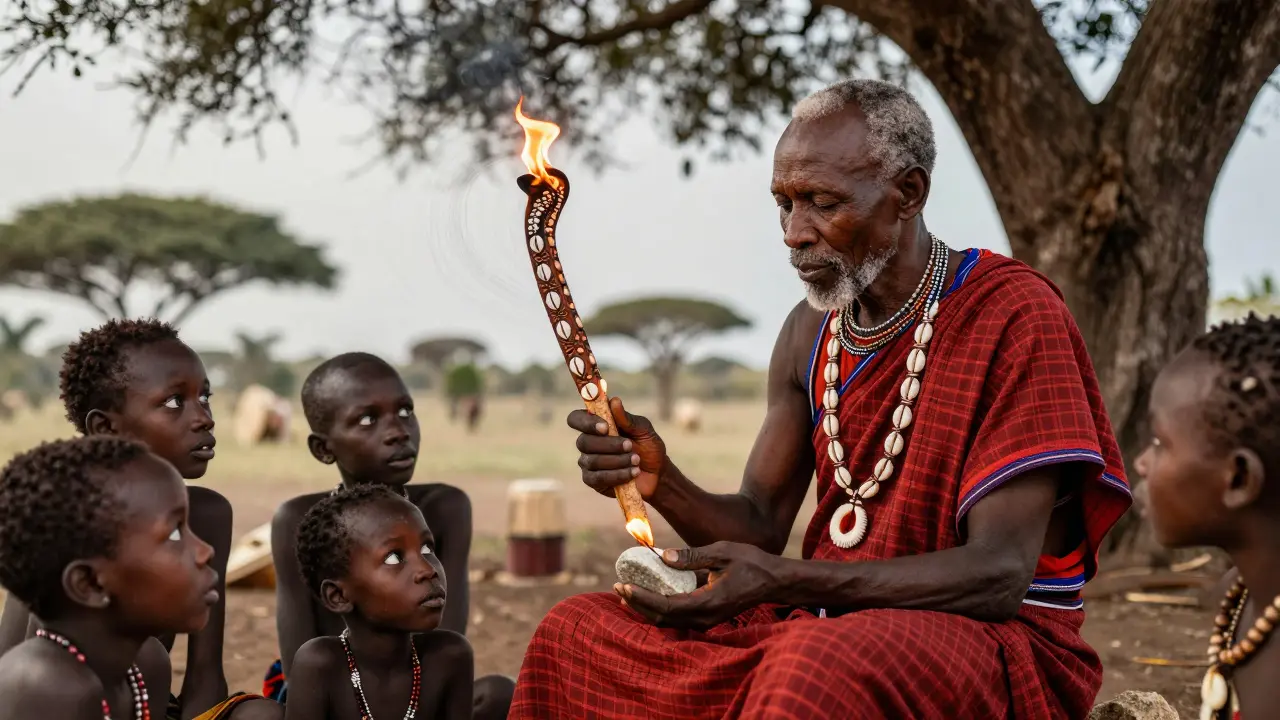
It’s also used in storytelling. Grandfathers will hold a rungu while recounting tales of bravery, hunting, or defense against lions or rival tribes. The object becomes a prop that anchors memory. Children learn not just the story, but the weight of responsibility through the feel of the rungu in their hands.
Materials and Craftsmanship
Not all rungus are the same. The best ones come from trees that grow slowly and harden over decades. The Maasai favor acacia xanthophloea, known as the fever tree, because its wood resists splitting and lasts for generations. Artisans use simple tools: a knife, a stone for smoothing, and fire to harden the surface. Some add beads, cowrie shells, or metal rings for decoration. These aren’t just for looks-they carry meaning. A bead might represent a lion killed; a ring might mark a successful raid.
Each rungu is unique. No two are carved exactly alike. That’s intentional. It reflects the individuality of the person who carries it. A warrior doesn’t just own a rungu-he shapes it, polishes it, and bonds with it over years. It becomes an extension of himself.
Modern Uses and Cultural Shifts
In cities like Nairobi or Arusha, you’ll still see older men carrying rungus. But now, they’re often used as walking sticks or fashion accessories. Younger generations may not carry them daily, but they still recognize their value. At cultural festivals, you’ll find rungus on display, sold as souvenirs, or used in dance performances for tourists.
There’s been a quiet revival. Some African youth groups are teaching traditional skills again-how to carve, how to throw, how to respect the object. Schools in Kenya have started including rungu-making in cultural education programs. It’s not about returning to the past, but about keeping the meaning alive.
Outside Africa, rungus appear in museums, private collections, and even in films. But many of these are mass-produced imitations. Authentic rungus are hand-carved, often passed down, and rarely sold openly. That’s why collectors pay high prices for verified pieces. A genuine, well-aged rungu from a Maasai elder can sell for over $300-not because it’s rare, but because it carries history.
Why It Still Matters
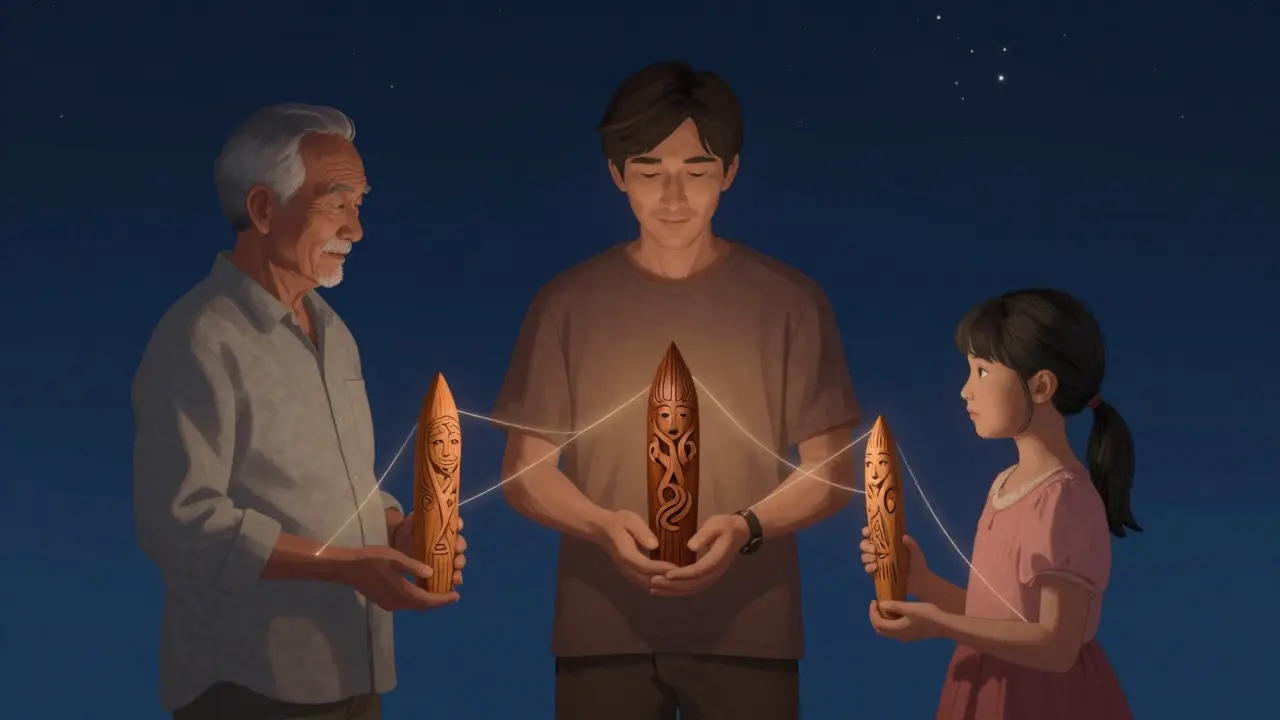
Why does the rungu still matter in 2026? Because it’s one of the few African traditions that hasn’t been fully commercialized or erased. It’s not a costume. It’s not a prop. It’s a tool with soul.
When you see a rungu, you’re seeing centuries of knowledge: how to read the land, how to defend without killing, how to carry dignity in silence. It’s a reminder that not all power needs to be loud. Sometimes, the strongest things are the quietest.
For many African communities, the rungu is still a daily part of life-not because they’re stuck in tradition, but because it still works. It’s simple, reliable, and deeply meaningful. In a world full of noise, the rungu speaks in weight, not words.
Common Misconceptions
One myth is that the rungu is only a weapon. That’s not true. Many are never used for violence. Some are purely ceremonial. Others are given to girls as symbols of strength.
Another myth is that it’s outdated. But in rural areas, it’s still the most practical tool for defending livestock from hyenas or lions. No gun, no electric fence, no alarm system works as well as a well-made rungu in the hands of someone who knows how to use it.
And it’s not just for men. Among some communities, women carry smaller rungus to protect themselves during travel. A mother might carry one while walking to market. A grandmother might use it to tap rhythm during storytelling. The rungu doesn’t care about gender-it cares about purpose.
Is the rungu still used for hunting today?
Yes, in remote areas of Kenya and Tanzania, hunters still use the rungu to strike small game like hares or birds. It’s silent, reusable, and doesn’t scare off animals like gunshots do. Some hunters carry it alongside a spear, using the rungu for close-range strikes and the spear for longer distances.
Can anyone carry a rungu, or is it restricted to certain groups?
Traditionally, yes-it was tied to specific ethnic groups like the Maasai, Kikuyu, and Samburu. But today, cultural exchange has changed that. In cities, people of all backgrounds carry rungus as fashion items or symbols of African heritage. However, the most authentic pieces are still made and used within those communities, and outsiders should respect that distinction.
How do you properly hold and throw a rungu?
The grip is similar to a baseball bat, but with more wrist control. To throw, you swing it in a sidearm arc, releasing it just before the arm reaches full extension. The spin gives it accuracy. Experts can hit targets up to 30 meters away. Training starts young-children practice on empty bottles or fallen branches before moving to real targets.
Are rungus legal to own outside Africa?
In most countries, yes-as long as it’s not used as a weapon. In Australia, the U.S., and the U.K., rungus are classified as cultural artifacts, not weapons, if they’re displayed or used for ceremonial purposes. However, carrying one in public with intent to harm could lead to legal trouble. Always check local laws before transporting one.
How can you tell if a rungu is authentic?
Authentic rungus have hand-carved patterns, uneven surfaces from natural wood grain, and signs of use-like worn spots from years of handling. Machine-made ones look too perfect, have uniform paint, and often come with plastic packaging. The best way to verify is to ask about its origin. A genuine piece will have a story behind it.
Learning about the rungu isn’t just about understanding a stick. It’s about seeing how a culture turns everyday objects into living symbols. In a time when so much is digital, disposable, and mass-produced, the rungu stands as a quiet rebellion-a reminder that meaning doesn’t come from technology. It comes from hands, history, and heart.
 Health and Wellness