
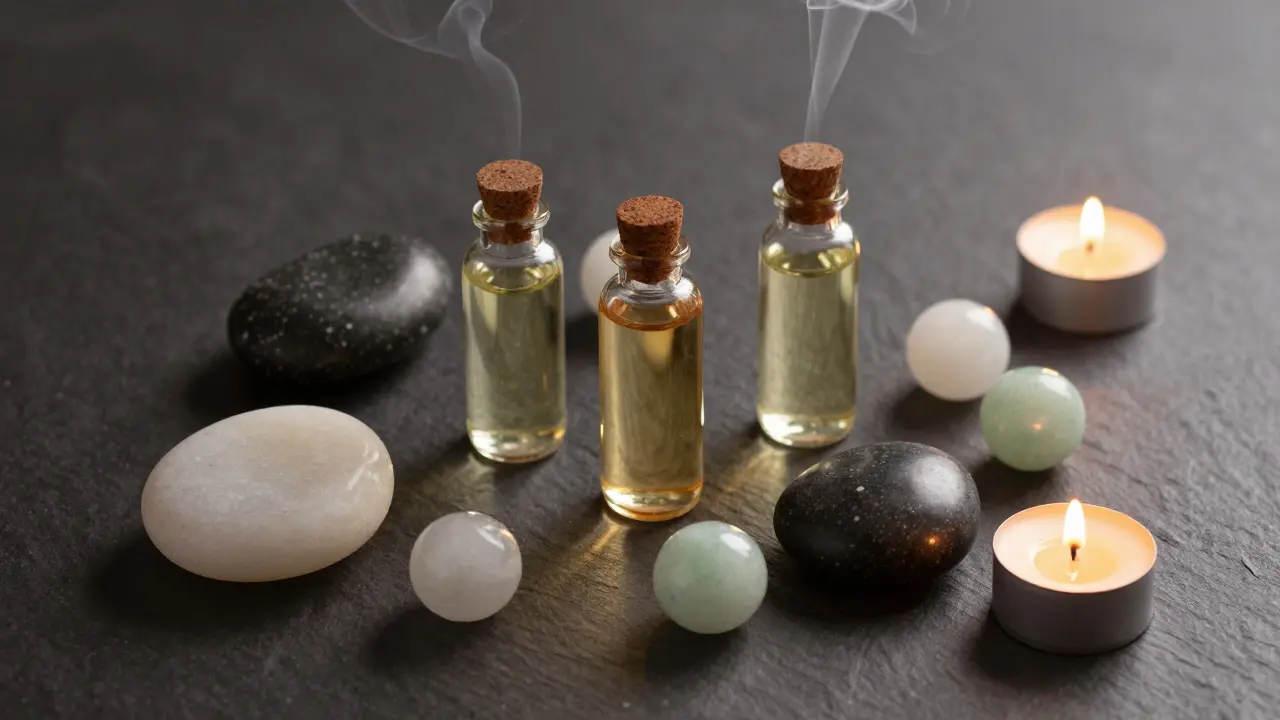
Imagine a touch that goes deeper than muscle tension. It’s not just about fixing a sore back; it’s about connecting with your partner or yourself on an energetic level. That is the promise of tantric massage. But here is the thing most people miss: your hands are only half the equation. The other half involves specific tantric massage tools designed to heighten sensation, balance energy, and deepen presence.
If you have ever tried to replicate those serene spa experiences at home, you might have realized that standard lotion and bare hands don’t quite cut it for this practice. Tantra isn’t just physical; it’s spiritual and emotional. To bridge that gap, practitioners use items that engage multiple senses-sight, smell, touch, and even temperature. Let’s look at what actually belongs in your toolkit and why each piece matters.
The Foundation: High-Quality Sensual Oils
You cannot do tantric massage without oil. Dry hands create friction, which breaks the flow of energy and distracts from the meditative state. However, not all oils are created equal. In tantric practice, the oil acts as a conductor for energy, or 'prana.'
Look for organic, cold-pressed oils. Sweet almond oil is a classic choice because it absorbs well and doesn’t leave a greasy residue. Jojoba oil mimics the skin’s natural sebum, making it perfect for sensitive types. If you want to add an aromatic layer, essential oils like lavender (for calming), ylang-ylang (for aphrodisiac effects), or sandalwood (for grounding) can transform the experience.
- Sweet Almond Oil: Great base, mild scent, affordable.
- Jojoba Oil: Long-lasting, non-comedogenic, feels like silk.
- Coconut Oil: Solidifies in cooler rooms; great for summer but messy in winter.
- Avoid: Mineral-based lotions. They sit on top of the skin rather than absorbing, creating a barrier to connection.
Pro tip: Warm the oil in your palms before applying it. Cold oil shocks the nervous system; warm oil invites relaxation immediately.
Temperature Play: Hot Stones and Ice Globes
Tantra engages the body through contrast. Temperature play is one of the most effective ways to stimulate nerve endings and bring awareness to different parts of the body.
Hot Stones are smooth, basalt rocks heated to a comfortable warmth (around 45-50°C). Basalt retains heat exceptionally well due to its density. These stones are placed along the spine, on the chakras, or held in the hands during breathing exercises. The warmth penetrates deep into the muscles, releasing stored tension and promoting blood flow. It creates a sense of safety and containment.
On the flip side, you have ice globes or cold stones. These are often made of glass or jade and chilled in the refrigerator. Running a cold globe over the neck, face, or inner thighs creates a sharp, awakening sensation that contrasts beautifully with the hot stones. This thermal contrast keeps the receiver present and alert, preventing them from drifting off into sleep too early.
| Tool Type | Material | Best Use Case | Sensation Profile |
|---|---|---|---|
| Hot Stones | Basalt | Back, Chakras, Hands | Deep, penetrating warmth |
| Cold Globes | Glass/Jade | Face, Neck, Inner Thighs | Sharp, cooling, invigorating |
| Warming Packs | Fabric/Microbeads | Joints, Shoulders | Soft, diffused heat |
Texture and Pressure: Feather Brushes and Silk Ropes
Direct hand contact is powerful, but sometimes indirect touch builds more anticipation. Tantric massage relies heavily on the concept of 'slowly revealing' sensation.
A feather brush or a soft horsehair brush introduces lightness. When you drag a feather lightly across someone’s back or legs, it tickles and stimulates the superficial nerve endings. This forces the receiver to focus intensely on the tiny movements, heightening their sensory awareness. It’s less about pressure and more about precision.
Silk ropes or scarves serve a similar purpose but add an element of gentle restraint or guidance. You can use a silk scarf to guide a stroke along the arm or leg without direct skin-to-skin contact initially. This builds erotic tension and mindfulness. The smooth texture of silk glides effortlessly, symbolizing fluidity and grace in the energy exchange.

Sound and Vibration: Singing Bowls and Tuning Forks
We often forget that sound is a form of vibration that travels through the body. In tantric practices, clearing the mental chatter is crucial. Sound tools help achieve this state of 'flow.'
Singing Bowls are metallic instruments that produce resonant tones when struck or rimmed. Typically made from bronze alloys, they emit frequencies that can range from 100Hz to 800Hz depending on size. Placing a singing bowl on the chest or head while massaging allows the vibrations to penetrate internal organs. This helps release emotional blockages stored in the body.
Tuning forks offer a more targeted approach. A 528Hz tuning fork, often associated with DNA repair and harmony, can be placed on specific points like the heart center or the third eye. The steady hum encourages deep breathing and synchronizes the giver’s and receiver’s rhythms.
Setting the Scene: Candles and Incense
Tools aren’t just what you touch; they’re what you see and smell. The environment dictates the mindset. Harsh overhead lighting kills the mood instantly. Instead, use low-wattage LED candles or beeswax candles. Beeswax burns cleanly and emits negative ions, which can improve air quality and mood.
Incense plays a major role in traditional tantra. Palo Santo wood, sage, or frankincense can cleanse the space energetically before you begin. The smoke signals to the brain that this time is separate from daily chores and stress. It marks the transition into sacred space.

Safety and Hygiene Considerations
Before you buy everything on Amazon, consider hygiene and safety. Since these tools involve intimate contact, cleanliness is non-negotiable.
- Stone Care: Basalt stones should be wiped down with alcohol after each use to remove oils and bacteria. Never share stones without sanitizing them first.
- Oil Allergies: Always patch-test new oils. Some people are allergic to nut-based oils like almond. Coconut or jojoba are safer bets for sensitive skin.
- Temperature Checks: Test hot stones on your own wrist before placing them on a partner. Burns ruin trust instantly.
- Consent: The most important tool is communication. Ask before using feathers or restraints. Tantra is about mutual respect, not surprise attacks.
Building Your Starter Kit
You don’t need to spend hundreds of dollars to start. Here is a practical starter list based on impact versus cost:
- High-quality Jojoba Oil ($15-20): Essential. Lasts months.
- Small Set of Hot Stones ($25-30): Look for 5-7 stones. Enough for the main chakras.
- One Silk Scarf ($10): Versatile for draping and guiding strokes.
- Beeswax Candle ($5): Sets the visual tone.
Start simple. Master the rhythm of your breath and the pressure of your hands before adding complex props. The tools support the intention; they don’t replace it.
Can I use regular massage lotion for tantric massage?
While you can, it’s not ideal. Most commercial lotions contain synthetic fragrances and preservatives that can clog pores or cause irritation during prolonged contact. Organic oils like jojoba or sweet almond absorb better and feel more natural against the skin, enhancing the energetic connection rather than blocking it.
How hot should the stones be for tantric massage?
Stones should be warm, not burning. Aim for a temperature between 45°C and 50°C (113°F - 122°F). Always test the stone on your inner wrist first. If it feels uncomfortably hot to you, it will burn your partner. Basalt holds heat well, so it’s better to underheat than overheat.
Is tantric massage always sexual?
Not necessarily. While it can be erotic, the core goal is energy exchange and presence. Many couples use tantric tools to deepen emotional intimacy and reduce stress without any sexual activity. It’s about mindful touch and connection, which can lead to various outcomes depending on the participants' intentions.
What is the best oil for sensitive skin?
Jojoba oil is generally the safest option for sensitive skin because it closely resembles human sebum. It is hypoallergenic and non-comedogenic. Avoid nut-based oils like almond if you have known allergies. Pure coconut oil is also good but can solidify in cooler temperatures.
Do I need special training to use tantric massage tools?
No formal certification is required for personal use. However, understanding basic anatomy and consent principles is crucial. Start with simple techniques like long, slow strokes with oil before incorporating stones or feathers. Watching reputable tutorials or taking a workshop can help you learn proper pressure and pacing.
 Health and Wellness