
Quick Highlights
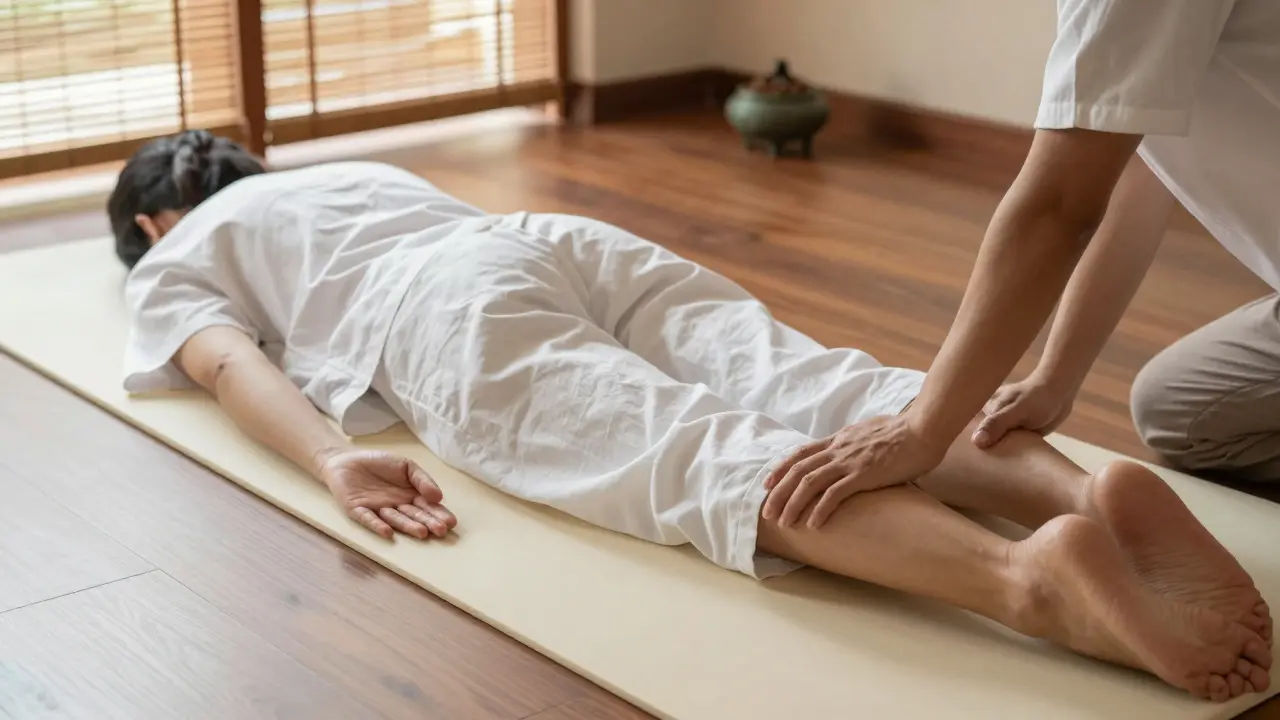
- Combines acupressure, assisted stretching, and energy work.
- Focuses on "Sen" lines (energy channels) rather than just muscles.
- Increases flexibility and reduces chronic muscle tension.
- Usually performed fully clothed on a firm mat.
What Exactly is Thai Bodywork?
When people talk about Thai bodywork is a therapeutic system of healing that blends Indian Ayurvedic principles with traditional Chinese medicine and local Thai healing arts. Also known as Nuad Thai, it is less about rubbing oils into the skin and more about manipulating the body's structure. Unlike Swedish massage, where the goal is often to soothe the surface muscles, Thai bodywork targets the deeper connective tissues and the flow of energy throughout the system.
The core of this practice revolves around the concept of Sen Lines, which are energy pathways that transport life force, or Prana, through the body. When these lines get blocked by stress or poor posture, you feel stiff, tired, or just "off." The practitioner uses their body weight to apply pressure to specific points along these lines to clear the blockages and get things moving again.
The Magic of Assisted Stretching
If you have ever tried to touch your toes and felt a sharp pull in your hamstrings, you know that stretching can be a chore. Thai bodywork turns this into a passive experience. The practitioner performs Assisted Stretching, which is a technique where the therapist moves the client's limbs into deep stretches while the client remains relaxed. This allows you to reach a depth of flexibility that is nearly impossible to achieve on your own because you aren't fighting your own muscle guards.
For example, during a typical session, a therapist might pull your leg behind your head or twist your torso in a way that feels like a deep, satisfying release. This doesn't just help your joints move better; it triggers the parasympathetic nervous system, which tells your brain it is safe to relax. This is why people often describe a "buzzing" or light feeling after a session-it is the result of increased circulation and the release of endorphins.
| Feature | Thai Bodywork (Nuad Thai) | Swedish Massage |
|---|---|---|
| Clothing | Fully clothed in loose garments | Undressed with a sheet/towel |
| Medium | No oil; performed on a floor mat | Oil or lotion; performed on a table |
| Technique | Stretching, pressing, joint mobilization | Effleurage, kneading, friction |
| Goal | Energy flow and flexibility | Muscle relaxation and stress relief |

How it Works: The Science and the Spirit
While the talk of "energy lines" sounds mystical, there is a lot of physical science happening here. By applying pressure to specific points, the practitioner is engaging with Myofascial Release, which is the process of releasing tension in the fascia, the connective tissue that wraps around every muscle and organ in the body. When fascia becomes tight or adhered, it restricts movement and causes pain. The rhythmic pressing and stretching of Thai bodywork break up these adhesions.
Moreover, the practice often incorporates Pranayama, or the ancient practice of breath control from yoga. You'll notice the practitioner timing their movements with your breath. Inhaling as they stretch you and exhaling as they apply pressure. This synchronization helps oxygenate the blood and allows muscles to relax further, making the deep stretches more effective and less painful.
Why it is Gaining Popularity Now
We are living in the era of the "tech neck." Between staring at smartphones and sitting in ergonomic chairs that aren't actually ergonomic, our bodies have become rigid. Traditional massages are great, but they often treat the symptom (a sore shoulder) rather than the systemic issue (a collapsed posture). Thai bodywork treats the body as a whole unit. It opens up the hips, decompresses the spine, and wakes up the dormant parts of the body that we ignore while typing on a laptop.
There is also a growing interest in Holistic Health-the approach that looks at the physical, mental, and spiritual aspects of a person. Because Thai bodywork is a meditative process for both the giver and the receiver, it provides a mental reset that a standard massage doesn't always offer. It is as much a mental detox as it is a physical one.
What to Expect During Your First Session
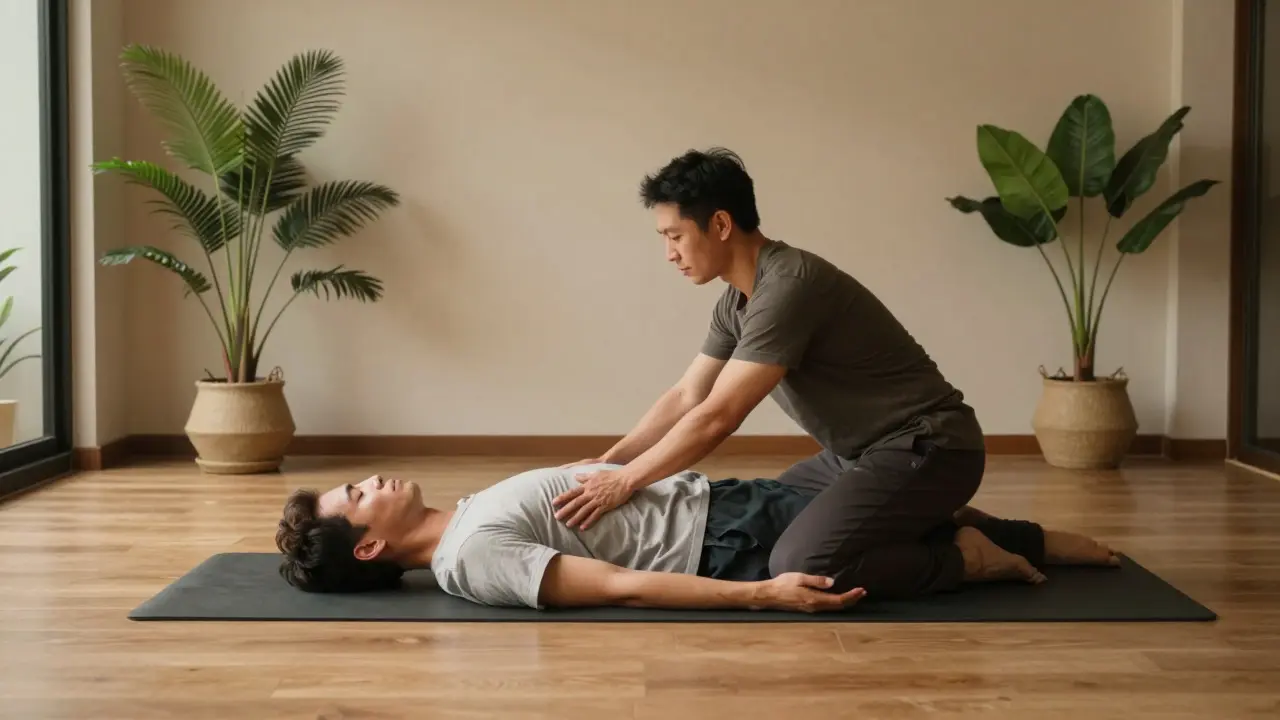
If you have never had a session, don't expect to just lay there. You are a participant. You'll typically start by changing into loose, comfortable clothing-think pajamas or yoga gear. You will be placed on a firm Thai Massage Mat, which is a thick, padded mat placed directly on the floor to provide stability for the practitioner.
The session usually begins with gentle pressing on the legs and arms to warm up the muscles. As the session progresses, the movements become more complex. You might find yourself in a pose that looks like a yoga stretch you've never seen before. The key is to communicate. If a stretch feels too intense, just say so. The goal is a "sweet pain"-that feeling where you know you're hitting a tight spot, but it still feels good.
One of the most unique aspects is the use of the practitioner's weight. They might use their palms to push your shoulder blades back or use their knee to apply pressure to the lower back. This allows them to apply a level of force that their hands alone couldn't manage, ensuring a deep release of tension.
Avoiding Common Pitfalls
Not all Thai bodywork is created equal. A common mistake is going to a place that claims to do "Thai massage" but just uses a table and some oil. While that's a nice massage, it isn't the traditional bodywork we're talking about. If you want the full experience, look for practitioners who use mats and focus on stretching.
Another thing to keep in mind is hydration. Because this work releases a significant amount of metabolic waste from the muscles and stimulates the lymphatic system, you can feel dehydrated or even a bit lightheaded afterward. Drink plenty of water before and after your session to help your body flush out the toxins released during the process.
Does Thai bodywork hurt?
It can be intense, but it shouldn't be "painful." There is often a sensation of pressure or a deep stretch that can feel challenging, but it should never feel like a sharp or stabbing pain. Proper practitioners will always check in with you and adjust the pressure based on your feedback.
How often should I get Thai bodywork?
For those dealing with chronic stiffness or recovering from an injury, once a week or every two weeks is common. For general maintenance and wellness, once a month is usually enough to keep your joints mobile and your energy flowing.
Who should avoid Thai bodywork?
People with severe osteoporosis, recent fractures, or advanced cardiovascular issues should consult a doctor first. Because of the deep stretching and pressure, those with blood clotting disorders or severe joint inflammation (like active rheumatoid arthritis) should proceed with caution.
Is this the same as Yoga?
They are cousins. Thai bodywork is often called "lazy man's yoga" because you get the benefits of yoga poses-increased flexibility, joint mobility, and mental calm-without having to do the active work yourself.
Do I really have to stay clothed?
Yes, in traditional Thai bodywork, you stay clothed. This is partly for the practicality of the movements-the practitioner needs to be able to move and pull your limbs without the risk of a towel slipping. It also maintains a specific energy boundary and respect within the practice.
Next Steps for Your Wellness Journey
If you are curious about Thai bodywork but a bit intimidated, start by looking for a certified practitioner who offers a shorter "introductory" session. This allows you to see how your body responds to the pressure and stretching without committing to a full two-hour experience.
Once you've had a few sessions, you might find that you're more open to starting a gentle yoga practice. The flexibility you gain from the bodywork makes yoga poses much more accessible. Together, these two practices create a powerful loop of mobility and relaxation that can significantly improve your quality of life, especially if you spend most of your day at a desk.
 Health and Wellness